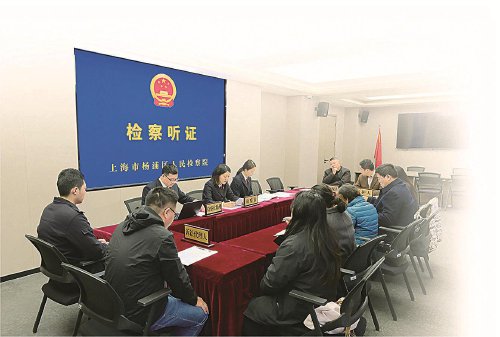
检察信访工作法治化

Search documents
去年前11个月,全国检察机关领导干部包案办理信访案件4.7万件
Xin Lang Cai Jing· 2026-02-13 04:53
Group 1 - The core viewpoint emphasizes the importance of leadership engagement in addressing public grievances and enhancing the effectiveness of the judicial process, as part of the "Fengqiao Experience" in the new era [1][2] - In 2025, from January to November, national prosecutorial leaders handled 29,500 cases through direct engagement and processed 47,000 petition cases, with 70% of conflicts effectively resolved at the grassroots level [1] - The proactive role of leadership in visiting and addressing grievances is highlighted as a means to inspire all prosecutorial staff to take responsibility and improve the quality and efficiency of case handling [1][2] Group 2 - A specific case involving a person named Lu, who faced difficulties after her husband's death in a traffic accident, illustrates the practical application of judicial assistance and conflict resolution by the prosecutorial authorities [2] - The prosecutorial authorities not only sought civil compensation but also provided judicial aid to the affected family, helping them overcome financial difficulties and restore hope [2] - The emphasis on a compassionate judicial approach reflects the integration of legal principles with human empathy, showcasing the political responsibility of leaders to alleviate public concerns [2]
2025年涉检信访、涉检重复信访及占比、非理性信访、集体访实现“五下降”
Xin Lang Cai Jing· 2026-02-13 04:53
Core Viewpoint - The article highlights the significant improvements in the handling of public complaints and appeals by the Chinese prosecutorial system, showcasing a high response rate and the implementation of new regulations aimed at enhancing the legal framework of the complaint process [1][2]. Group 1: Performance Metrics - The prosecutorial system achieved a procedural response rate of 99.8% within seven days and a response rate of 99.2% regarding the process or results within three months [1]. - The overall situation of public complaints related to prosecution is stable, with a goal to reduce various types of complaints by 2025 [1]. Group 2: Regulatory Framework - The newly revised "Regulations on the Work of People's Procuratorates on Public Complaints" serves as a foundational document to standardize the handling of public complaints [1]. - The regulations emphasize the leadership of the Party in prosecutorial work and the importance of a people-centered development approach, reflecting the legal requirements for complaint handling [1]. Group 3: Institutional Improvements - The regulations clarify the jurisdiction over complaint matters, standardize handling procedures, and establish a system for maintaining order and accountability in complaint handling [1]. - A leadership structure under the Party's guidance has been created to support high-quality development in prosecutorial complaint work, marking a significant achievement in advancing the rule of law in this area [1]. Group 4: Additional Guidelines - In addition to the revised regulations, a series of guidelines for effectively handling complaints and appeals have been introduced, including specific instructions for criminal appeal cases [2]. - These guidelines aim to enhance the legal framework for handling complaints, ensuring a more standardized and effective resolution of conflicts and addressing public concerns [2].
领导干部接访下访推动信访矛盾化解在基层
Xin Lang Cai Jing· 2026-02-13 02:50
Core Viewpoint - The leadership of the prosecutorial agencies is actively engaging in public consultations and case handling, which is essential for advancing the rule of law in petition work and effectively resolving conflicts at the grassroots level [1][2] Group 1: Leadership Engagement - In 2025, from January to November, national prosecutorial leaders conducted 29,500 public consultations and handled 47,000 petition cases, with 70% of conflicts effectively resolved at the grassroots level [1] - The leadership's engagement serves as a demonstration effect, encouraging all prosecutorial staff to take responsibility [1] Group 2: Conflict Resolution - The prosecutorial agencies are addressing urgent issues faced by the public, such as financial difficulties and civil compensation, through judicial assistance and mediation [2] - A specific case involving a family affected by a traffic accident illustrates the effective resolution of conflicts, where the prosecutorial agency facilitated civil compensation and provided judicial aid to the affected family [2] Group 3: Collaborative Efforts - The leadership's proactive approach enhances multi-party collaboration, fostering a collective effort to resolve disputes [1] - The focus on transforming outcomes aims to improve case handling quality and promote social governance [1]
群众信访件件有回复从“做得到”向“做得好”提升
Xin Lang Cai Jing· 2026-02-13 02:50
Core Insights - The article highlights the significant improvements in the handling of public complaints and appeals by the Chinese prosecutorial system, with a procedural response rate of 99.8% within seven days and a response rate of 99.2% within three months [1][2] Group 1 - The data indicates that by 2025, there will be a reduction in various types of complaints related to the prosecution, including irrational and collective complaints, leading to a more stable overall situation in public complaints [1] - The newly revised "Regulations on the Work of People's Procuratorates on Public Complaints" was released at the beginning of 2025, serving as a foundational document to standardize the handling of public complaints [1] - The revised regulations emphasize the leadership of the Party in prosecutorial work and the importance of a people-centered development approach, reflecting the legal requirements for complaint handling [1] Group 2 - The Supreme Procuratorate has introduced a series of guidelines aimed at improving the quality and efficiency of handling complaints and appeals, including specific directives for criminal appeal cases [2] - These guidelines are designed to enhance the legal framework for handling public complaints, ensuring a more standardized and effective resolution of conflicts and issues faced by the public [2] - The emphasis on legalizing the complaint handling process aims to address urgent public concerns more effectively, thereby improving the overall efficacy of the prosecutorial system [2]
最高检:带着对人民群众的深厚感情深入推进检察信访工作法治化
Xin Lang Cai Jing· 2026-02-02 08:44
Core Viewpoint - The article emphasizes the importance of advancing the rule of law in the work of the procuratorial system, particularly in the context of public petitions and social governance [1] Group 1: Meetings and Leadership - A national social work ministerial meeting was held in Beijing on January 26, attended by key political figures including Cai Qi [1] - The Central Petition Work Joint Conference was convened on January 29, with remarks from Chen Wenqing, a member of the Political Bureau [1] - The Supreme People's Procuratorate held a party group meeting on February 2 to discuss the implementation of the resolutions from the aforementioned meetings [1] Group 2: Focus Areas - The Supreme People's Procuratorate aims to deepen the legal framework of petition work and enhance the resolution of conflicts and disputes [1] - There is a call for procuratorial agencies to understand new situations and tasks, emphasizing their role in national legal supervision and social governance [1]
把群众的“问题清单”变成“幸福账单”
Xin Lang Cai Jing· 2026-01-29 00:09
Core Viewpoint - The news highlights the innovative approaches taken by various provincial procuratorates in China to enhance public service and conflict resolution through technology and community engagement, emphasizing the integration of traditional practices with modern methods to address legal issues and improve citizen satisfaction. Group 1: Technological Integration - Beijing's procuratorate utilizes a smart application system for case screening and monitoring, enhancing efficiency in identifying judicial assistance needs and risks [6][8] - The "枫控智检" model in Beijing focuses on risk warning and source governance, creating a comprehensive system for judicial oversight [7][8] - The development of a visual analysis system for public complaints in Henan aims to improve response times and citizen satisfaction [19] Group 2: Community Engagement - Shanghai's "五有" work method emphasizes proactive conflict resolution and community involvement, leading to successful mediation in local disputes [9][10] - The "吃茶话事" approach in Fujian promotes informal dialogue to resolve grievances, integrating local culture into legal processes [15][17] - The "浙里检和" initiative in Zhejiang combines cultural values with legal functions to enhance community harmony and prevent conflicts [11][12] Group 3: Case Studies and Outcomes - A case in Shanghai illustrates the effective use of community resources to mediate a neighborhood dispute, resulting in a peaceful resolution [10] - In Zhejiang, a multi-faceted support system was established for farmers affected by wildfires, combining judicial assistance with agricultural support [12] - The "温暖控申" initiative in Anhui showcases a structured approach to resolving complaints, ensuring that citizens feel heard and supported [13][14] Group 4: Systematic Improvements - Henan's "豫检'枫'尚" brand matrix aims to standardize conflict resolution practices across the province, enhancing the effectiveness of judicial services [18][19] - The establishment of a unified complaint response center in Henan ensures timely handling of public grievances, contributing to a decrease in legal disputes [19] - Sichuan's "检担民了" brand emphasizes grassroots engagement and accessibility of legal services, reflecting a commitment to serving the community [20][21]