
母亲河(湖)复苏行动

Search documents
整装推进都江堰等灌区现代化改造
Xin Lang Cai Jing· 2026-01-11 18:13
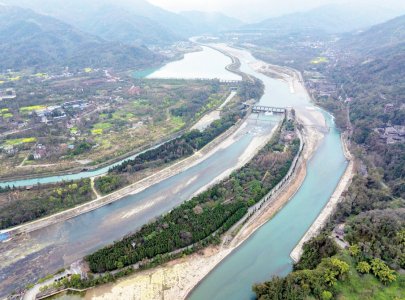
Core Viewpoint - The Chinese government is accelerating the construction of major water conservancy projects, with significant developments planned for 2026, including the modernization of the Dujiangyan irrigation area in Sichuan, which aims to enhance flood control, water supply security, and agricultural productivity [1][3]. Group 1: Major Water Conservancy Projects - The modernization project for the Dujiangyan irrigation area has received approval, with an estimated total investment of 14.09 billion yuan and a construction period of 46 months, impacting eight cities and 41 counties [1][3]. - The project will add 220,000 mu of irrigated area, improve 3.35 million mu of irrigated area, increase annual grain production by 920 million jin, and reduce water loss by 430 million cubic meters annually, benefiting over 30 million people [1][3]. - In 2026, the Ministry of Water Resources plans to initiate several major projects, including the Fujian Shangbaishi Reservoir and the Taihu Taipu River Phase II project, as well as large-scale irrigation projects in Guangdong and Jiangxi [4]. Group 2: Achievements in Groundwater Management - The Ministry of Water Resources reported significant improvements in groundwater management in North China, with shallow and deep groundwater levels rising by 3.76 meters and 7.65 meters, respectively, compared to 2020 [6]. - Notable cases of spring resurgence include the revival of the Jinan Baiquan spring and the stabilization of the Shanxi Jinxi spring, which had been dry for decades [6]. - The ministry has implemented various measures, including water conservation and ecological restoration, leading to the successful restoration of 79 rivers and effective ecological water level maintenance in nine lakes [6].

去年全国农村自来水普及率达96%
Xin Lang Cai Jing· 2026-01-10 03:00
Group 1 - The national water network currently covers 80.3% of the country's land area, providing water security for major strategic implementations, important economic zones, urban clusters, energy bases, major grain production areas, key ecological function areas, and significant water transport channels [1] - By 2025, China aims to complete 9,420 rural water supply projects, enhancing water supply security for 134 million rural residents, with a target of achieving a national rural tap water penetration rate of 96% [1] - The total investment in water conservancy construction for the year is projected to reach 1.28 trillion yuan, creating 3.15 million jobs and effectively contributing to economic growth and employment [1] Group 2 - Since 2022, China has initiated 88 river and lake restoration actions to address issues like river channel disconnection and lake shrinkage, with 79 rivers achieving full connectivity and 9 lakes maintaining ecological water levels [2] - By 2025, over 1,700 "happy rivers and lakes" will be established nationwide, contributing to the creation of high-quality waterfront spaces that promote natural interaction and enjoyment [2] - In 2026, the Ministry of Water Resources plans to implement major water conservancy projects, including the construction of the Liaodong Peninsula water resource allocation and the Hubei Jiangjin water supply project, which will provide water security for 4.04 million people and 3.96 million acres of farmland [2]