民营建筑业企业发展

Search documents
激活民营建筑业企业发展新动能
Xin Lang Cai Jing· 2026-02-06 19:58
Core Viewpoint - The government work report emphasizes the need to cultivate and strengthen business entities, particularly in the private construction sector, which currently accounts for 90% of the industry in the region [3]. Group 1: Industry Overview - The private construction sector in the region has a significant presence, making up 90% of the total construction industry [3]. - Since the beginning of the 14th Five-Year Plan, the total output value of the construction industry in the region has reached 664.36 billion, with an average annual growth rate of 7.9% [3]. Group 2: Challenges and Recommendations - Despite steady improvements in the quality of the construction industry, private construction enterprises face challenges such as weak competitiveness, low innovation capabilities, and insufficient industry chain collaboration [4]. - Recommendations for revitalizing the private construction sector include focusing on four types of collaboration: market collaboration to optimize the competitive environment, innovation collaboration to build an ecosystem led by major enterprises, industry collaboration to integrate with energy and chemical sectors, and policy collaboration to ensure effective implementation of supportive policies [4].


山东出台21条措施促进民营建筑业企业发展
Da Zhong Ri Bao· 2025-07-19 00:10
Core Viewpoint - Shandong Province has introduced 21 measures to promote the sustainable and healthy development of private construction enterprises, aiming to enhance their participation in state-funded projects and improve the overall market environment for the construction industry [2][3]. Group 1: Market Environment Optimization - The measures include enhancing the participation of private construction enterprises in state-funded investment projects, with a focus on ensuring that at least 45% of the budget for suitable projects over 4 million yuan is reserved for small and medium-sized enterprises [3]. - The government will support brand building for private construction enterprises, ensuring that they have a minimum of 50% representation in awards and evaluations within the construction sector [3]. Group 2: Financial Support and Payment Regulations - The measures address the financial pressures faced by private construction enterprises by establishing a comprehensive process for project payment settlements, prohibiting mandatory acceptance of non-cash payment methods, and ensuring timely payment upon project completion [4]. - Financial institutions are encouraged to treat private construction enterprises equally in terms of credit and risk management, with incentives for supporting quality projects through new loans and project guarantees [4]. Group 3: Talent Development and Innovation - The measures promote collaboration between private and state-owned enterprises through market-oriented investments, mergers, and acquisitions to enhance their operational capabilities [5]. - There will be support for talent development in private construction enterprises, including subsidies for innovation talent and streamlined channels for professional title evaluations [5].
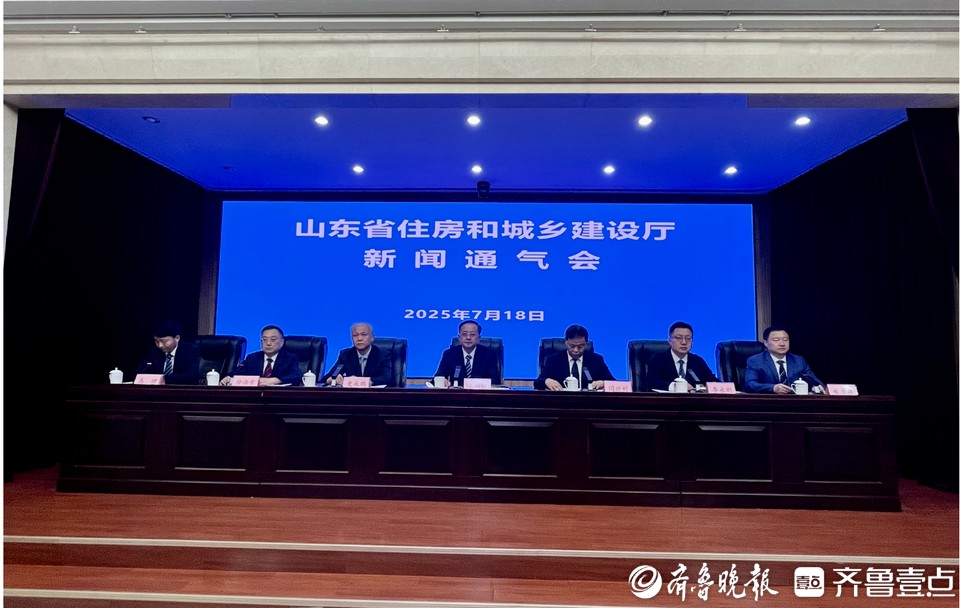
7大方面21项措施!山东真金白银促民营建筑业企业健康发展
Qi Lu Wan Bao· 2025-07-18 08:40
Core Viewpoint - The Shandong Provincial Department of Housing and Urban-Rural Development, along with 14 other departments, has issued a document aimed at promoting the sustainable and healthy development of private construction enterprises through 21 specific measures across seven key areas [1][3]. Group 1: Market Environment Optimization - The document emphasizes the need to enhance support services for private construction enterprises participating in major infrastructure projects, ensuring that over 45% of the procurement budget for projects exceeding 4 million yuan is reserved for small and medium-sized enterprises [4][5]. - It mandates that private construction enterprises should have at least a 50% representation in evaluation and award activities within the construction sector [4]. Group 2: Innovation and Technology - The initiative aims to stimulate innovation by supporting the establishment of key laboratories and innovation centers, providing 10 million yuan in funding for platforms upgraded to national levels without matching state funds [5]. - It encourages collaboration between state-owned enterprises, universities, and private construction firms to share technological resources and innovations [5]. Group 3: Financial Support - The document addresses financing challenges faced by private construction enterprises, proposing more precise financial services and equal treatment in credit management [6]. - It promotes financial products like "credit easy loans" and encourages financial institutions to support the renewal of loans for private construction enterprises [6]. Group 4: Reducing Operational Burdens - The document prohibits the collection of additional guarantees beyond specified types, aiming to alleviate the financial burden on private construction enterprises [7]. - It emphasizes the protection of property rights and legal interests of private construction enterprises, ensuring a clear distinction between economic disputes and criminal offenses [7]. Group 5: Transformation and Development - The initiative supports partnerships between private and state-owned enterprises to enhance investment capabilities and facilitate the international expansion of private construction firms [8]. - It encourages various enterprises to increase their involvement in overseas and out-of-province construction projects, providing credit incentives for those meeting certain thresholds [8]. Group 6: Talent Development - The document supports private construction enterprises in applying for government special allowances and enhancing high-level talent development [8]. - It promotes linking skill levels with compensation to incentivize skill improvement among workers in the private construction sector [8].