氟配位

Search documents
我科学家研发出锂电池“新配方”
Huan Qiu Wang Zi Xun· 2026-02-27 01:12
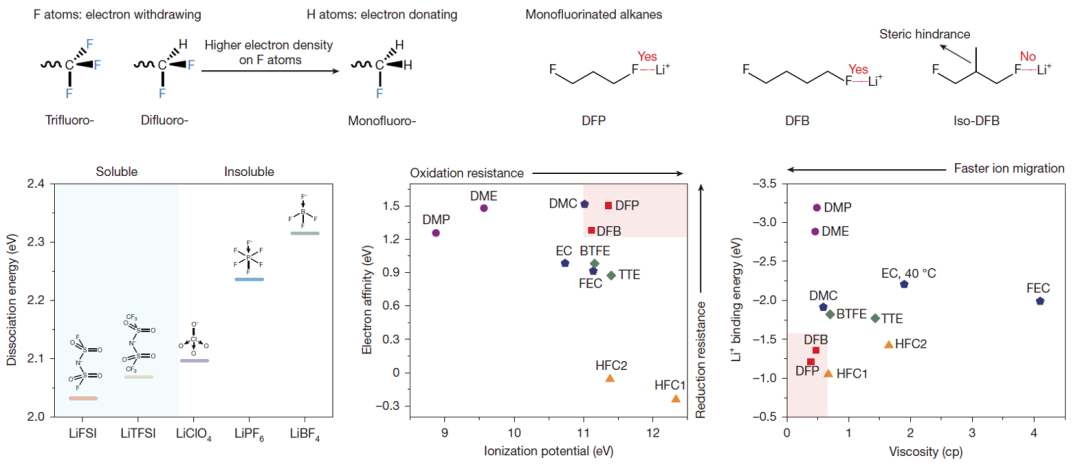
Core Viewpoint - The research team from Nankai University has developed a groundbreaking lithium metal battery using a novel fluorine-coordinated electrolyte, achieving an energy density of 700 Wh/kg and maintaining high performance at extremely low temperatures, which could revolutionize applications in electric vehicles and polar exploration [1][3][5]. Group 1: Breakthrough Technology - The new electrolyte design replaces oxygen with fluorine atoms to dissolve lithium salts, significantly improving solvent utilization [1][3]. - The innovative fluorinated hydrocarbon solvents enhance the wettability and reduce the amount of electrolyte needed, leading to a higher energy density [3][5]. Group 2: Performance and Applications - The new lithium metal battery can deliver nearly 400 Wh/kg of energy at -50°C, showcasing its potential for extreme environments [1][3]. - The high energy density and low-temperature performance make this technology suitable for applications in electric vehicles, intelligent robotics, low-altitude economy, and aerospace [5].

-50℃也能高效放电!我科学家研发出锂电池“新配方”
Ke Ji Ri Bao· 2026-02-26 06:39
Core Insights - The research team from Nankai University has developed a groundbreaking lithium metal battery using a novel electrolyte based on fluorine coordination, which significantly enhances energy density and low-temperature performance [1][2]. Group 1: Breakthrough Technology - The new electrolyte design replaces oxygen atoms with fluorine atoms to dissolve lithium salts, resulting in a high energy density of 700 watt-hours per kilogram for the lithium metal battery [1][2]. - The battery maintains a high energy output of nearly 400 watt-hours per kilogram even at -50 degrees Celsius, making it suitable for applications in electric vehicles and polar exploration [1][2]. Group 2: Historical Context and Innovation - Historically, the use of oxygen in electrolytes has been a standard since the invention of the battery in 1800, with traditional lithium batteries relying on lithium salts and carbonate solvents [1]. - The new fluorinated hydrocarbon solvents demonstrate better wettability and utilization, allowing for a significant reduction in electrolyte volume compared to traditional lithium-oxygen coordination systems [2]. Group 3: Application Potential - The high energy density and low-temperature resilience of the new battery technology present vast application potential in sectors such as electric vehicles, intelligent robotics, low-altitude economy, and aerospace [5].