水质监测智能化

Search documents
北裕仪器水质监测“黑灯实验室”落地山东
Xin Lang Cai Jing· 2025-12-30 11:05
Core Insights - The traditional water quality monitoring methods face challenges in sample processing efficiency, data continuity, and human resource investment. The smart unmanned laboratory utilizes automation and intelligent technology to enhance sample processing and testing efficiency, significantly reducing manual operations and human errors [1][14] - The smart unmanned analysis and detection system developed by Beiyu Instrument provides high-quality data analysis and precise monitoring results, supporting various monitoring needs and ensuring scientific and authoritative data [5][16] Group 1: Technology and Innovation - The smart unmanned laboratory has completed the delivery of all equipment and is now operational, adhering strictly to GB and HJ standards to ensure data reliability [3][17] - The integration of automation and intelligent technology allows for efficient detection of nine key indicators in surface water, groundwater, and effluent, with a 24/7 monitoring capability to handle peak sample testing demands [3][16] - The system supports sample prioritization and can automatically schedule testing sequences based on contamination risk, effectively reducing cross-contamination [5][16] Group 2: Market Position and Standards - Beiyu Instrument is committed to advancing monitoring technology and leading the digital and intelligent transformation in the water quality monitoring sector, contributing to sustainable ecological development [6][16] - The "Technical Requirements for the Construction and Operation of Smart Unmanned Water Quality Monitoring Laboratories" standard, co-drafted by Beiyu Instrument, aims to enhance the ecological monitoring technical system and promote the application of new technologies in monitoring [11][21] Group 3: System Features and Capabilities - The smart analysis and detection system is fully automated, capable of continuous operation, and allows for flexible configuration of monitoring parameters based on user needs [7][19] - The system is designed to be open and compatible with third-party instruments, facilitating method comparison and ensuring compliance with national standards [9][19] - The system can analyze approximately 200 samples per day without additional equipment, showcasing its efficiency and cost-effectiveness [19][20]

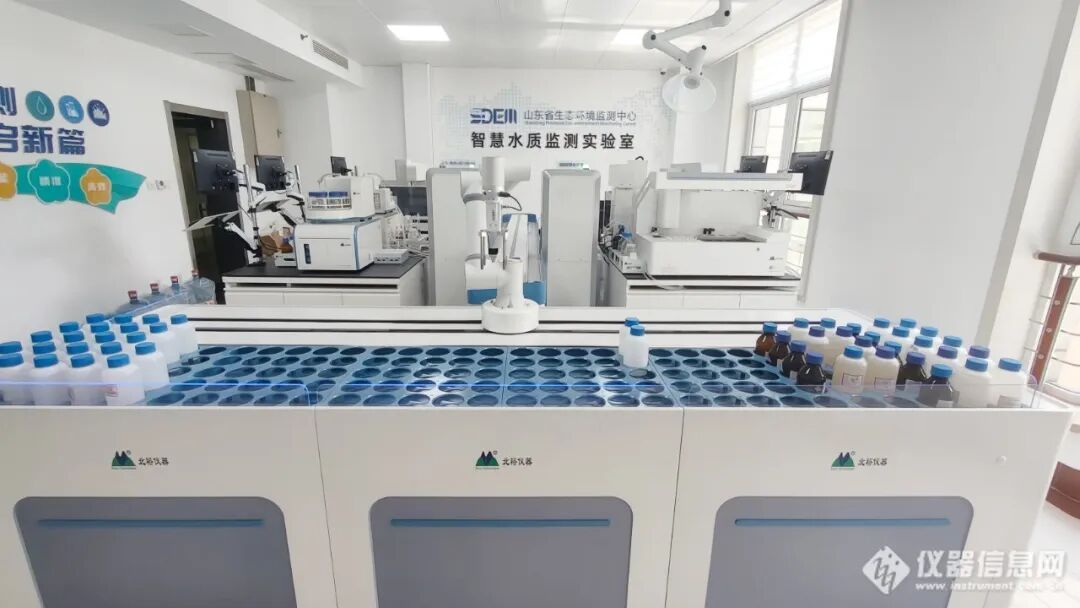
北裕仪器水质监测“黑灯实验室”落地山东
仪器信息网· 2025-12-30 09:02
Core Viewpoint - The establishment of a smart unmanned laboratory in Shandong significantly enhances water quality monitoring capabilities through automation and intelligent technology, addressing challenges in traditional monitoring methods and improving efficiency and data quality [1][2]. Group 1: Laboratory Features and Innovations - The smart unmanned laboratory utilizes automated and intelligent technologies to achieve high efficiency in sample processing and detection, reducing human error and labor input [2][4]. - The laboratory is capable of continuous monitoring 24/7, effectively handling large volumes of samples during peak periods [4]. - It adheres to national standards (GB and HJ) for all detection methods, ensuring scientific and authoritative data [4][7]. Group 2: System Capabilities and Quality Control - The North Yu Instrument's smart unmanned analysis detection system provides high-quality data analysis and precise monitoring results, with features like automatic detection sequence based on sample priority [6][10]. - The system supports the addition of various quality control samples and implements automatic parameter determination and intelligent classification of surface water samples [6][10]. - It includes intelligent forecasting of reagent usage and monitoring of remaining quantities, ensuring continuity and safety in detection work [6][10]. Group 3: Compliance and Standards - The smart unmanned analysis detection system complies with the laboratory management system requirements and meets various detection needs across different fields [7][12]. - The establishment of the "Technical Requirements for the Construction and Operation Maintenance of Smart Unmanned Water Quality Monitoring Laboratories" standard promotes the standardization and regulation of the industry [12]. Group 4: Detection Projects and Flexibility - The system is designed to be open and compatible with third-party instruments, allowing for flexible configuration and customization based on user needs [10][11]. - It covers a wide range of detection projects, including surface water, wastewater, and groundwater, with the ability to analyze key indicators such as ammonia nitrogen, total nitrogen, and chemical oxygen demand [11][15].