沟长制

Search documents
当好群众的贴心人
Xin Lang Cai Jing· 2026-01-15 22:31
Core Viewpoint - The Sichuan natural resources department has made significant progress in disaster prevention and real estate registration, enhancing public safety and improving the quality of life for residents through various initiatives during the 14th Five-Year Plan period [2][3][4] Group 1: Disaster Prevention and Management - Over the past five years, Sichuan has successfully relocated over 153,000 residents from geological disaster-prone areas, effectively eliminating more than 5,900 geological hazard points [2][3] - The province has implemented over 49,00 major geological hazard remediation projects, safeguarding the lives and property of more than 990,000 people [2] - Sichuan has improved its disaster warning systems, successfully evacuating 6.048 million people and preventing 240 geological disaster incidents, which could have resulted in 4,505 potential casualties [2][3] Group 2: Real Estate Registration Improvements - Sichuan has streamlined the real estate registration process to two main steps, with general and mortgage registrations completed within four working days [3][4] - The province has achieved a comprehensive integration of real estate registration, transaction, and tax payment processes, allowing for simultaneous processing [3] - The introduction of AI assistants in various regions has enhanced the efficiency of real estate services, enabling citizens to complete procedures with minimal physical presence [3][4] Group 3: Natural Resource Management - Sichuan has initiated a unified natural resource registration system, completing over 2,900 registration projects, including significant areas like the Giant Panda National Park [4] - The establishment of a three-dimensional database for natural resource management has improved the integration of various natural resources, aiding in tourism development [4]

汛期遭遇9次区域性暴雨过程,9次启动四级防汛应急响应 今年防汛,四川有哪些新战备新战法?
Si Chuan Ri Bao· 2025-10-08 23:56
Core Viewpoint - Sichuan province successfully managed to avoid casualties during the flood season, which ended on September 30, 2023, despite facing nine regional heavy rain events and activating emergency responses multiple times [1] Group 1: Technological Advancements in Flood Control - Sichuan is enhancing its flood control capabilities through the deployment of 73 rainfall monitoring radars across the province, with the first 38 already operational by July 31, 2023 [2] - The rainfall radars provide real-time high-resolution rainfall data and can forecast rainfall 1 to 3 hours in advance, addressing the monitoring gaps in mountainous areas [2] - The introduction of the first batch of drone-deployable rain gauges, "Rain God-1," in August 2023, allows for monitoring in remote areas even under adverse conditions [3] Group 2: Innovative Mechanisms for Disaster Reduction - The integration of the Dujiangyan-Piziping reservoir management system allowed for proactive flood control by lowering reservoir water levels in anticipation of heavy rainfall, effectively reducing downstream flood levels by 2 to 3 meters [5] - The establishment of temporary evacuation shelters, termed "safety houses," has provided refuge for over 29,000 individuals threatened by mountain floods and geological disasters [5] - New mechanisms such as basin joint prevention and control, and the "30123" emergency response system have been implemented to enhance flood disaster reduction efforts [6]
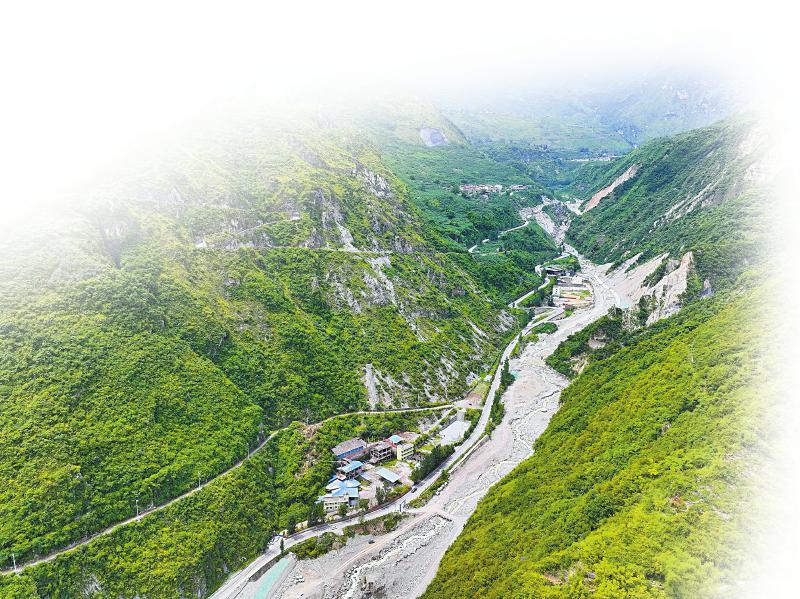
如何破解山洪泥石流灾害防治中“自扫门前雪”的难题? 沟长统管河沟 点长盯紧隐患点
Si Chuan Ri Bao· 2025-07-25 07:07
Core Viewpoint - The article discusses the implementation of a "Gongzhang" (valley manager) system in Sichuan province to enhance flood disaster prevention and management, particularly focusing on mountain flood and debris flow hazards during the rainy season [5][7]. Group 1: Implementation of the Gongzhang System - Sichuan has initiated a pilot program for the Gongzhang system in areas such as Ya'an, Ganzi, Aba, and Liangshan to improve disaster prevention capabilities [5][7]. - The Gongzhang system involves a hierarchical management mechanism based on river basins, with designated managers responsible for each section, ensuring comprehensive coverage and coordination among various administrative levels [6][7]. - The system aims to address challenges in disaster management, such as the lack of coordination between upstream and downstream areas, by establishing clear responsibilities and communication channels [6][7]. Group 2: Responsibilities and Structure - The Gongzhang system includes a four-tier responsibility framework involving county, township, village, and point managers, ensuring that every section of the river and its tributaries is monitored and managed effectively [7][9]. - Specific responsibilities for each level of management have been outlined, including daily monitoring, emergency response, and communication of hazards to ensure a closed-loop management system [9][10]. - Over 3,600 debris flow channels have been selected for the Gongzhang system, with more than 3,400 managers and 8,900 point managers appointed across the province [9][10]. Group 3: Technological Integration - The implementation of the Gongzhang system will leverage technology such as flood forecasting systems, 3D modeling, and emergency communication tools to enhance disaster response capabilities [10]. - Continuous evaluation and improvement of the Gongzhang system will be conducted to ensure effective integration with existing disaster management frameworks [10].