油气改革核聚变

Search documents
上海石化的前世今生:2025年Q3营收588.86亿行业第七,净利润-4.29亿行业第九
Xin Lang Cai Jing· 2025-10-31 00:47
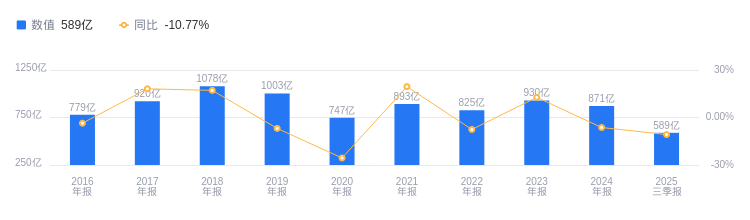
Core Viewpoint - Shanghai Petrochemical, established in 1993, is a significant integrated refining and chemical enterprise in China, focusing on crude oil processing and various petrochemical products [1] Group 1: Business Performance - In Q3 2025, Shanghai Petrochemical achieved a revenue of 58.886 billion yuan, ranking 7th in the industry, with the top two competitors being China National Petroleum and Sinopec [2] - The revenue composition includes refining products at 26.857 billion yuan (67.95%), chemical products at 8.536 billion yuan (21.60%), and trading of petrochemical products at 3.86 billion yuan (9.77%) [2] - The net profit for the same period was -429 million yuan, placing the company 9th in the industry, with the industry average net profit being 18.048 billion yuan [2] Group 2: Financial Ratios - As of Q3 2025, the company's debt-to-asset ratio was 41.78%, down from 45.04% year-on-year, which is significantly lower than the industry average of 62.74% [3] - The gross profit margin for the same period was 16.87%, slightly up from 16.63% year-on-year, exceeding the industry average of 13.42% [3] Group 3: Shareholder Information - As of December 31, 2004, the number of A-share shareholders increased by 7.66% to 156,700, with an average holding of 4,593.68 shares, down by 7.11% [5] - By September 30, 2025, Hong Kong Central Clearing Limited was the fourth-largest shareholder, holding 84.974 million shares, an increase of 13.0582 million shares from the previous period [5] Group 4: Future Outlook - The company is accelerating its carbon fiber project, with a 30,000-ton large tow carbon fiber project starting construction in Inner Mongolia, expected to be completed by 2027 [6] - Shanghai Petrochemical's 1.2 million tons ethylene quality upgrade project is anticipated to be operational by 2028, which may enhance product value [7]


中国石油的前世今生:2025年三季度营收21692.56亿元行业居首,净利润1401.14亿元远超第二名
Xin Lang Cai Jing· 2025-10-30 22:33
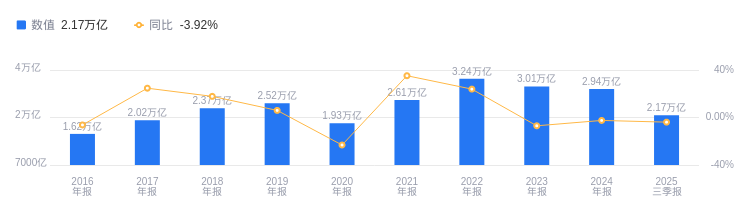
Core Viewpoint - China National Petroleum Corporation (CNPC) is the largest oil and gas producer and seller in China, with a comprehensive business model covering exploration, development, and new energy, showcasing unique advantages in the entire industry chain [1] Group 1: Business Overview - CNPC was established on November 5, 1999, and was listed on the Shanghai Stock Exchange on November 5, 2007, with its headquarters in Beijing [1] - The main business segments include exploration and development of crude oil and natural gas, refining and sales of oil products, and natural gas transportation and sales [1] Group 2: Financial Performance - As of Q3 2025, CNPC reported revenue of 2,169.256 billion yuan, ranking first in the industry, significantly higher than the industry average of 493.904 billion yuan and the median of 88.024 billion yuan [2] - The net profit for the same period was 140.114 billion yuan, also the highest in the industry, far exceeding the second-ranked Sinopec's 34.033 billion yuan [2] Group 3: Financial Ratios - CNPC's debt-to-asset ratio as of Q3 2025 was 38.38%, lower than the previous year's 39.54% and significantly below the industry average of 62.74%, indicating strong solvency [3] - The gross profit margin for Q3 2025 was 21.09%, slightly down from 21.57% year-on-year but still above the industry average of 13.42%, reflecting robust profitability [3] Group 4: Shareholder Information - As of September 30, 2025, the number of A-share shareholders increased by 4.52% to 498,800, while the average number of circulating A-shares held per shareholder decreased by 4.33% to 324,600 [5] - Major shareholders include China Securities Finance Corporation and Hong Kong Central Clearing Limited, with notable changes in their holdings [5] Group 5: Future Outlook - According to Everbright Securities, CNPC's long-term strategy and integrated business model are expected to enable it to navigate oil price cycles and achieve sustained growth [6] - Key business highlights include upstream cost reductions, anticipated increases in natural gas production, and significant growth in new chemical materials and renewable energy capabilities [6]