现代水网体系

Search documents
我在工地过大年丨除夕夜,他们在一线“织水网”
He Nan Ri Bao· 2026-02-17 23:07
2月16日,农历除夕。一夜降雪过后,鲁山县昭平台水库扩容工程项目现场气温跌至零摄氏度以下,银 装素裹的工地里,工程车辆穿梭不息。 昭平台水库扩容,正是这个"结"的关键一环。扩容后,总库容将从6.85亿立方米跃升至13.56亿立方米, 成为全省第四大水库,与出山店水库、前坪水库协同运用,将漯河以下沙颍河干流防洪标准提高到50年 一遇,保障平顶山、漯河等地200万人口供水安全。 2023年9月,平顶山被水利部确定为全国首批7个市级水网先导区之一,昭平台扩容,正是先导区建设 的"重头戏"。 按照项目工期,今年汛前,尧沟溢洪道必须具备控泄条件,这意味着大家必须与时间赛跑。 春节期间,昭平台扩容项目尧沟溢洪道预制启闭机T形梁蒸汽养护,左岸交通桥墩柱盖梁及桥头堡基础 钢筋混凝土照常施工;拆除重建进水塔墩墙与出口闸底板锚杆施工同步推进…… "春节期间,有40多名工友坚守一线,目前,输水洞工程已经完成近40%,拆除重建进水塔底板已浇筑 完成,洞身加固钢衬施工条件已具备。"岳安华说。 晚饭时间,工地旁的项目部渐渐热闹起来。收工后的工友们三三两两走进来,汇聚出一片欢声笑语。 "岳工,你包的饺子咋全是躺倒的?"昭平台水库扩容工程建 ...
河南省高质量完成“十四五”规划系列主题新闻发布会之十四 开创新时代治水兴水新局面
He Nan Ri Bao· 2025-10-18 23:36
Core Insights - The Henan provincial government has successfully implemented the "14th Five-Year Plan" focusing on water security and ecological protection, achieving significant milestones in water infrastructure and resource management [1][2][5] Water Resource Utilization - Water efficiency in Henan has improved, with total water usage projected at 214.18 billion cubic meters for 2024, meeting national targets. Water usage per unit of GDP and industrial output has decreased by 23.8% and 49.0% respectively since 2020 [2] Modern Water Network Construction - A modern water network is being developed in Henan, with a comprehensive planning framework established. Key projects include the construction of major water source facilities and cross-regional water diversion projects [3][4] Ecological Protection and Management - The province has made significant progress in ecological protection, establishing a five-level management system for rivers and lakes, resulting in over 90% compliance with ecological flow standards in major rivers [5] Disaster Prevention and Response - Henan has enhanced its flood and drought disaster prevention capabilities by developing a modern monitoring and response system, including 8 rainfall radar units and 8,266 hydrological monitoring stations [6][7]
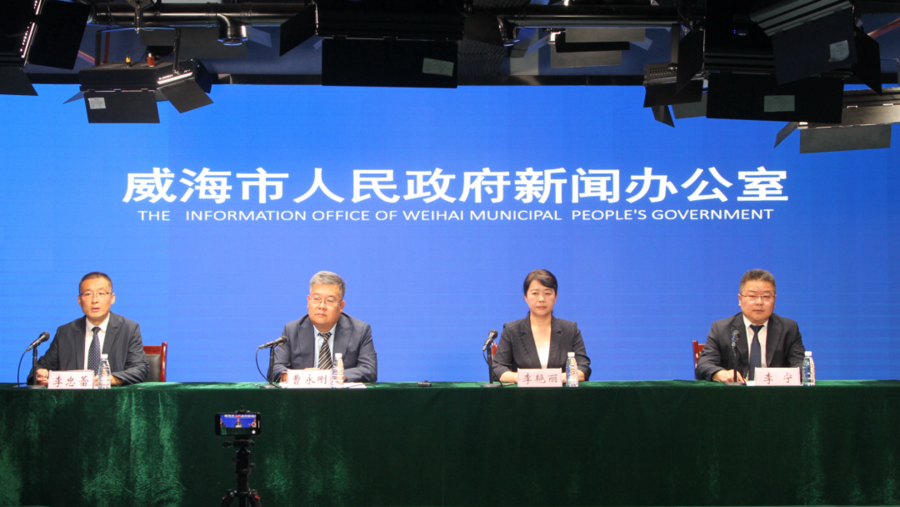
威海持续优化水资源配置,科学构建现代水网体系
Qi Lu Wan Bao Wang· 2025-06-30 07:56
Core Viewpoint - Weihai City is addressing its severe water scarcity issues by developing a modern water network to support urban growth and improve residents' quality of life [3][4]. Group 1: Water Resource Management - Weihai has a per capita water resource availability of only 573 cubic meters, which is less than a quarter of the national average and one-twenty-second of the global average [3]. - The city is integrating into the provincial water network and constructing a comprehensive water system characterized by "one axis, two wings, nine rivers, multiple reservoirs, one belt, four zones, and six water transformations" [3][4]. Group 2: Infrastructure Development - Key projects include the interconnection of major water sources between urban areas and surrounding cities, enhancing the strategic water reserve and distribution capabilities [4]. - The city has completed several critical water connection projects, establishing a framework for multi-source water supply and joint scheduling [4]. Group 3: Ecological and Environmental Management - The city is enhancing water safety by improving flood defenses and increasing the compliance rate of levees to over 90% [5]. - A digital water management system has been established, integrating data from various sources to monitor river basin conditions in real-time [5]. Group 4: Economic and Social Development - The water network is being leveraged to boost tourism and rural development, with initiatives aimed at enhancing the ecological environment and promoting local economies [6][7]. - The city has achieved a 100% coverage rate for rural tap water supply, significantly improving water quality and sanitation in rural areas [7].