生物量迁移

Search documents
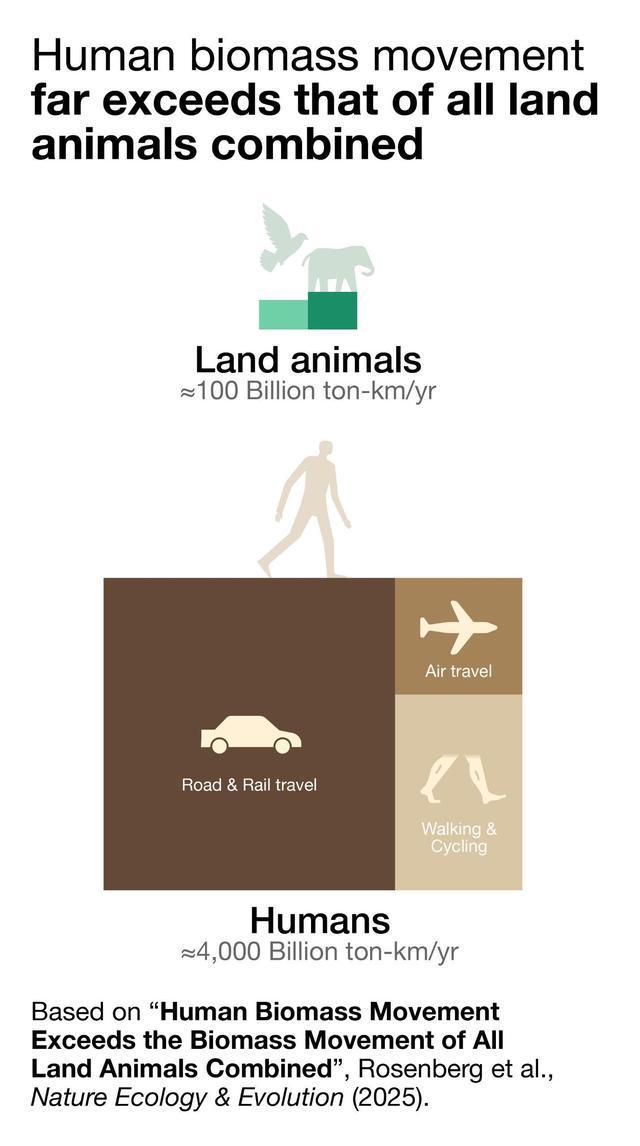
人类生物量迁移规模远超陆地动物总和
Huan Qiu Wang Zi Xun· 2025-10-29 02:32
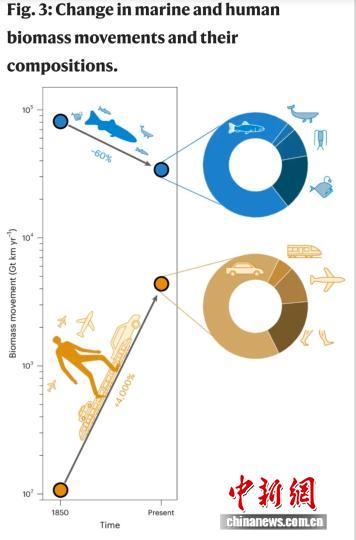
Core Insights - The scale of human biomass migration is 40 times greater than the total biomass of all existing terrestrial animals [1][5] - Since 1850, global wild mammal biomass has decreased by over 50%, with marine mammals experiencing a significant decline of approximately 70% [1][5] Group 1: Human Migration Impact - Human biomass migration is defined as the total biomass of a species multiplied by the distance it actively moves each year [5] - The study indicates that human migration has increased by about 40 times since 1850, contrasting with the halving of marine animal biomass migration during the same period [5] Group 2: Wild Mammal Biomass Decline - The research highlights a dramatic reduction in wild mammal biomass, with a total decline exceeding 50% since 1850 [5] - The decline in marine mammal biomass is particularly severe, with a 70% reduction attributed to the decline of larger species such as blue whales, humpback whales, and sperm whales [5]

生物量迁移最新研究:人类超所有陆地动物总和 野生哺乳动物锐减
Zhong Guo Xin Wen Wang· 2025-10-28 07:03
生物量迁移最新研究:人类超所有陆地动物总和 野生哺乳动物锐减 此次在《自然-生态与演化》上发表的论文通过分析科学文献和数百个数据源,评估全球近年来跨物种 的生物量迁移。研究人员将全球生物量迁移量定义为某一物种总生物量乘以其每年主动移动的距离。他 们发现,人类的生物量迁移是所有野生陆地哺乳类、鸟类和陆生节肢动物总和的40倍以上。 据介绍,迁移性是动物的一个本质特征。人类同样会广泛迁移,无论是步行还是借助飞机、火车和汽车 等交通手段。比较生物量的迁移(定义为体重与迁移距离的乘积),能直接衡量人类和动物活动的规模。 中新网北京10月28日电 (记者 孙自法)施普林格·自然旗下学术期刊《自然-生态与演化》《自然-通讯》 北京时间10月28日凌晨分别在线发表生态学论文称,人类的生物量迁移可能达到所有陆地动物总和的40 倍;野生哺乳动物的生物量自1850年以来已减少逾半,海洋哺乳类生物量下降尤其多——约70%。 本项研究成果相关示意图(图片来自论文)。施普林格·自然 供图 这两篇学术论文均由通讯作者、以色列魏茨曼科学研究院Ron Milo和同事及合作者共同完成,他们认 为,两项研究发现为全球迁移和动物生物量经时变化的构成 ...