神仙思想

Search documents
幽香缕缕飘千年
Xin Lang Cai Jing· 2026-01-22 20:14
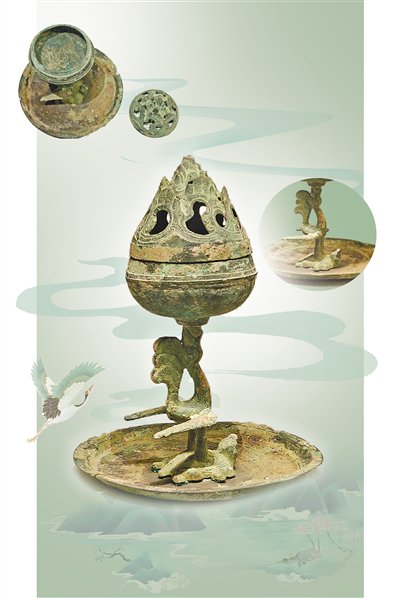
Core Viewpoint - The article highlights the artistic and cultural significance of the bronze Boshan furnace, a traditional incense burner from the Han and Jin dynasties, showcasing its intricate design and craftsmanship that reflects the era's aesthetic and spiritual values [4][5][7]. Design and Structure - The Boshan furnace consists of three main parts: a hollow mountain-shaped lid with air holes for incense smoke, a round body that fits seamlessly with the lid, and a base designed in the shape of a turtle supporting a crane, symbolizing longevity and auspiciousness [3][4][5]. - The lid features a height difference of 3 centimeters, creating a layered spatial effect, with varying hole sizes, the smallest being 0.3 centimeters, ensuring both functionality and aesthetic appeal [6][7]. Historical Context - The Boshan furnace is rooted in Chinese mythology, associated with the legendary mountain where immortals reside, reflecting the cultural beliefs of the Han dynasty that emphasized the connection between incense burning and spiritual experiences [4][5]. - The furnace was discovered in the archaeological site of the Butai Han tombs, which contained numerous valuable artifacts, indicating the significance of such items in the lives of the elite during the Han period [4][5]. Craftsmanship and Materials - The bronze furnace exemplifies the advanced metalworking techniques of the Han dynasty, utilizing a casting method that involves creating molds and careful design to achieve intricate details [5][6]. - The composition of the bronze includes 85% copper, 12% tin, and 3% lead, which ensures durability and fluidity during the casting process, showcasing the artisans' understanding of material properties [6][7]. Cultural Significance - The Boshan furnace serves as a representation of the social customs, economic development, and cultural exchanges of the Han dynasty, embodying the fusion of Central Plains and nomadic cultures [7][8]. - It symbolizes the continuity of Chinese civilization, reflecting the aesthetic and spiritual pursuits of ancient people, and remains a testament to the rich cultural heritage of China [8].