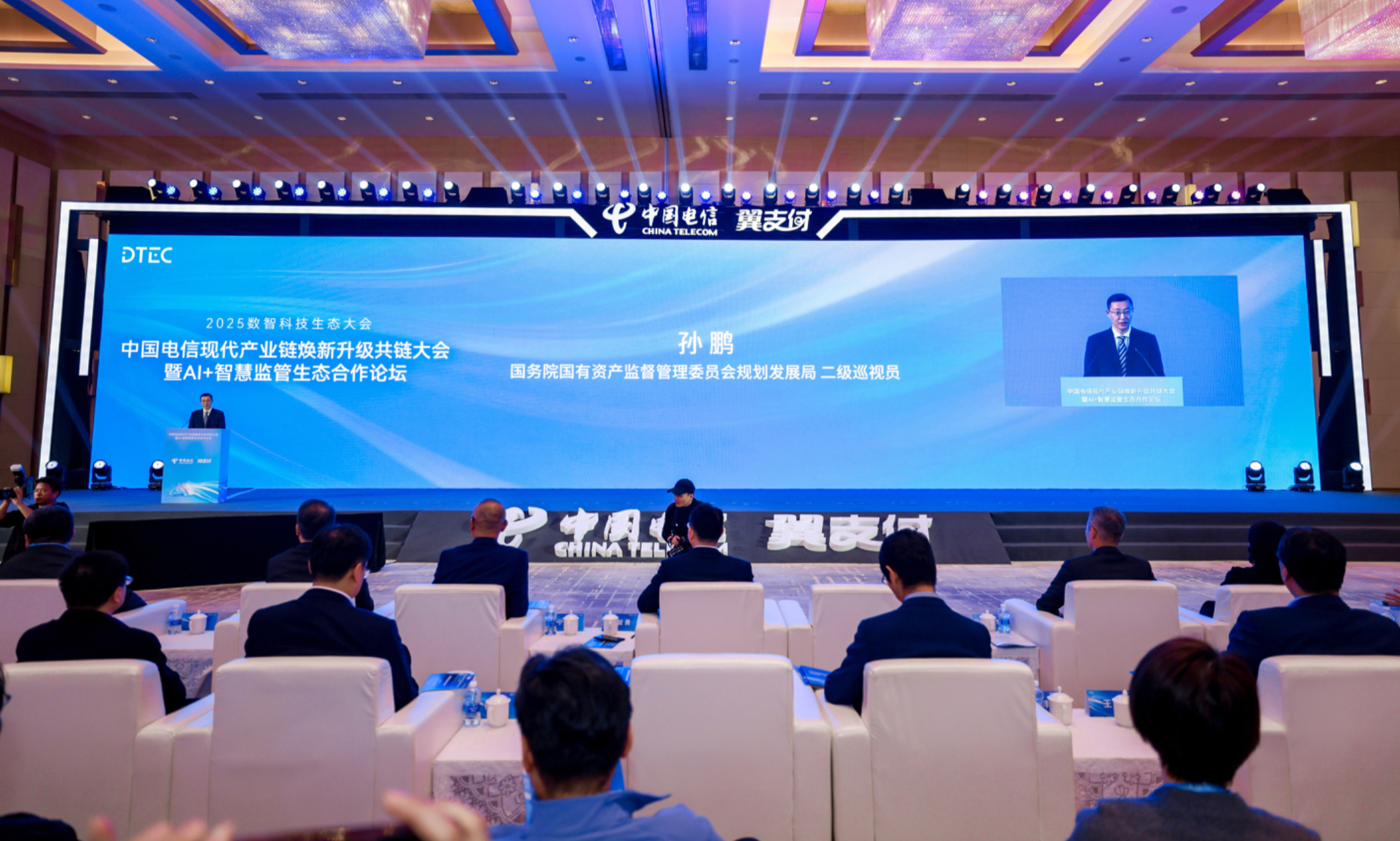
移动支付产业链焕新升级

Search documents
移动支付现代产业链如何实现数智化换新升级?这场论坛探讨答案
Guo Ji Jin Rong Bao· 2025-12-07 07:58
Core Viewpoint - The recent "2025 Digital Technology Ecosystem Conference" highlighted the modernization and upgrading of the mobile payment industry chain, emphasizing the importance of digital economy development as a key direction for industrial renewal [1][3]. Group 1: Industry Development - The State-owned Assets Supervision and Administration Commission (SASAC) has prioritized the development of the digital economy as a significant action for industrial renewal, launching initiatives for modern industrial chain construction and "AI+" special actions [1]. - China Telecom aims to leverage the new opportunities presented by technological revolutions and industrial transformations to upgrade its strategy towards "cloud transformation, digitalization, and intelligent benefits" [3]. Group 2: Technological Advancements - The focus is on enhancing technological capabilities in AI big data, blockchain, and privacy computing, which are essential for digital and payment applications [4]. - China Telecom plans to strengthen four major technology platforms: "Xingyuan," "Lingze," "Yufeng," and "Chenzhi," to establish a solid foundation for industrial development [4]. Group 3: Regulatory Framework - China Telecom is actively exploring the construction of an intelligent, penetrating regulatory system to meet the requirements of comprehensive oversight across all levels, chains, processes, and elements [4]. - The company has identified 11 key areas to focus on, utilizing big data and core technologies to build an intelligent regulatory platform aimed at enhancing risk management across the group [4]. Group 4: Risk Management - The goal of penetrating regulation is to enhance regulatory efficiency and promote intelligent oversight, enabling companies to improve their core competitiveness through high-quality development [5]. - To effectively implement penetrating regulation, challenges related to data, models, and mechanisms must be addressed, with a focus on unified planning, standards, and governance [5].