红色革命精神

Search documents
铭记历史 缅怀先烈丨刘云彪:屡建战功的骑兵团长
Xin Hua Wang· 2025-08-17 09:52
Core Viewpoint - The article highlights the life and achievements of Liu Yunbiao, a notable figure in the Chinese military history, particularly during the Anti-Japanese War, emphasizing his leadership and bravery in various battles [1][2][3] Group 1: Early Life and Military Career - Liu Yunbiao was born into a farming family in Luotan Village, Longyan City, and joined the Communist Party and the Red Army in the early 1930s [1] - He held various positions, including reconnaissance platoon leader and later became the commander of the first cavalry regiment of the Red Army [1][2] Group 2: Key Battles and Achievements - Liu Yunbiao participated in significant battles such as the Battle of Pingxingguan, where he successfully led his troops to occupy strategic positions and defeat Japanese forces [2] - He played a crucial role in the establishment of the North Yue anti-Japanese base by defeating numerous Japanese and puppet troops in 1937 and 1938 [2] Group 3: Later Years and Legacy - Liu Yunbiao's cavalry regiment was involved in the Hundred Regiments Offensive in 1940, where they conducted numerous attacks against Japanese forces [3] - He succumbed to illness in 1942 at the age of 29, and his legacy is honored through various memorials and educational initiatives in his hometown [3]
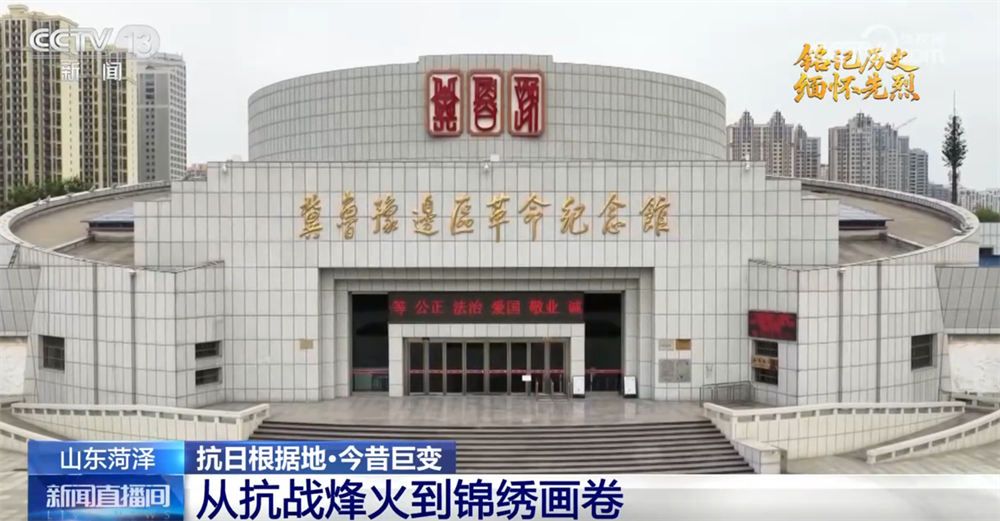
抗日根据地·今昔巨变|革命老区焕新颜 用“日子越过越好”告慰先烈
Yang Shi Wang· 2025-08-10 04:38
Core Viewpoint - The news highlights the significance of the Jilu and Henan Revolutionary Memorial Museum in Heze City, Shandong Province, as a site for red tourism and education, reflecting the revolutionary history and spirit of the region during the Anti-Japanese War. Group 1: Historical Significance - The Jilu and Henan Revolutionary Memorial Museum houses over 7,000 cultural relics that comprehensively reflect the revolutionary history of the region during the 1930s and 1940s under the leadership of the Communist Party of China [1] - The museum serves as a reminder of the heroic battles fought by the Eighth Route Army, including significant engagements such as the Fanba and Panxi River ambushes, which inflicted heavy losses on Japanese and puppet forces [1] Group 2: Visitor Engagement - During the summer of 2024, the museum is expected to receive 860,000 visitors and conduct red education activities for over 50,000 students [3] - The Heze Municipal Party Committee's lecturer group is training middle and primary school students to become "red narrators," allowing them to learn and share revolutionary history [3] Group 3: Cultural Artifacts - One notable artifact is a coarse porcelain bowl used in the "bean election" during the democratic movement in rural China, symbolizing the innovative methods used to conduct elections in a largely illiterate population [5] - Another significant item is the interview bag of martyr Liu Chaoqi, a war correspondent who sacrificed his life during the Anti-Japanese War, representing the spirit of revolutionary journalism [7] Group 4: Cultural Activities - The city of Heze hosts over 270 performances of red-themed dramas and situational plays annually, along with more than 400 red education presentations, which are well-received by the public [9] Group 5: Economic Development - In 2024, Heze's GDP is projected to reach 480.3 billion yuan, marking a significant rise from being the lowest in Shandong Province to a position in the provincial middle tier [11] - The per capita disposable income of urban and rural residents in Heze has been rapidly increasing, consistently ranking among the top in Shandong Province [11] - Over the past decade, Heze has become one of the fastest-growing cities in Shandong, with notable improvements in industrial development, urban functionality, cultural construction, and public welfare [11]

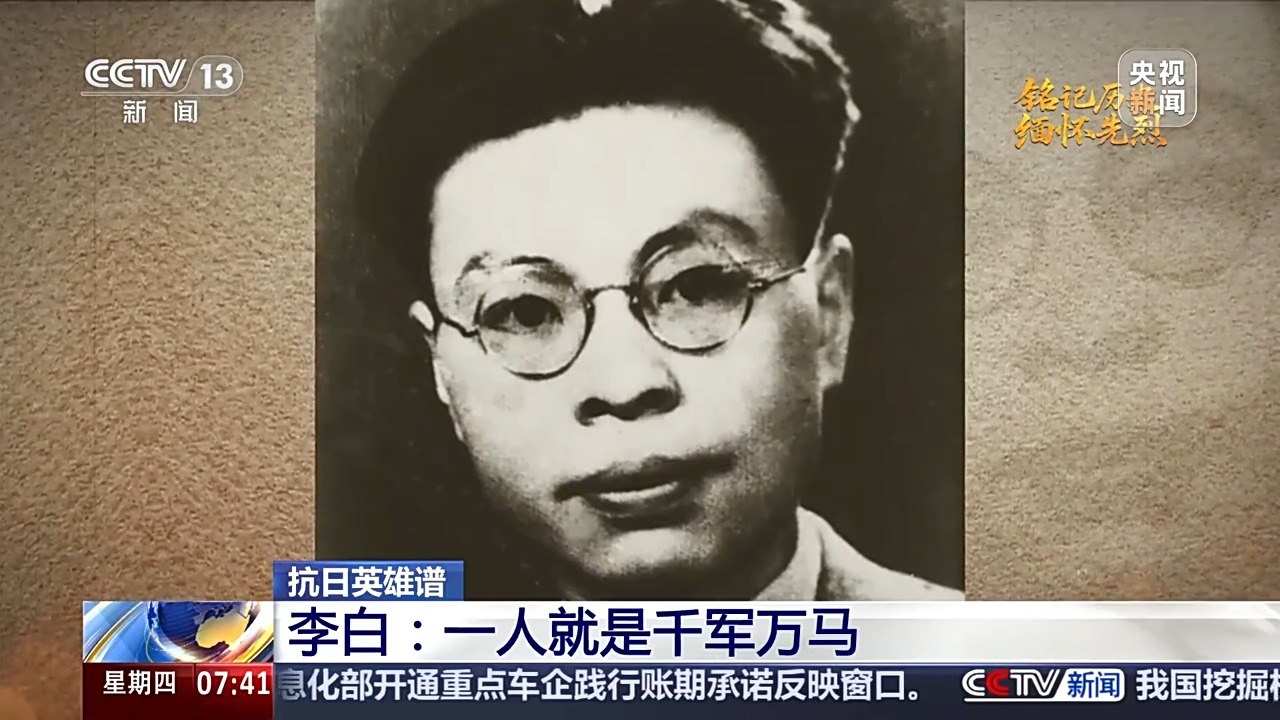
抗日英雄谱丨在永不消逝的电波背后 他一人抵挡千军万马
Yang Shi Xin Wen Ke Hu Duan· 2025-07-12 07:27
Core Viewpoint - The article commemorates the life and contributions of Li Bai, a Chinese Communist underground worker who played a crucial role in transmitting intelligence during the Anti-Japanese War, ultimately sacrificing his life for the cause [1][28]. Group 1: Background and Early Life - Li Bai, originally named Li Huachu, was born in Liuyang, Hunan, and joined the Chinese Communist Party at the age of 15 [3]. - He served as the political commissar of the radio station for the 5th Army Corps of the Chinese Workers' and Peasants' Red Army [3]. Group 2: Establishing the Radio Station - After the Japanese army destroyed the underground radio station in Shanghai, the Central Committee tasked Li Bai with establishing a new secret radio station due to his expertise in radio technology [3]. - Upon arriving in Shanghai during the intense fighting of the Battle of Shanghai, Li Bai began purchasing parts to assemble a radio station [5]. Group 3: Operational Challenges - Initially, Li Bai's radio station operated at a high power, which made it easy to detect, prompting the need for adjustments to ensure safety [5][9]. - Collaborating with radio experts, Li Bai successfully reduced the power of the radio station while maintaining clear signal transmission to Yan'an [9][11]. Group 4: Intelligence Transmission - Li Bai transmitted critical military intelligence regarding Japanese troop movements, enabling the Communist Party to respond effectively [11]. - Despite the risks, he continued to send messages until he was captured by Japanese forces in 1942 [12][23]. Group 5: Imprisonment and Resilience - During his imprisonment, Li Bai endured severe torture but maintained his cover story, claiming to be a commercial radio operator [12][15]. - He was eventually released in 1943 due to the efforts of the Communist Party [15][17]. Group 6: Later Contributions - After his release, Li Bai was assigned to infiltrate the Nationalist government's intelligence department, where he continued to relay vital information to the Communist Party [17]. - His contributions during the Liberation War were significant, providing crucial intelligence to the People's Liberation Army [21]. Group 7: Final Sacrifice - On December 29, 1948, Li Bai sent his last message before being captured and executed by Nationalist forces [23][26]. - His legacy is remembered as one of dedication and sacrifice for the Communist cause, with his motto being "the radio station is more important than life" [28].