
美古关系

Search documents
古巴计划就快艇事件质询美方,美政府表态愿意“合作澄清事实”
Huan Qiu Shi Bao· 2026-02-27 22:58
Core Viewpoint - The Cuban government is in close communication with U.S. officials regarding a recent incident involving gunfire from a boat in Cuban waters, expressing willingness to exchange information and seek clarification on the involved individuals' backgrounds and actions [1] Group 1: Incident Details - On the morning of the 25th, a boat flying the Florida state flag, carrying 10 armed individuals from the U.S., entered near Cuba's northern coast and opened fire on Cuban soldiers, resulting in the death of 4 suspects and injuries to 6 others [1] - A Cuban officer was also reported injured during the exchange of fire, and the Cuban government accused the individuals on the boat of being Cuban-American militants attempting to infiltrate and carry out terrorist activities [1] Group 2: Individuals Involved - The identities of some individuals involved have been revealed, including Michel Ortega Casanova, and two others, Amihail Sanchez Gonzalez and Leodan Enrique Cruz Gomez, who were previously wanted by the Cuban government for terrorism-related activities [2] - Gonzalez is considered one of the leaders of the operation aimed at inciting rebellion among Cuban citizens to overthrow the Cuban government [2] Group 3: U.S. Response - The U.S. government's response has been cautious, with Secretary of State Rubio commenting on the situation, and a U.S. official confirming that at least one American citizen died in the incident, with another injured [2] - The U.S. State Department later confirmed that two of the ten individuals involved in the conflict were indeed American citizens, one of whom died during the confrontation [2] Group 4: Boat Origin and Broader Implications - The boat involved was reported stolen in Florida, with the local sheriff's office indicating that the owner claimed it was taken by an employee [3] - The incident has sparked widespread discussion in Cuba and adds new complexities to the already tense U.S.-Cuba relations, especially following the U.S. announcement to allow Venezuelan oil into the Cuban market, which was seen as a positive signal to alleviate Cuba's energy crisis [3]
“快艇交火事件”加剧美古关系紧张态势
Xin Lang Cai Jing· 2026-02-27 07:05
Core Viewpoint - The recent armed incident involving a U.S.-registered speedboat entering Cuban waters has escalated tensions between the U.S. and Cuba, with potential implications for U.S. foreign policy towards Cuba and regional stability [2][3]. Group 1: Incident Details - A U.S.-registered speedboat entered Cuban territorial waters and engaged in gunfire with Cuban law enforcement, resulting in 4 fatalities and 6 injuries among the armed personnel on the boat [2]. - The Cuban government reported that the armed individuals on the speedboat had plans for terrorist infiltration, with many having criminal records and some wanted for terrorism-related activities [3]. - The U.S. Secretary of State denied any involvement of U.S. government personnel in the incident, while Cuban officials indicated a willingness to cooperate in investigating the event [2][3]. Group 2: U.S.-Cuba Relations - The incident is seen as a reflection of the heightened tensions in U.S.-Cuba relations, which have been strained since the U.S. imposed economic and trade embargoes following the Cuban Revolution in 1959 [5]. - The U.S. has labeled Cuba as a "state sponsor of terrorism" and has threatened to impose tariffs on countries supplying oil to Cuba, further exacerbating the situation [5]. - Experts suggest that the U.S. may use this incident to justify increased pressure and sanctions on Cuba, potentially leading to tighter control over Cuban waters [4][5]. Group 3: Economic Impact on Cuba - The ongoing U.S. embargo has resulted in significant economic losses for Cuba, leading to shortages of essential goods, including fuel, food, and medical supplies [5][6]. - The recent oil restrictions have severely impacted Cuba's tourism sector, with airlines from Canada and Russia halting flights during peak tourist seasons [5]. - Cuba is facing one of its most severe economic crises in decades, with its primary sources of funding—support from Venezuela and tourism—having been disrupted [6].

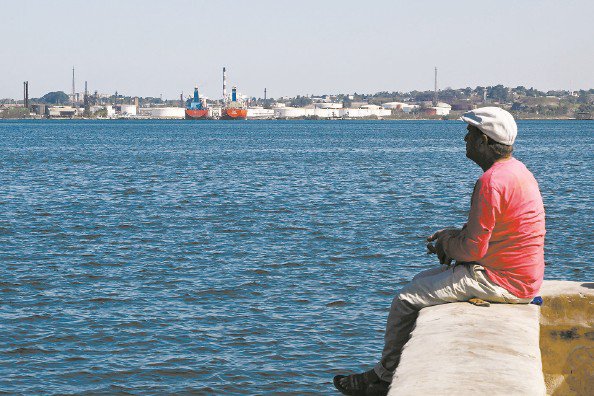
【环球财经】特朗普称墨西哥将停止向古巴输油
Xin Hua She· 2026-02-03 06:12
Core Viewpoint - The article discusses President Trump's announcement that Mexico will stop supplying oil to Cuba, indicating a shift in geopolitical relations and potential impacts on Cuba's economy and energy supply [1] Group 1: U.S.-Cuba Relations - Trump stated that Cuba is no longer receiving financial support from Venezuela, which may affect its economic stability [1] - The U.S. is currently engaging with Cuban leaders, suggesting a potential for future negotiations [1] Group 2: Mexico's Position - Mexico has not yet responded to Trump's claims regarding the cessation of oil supplies to Cuba [1] - Mexican President AMLO mentioned that Mexico is coordinating with the Cuban embassy in Mexico to determine specific humanitarian aid needs [1] Group 3: Cuba's Response - A Cuban official indicated that there is communication and information exchange between Cuba and the U.S., but no formal dialogue is taking place at the moment [1] - Cuba expressed willingness to engage in dialogue with the U.S. if certain conditions are met [1]
特朗普:美国正与古巴进行对话 “将达成协议”
Zhong Guo Xin Wen Wang· 2026-02-01 23:03
Core Viewpoint - The article discusses President Trump's announcement regarding ongoing dialogues with Cuba, suggesting a potential agreement may be reached between the two nations [1]. Group 1: U.S.-Cuba Relations - President Trump indicated that the U.S. is in contact with high-level officials in Cuba to monitor developments [1]. - The relationship between the U.S. and Cuba has been tense, particularly following U.S. military actions against Venezuela [1]. - Trump signed an executive order threatening tariffs on goods from countries supplying oil to Cuba, indicating a more aggressive stance [1]. Group 2: Cuban Response - In response to Trump's executive order, Cuba's Foreign Minister Rodríguez stated that the U.S. actions threaten the entire international community, leading Cuba to declare a "state of international emergency" [1].
特朗普再次表态:将与古巴达成协议
Xin Lang Cai Jing· 2026-02-01 22:24
Core Viewpoint - The article discusses the ongoing dialogue between the United States and Cuba, with President Trump expressing optimism about reaching an agreement with Cuba amidst heightened tensions in U.S.-Cuba relations [1] Group 1: U.S.-Cuba Relations - President Trump stated that the U.S. is engaging in discussions with high-level Cuban officials to monitor developments [1] - The relationship between the U.S. and Cuba is currently under significant strain, particularly following U.S. military actions in Venezuela [1] Group 2: Recent Actions and Responses - On January 29, Trump signed an executive order threatening to impose tariffs on goods imported from countries that provide oil to Cuba [1] - In response to the executive order, Cuban Foreign Minister Rodriguez declared a "state of international emergency," indicating the seriousness of the situation [1]
朗普再次表态:将与古巴达成协议
Yang Shi Xin Wen· 2026-02-01 18:58
Core Viewpoint - The U.S. is engaging in dialogue with Cuba, with President Trump expressing optimism about reaching an agreement [1] Group 1: U.S.-Cuba Relations - The relationship between the U.S. and Cuba is currently tense, particularly following U.S. military actions in Venezuela [1] - President Trump indicated that Cuba may become a focus for the U.S. after recent military actions [1] - An executive order was signed by Trump threatening tariffs on goods from countries providing oil to Cuba [1] Group 2: Cuban Response - Cuban Foreign Minister Rodriguez responded to the U.S. executive order, stating it threatens the international community [1] - In reaction to the U.S. actions, Cuba declared a "state of international emergency" [1]