自修复技术

Search documents
自修复复合材料可使飞机、汽车和航天器部件的使用寿命长达数百年
Xin Lang Cai Jing· 2026-01-27 03:20
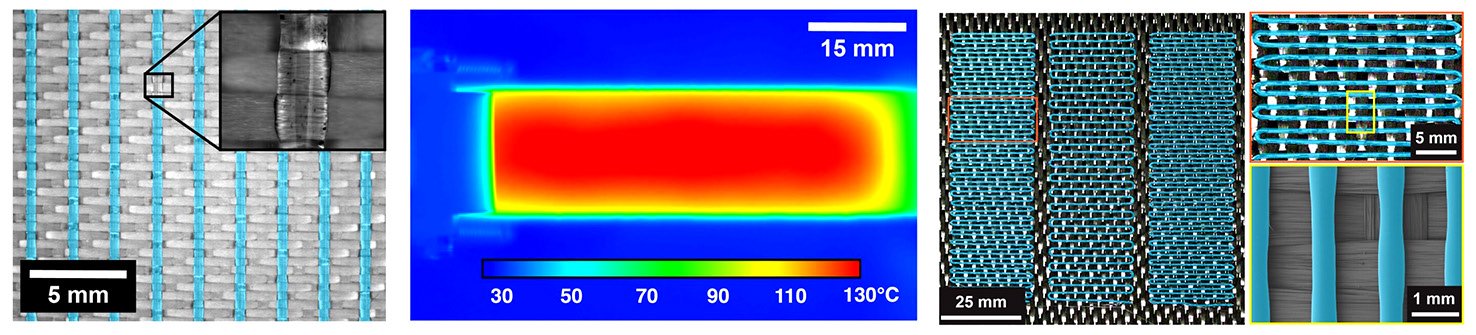
Core Viewpoint - Researchers have developed a self-healing composite material that significantly outperforms current materials used in aircraft wings and turbine blades, capable of self-repairing over 1,000 times, potentially extending the lifespan of traditional fiber-reinforced composites from decades to hundreds of years [2] Group 1: Material Properties and Innovations - The self-healing technology addresses interlayer delamination, a long-standing challenge in fiber-reinforced polymer composites since the 1930s, potentially allowing components to last up to 500 years compared to the typical lifespan of 15 to 40 years [2] - The self-healing material incorporates a thermoplastic repair agent 3D printed onto the fiber-reinforced layer, enhancing delamination resistance by 2 to 4 times [2] - A thin carbon-based heating layer embedded in the material melts the repair agent upon electrical activation, allowing it to flow into cracks and re-bond delaminated interfaces, restoring structural integrity [2] Group 2: Testing and Performance - An automated testing system was constructed to evaluate the long-term self-healing performance, subjecting the composite material to repeated tensile forces to induce delamination, followed by thermal repair [2] - The material underwent 1,000 fracture-healing cycles within 40 days, demonstrating a significantly higher initial toughness compared to unmodified composites, with superior crack resistance maintained over at least 500 cycles [2] Group 3: Potential Applications and Future Development - The self-healing function is expected to be triggered only after accidental damage or during routine maintenance, with an estimated lifespan of 125 years if repairs are needed quarterly, and up to 500 years with annual maintenance [2] - This technology holds particular value for expensive technologies like aircraft and wind turbines, and is especially critical for spacecraft operating in hard-to-reach environments where traditional repair methods are impractical [2] - The research indicates that while the repair capability may gradually decline over time due to fiber breakage and chemical interactions, self-healing remains effective over extended periods, with potential for permanent repair through statistical modeling [2]