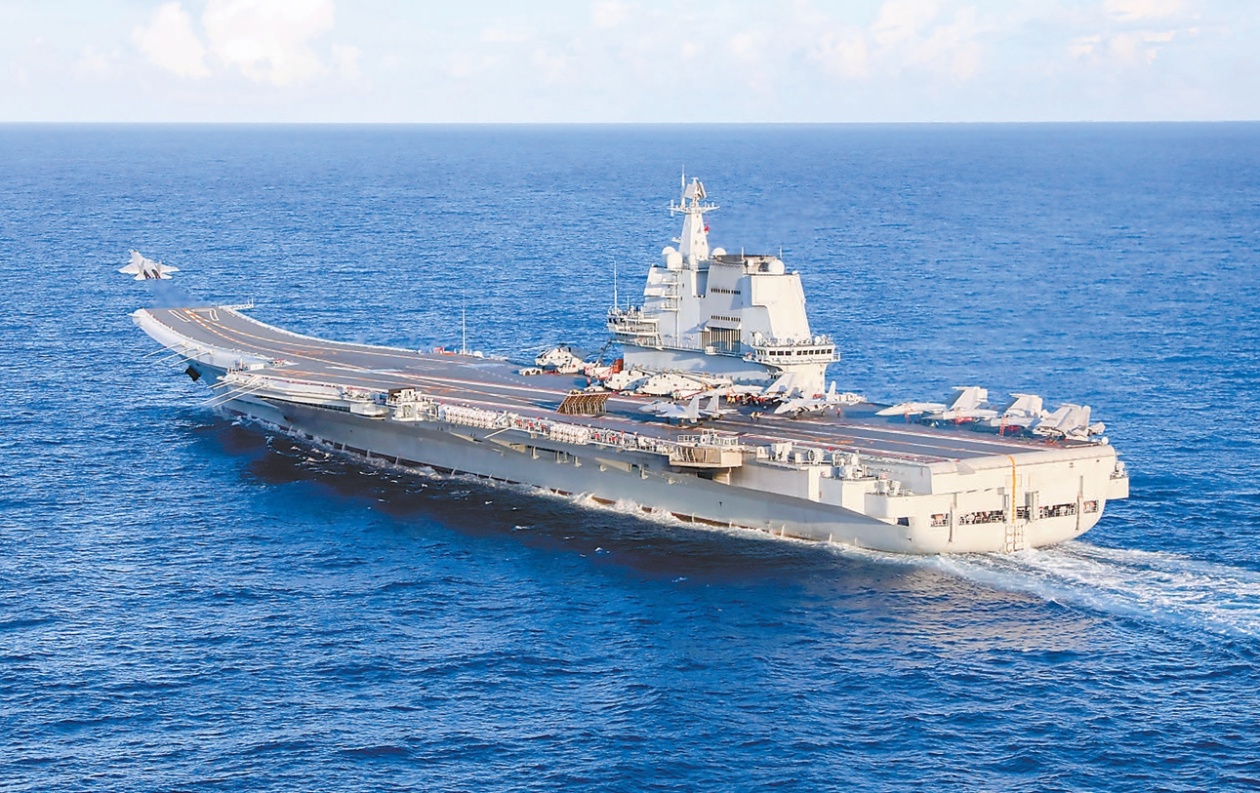
航母编队体系作战能力

Search documents
弹,弹,弹!福建舰上,三型舰载机弹射起飞
Mei Ri Jing Ji Xin Wen· 2025-09-22 14:20
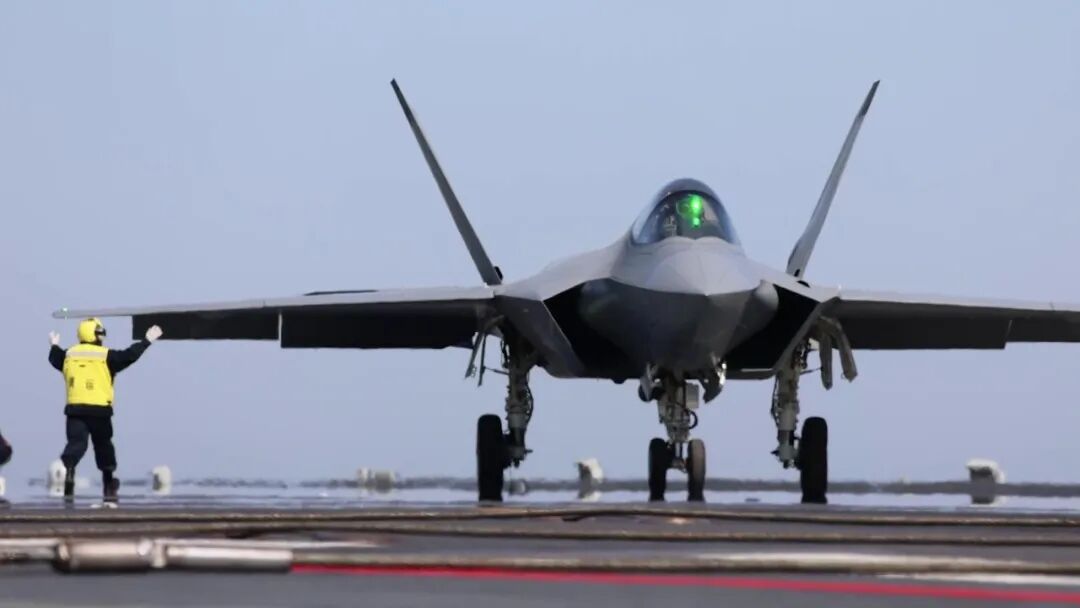
Core Viewpoint - The successful launch and recovery training of the J-15T, J-35, and KJ-600 carrier-based aircraft on the Fujian aircraft carrier marks a significant milestone in China's naval aviation development, indicating the carrier's capability for electromagnetic catapult launches and recoveries [1][3]. Group 1: Naval Aviation Development - The Chinese Navy has made significant advancements in carrier-based aviation, transitioning from single aircraft operations to a comprehensive system, and from shore-based to carrier-based operations, achieving a leap from sloped takeoff to catapult launches [3]. - The successful trials of the J-15T, J-35, and KJ-600 represent a breakthrough in China's aircraft carrier development, contributing to the transformation of the navy [3][4]. - The KJ-600, as China's first carrier-based fixed-wing early warning aircraft, enhances the naval command and control capabilities, significantly expanding the range of early warning and airspace monitoring [3][4]. Group 2: Strategic Implications - The successful operation of these aircraft allows for continuous control over relevant maritime areas, enhancing both defensive and offensive capabilities [4]. - The J-35, a fifth-generation stealth carrier-based fighter, is crucial for the navy's transition from "near-sea defense" to "far-sea defense," focusing on securing air superiority for carrier strike groups [4][5]. - The J-15T has improved operational capabilities compared to its predecessor, enabling enhanced strike capabilities against both land and sea targets [4]. Group 3: Technological Advancements - The integration of electromagnetic catapult technology significantly improves the efficiency of launching and recovering aircraft, ensuring the early warning system remains operational [4]. - The J-35 can take off quickly in a "full fuel + stealth configuration," while the J-15T can launch with "full fuel and armament," allowing for effective saturation attacks against adversaries [4][5]. - The increasing number of carrier-based aircraft will lead to generational upgrades in the operational capabilities of China's carrier strike groups [5][7].

中国双航母首次在西太演练,军事专家:表明航母编队体系作战能力又上新台阶
Huan Qiu Shi Bao· 2025-06-10 22:47
Core Viewpoint - The Chinese Navy's dual aircraft carrier exercise in the Western Pacific marks a significant advancement in its operational capabilities, demonstrating enhanced joint operational readiness and long-range defense capabilities [1][4]. Group 1: Military Developments - The Chinese Navy's Liaoning and Shandong aircraft carriers conducted their first simultaneous exercise in the Western Pacific, indicating a new level of operational capability for carrier strike groups [1][3]. - The exercise is part of a routine training plan aimed at improving mission execution capabilities and is consistent with international law and practices, not targeting any specific nation [1][4]. Group 2: Regional Reactions - Japan's Ministry of Defense reported the simultaneous presence of the two Chinese aircraft carriers in the Pacific, interpreting it as an effort by China to strengthen its long-range operational capabilities [3]. - The Chinese Foreign Ministry reiterated that the naval activities are in accordance with international law, urging Japan to adopt a more objective and rational perspective [4]. Group 3: Strategic Implications - Military experts suggest that the dual carrier exercise enhances the Chinese Navy's command and control procedures, reconnaissance capabilities, and communication efficiency, indicating a more mature use of carrier groups [4]. - The formation of dual carrier capabilities is seen as beneficial for addressing medium-scale maritime conflicts and enhancing national sovereignty and territorial integrity [4].