
行星视运动

Search documents
就在今晚,土星与海王星上演“星星相吸”
Qi Lu Wan Bao· 2025-08-06 08:43
Group 1 - The conjunction of Saturn and Neptune is set to occur on August 6, 2023, allowing the public to observe this event in the southeastern sky if the weather permits [1][4] - The term "conjunction" refers to the phenomenon where two celestial bodies have the same ecliptic longitude from the perspective of Earth, appearing very close together in the sky [4][5] - The recent conjunction follows a previous one on June 29, 2023, due to Saturn and Neptune's nearly synchronous movement in the constellation Pisces [4][6] Group 2 - The angular distance between Saturn and Neptune during this conjunction is approximately 1 degree, comparable to the width of two full moons [6] - At the time of conjunction, Saturn's brightness is about magnitude 0.8, making it relatively bright, while Neptune's brightness is around magnitude 7.8, rendering it invisible to the naked eye [6] - The transition of Saturn from direct motion to retrograde motion indicates that the observational conditions for Saturn are improving as it approaches its opposition on September 21, 2023 [8] Group 3 - This conjunction provides an opportunity for amateur astronomers to locate Neptune using small telescopes, especially during clear nights in early August [9]

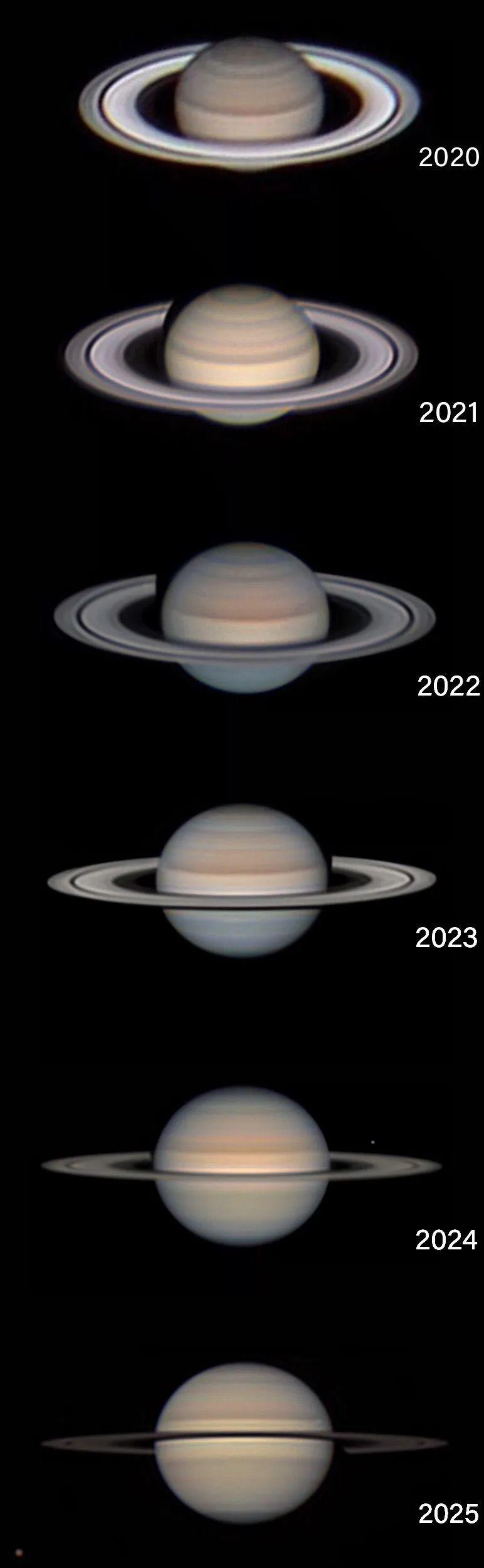
土星与海王星6日上演“星星相吸”
Xin Hua She· 2025-08-04 07:01
Core Points - The conjunction of Saturn and Neptune will occur on August 6, providing an opportunity for public observation in the southeastern sky if the weather permits [1] - Saturn is known for its prominent rings, earning it the nickname "Ringed King," while Neptune is the farthest known planet from the Sun and appears quite dim [1] - The term "conjunction" refers to the phenomenon where two celestial bodies have the same apparent longitude in the sky, making them appear close together from Earth [1] Summary by Sections - **Saturn's Motion**: Saturn has transitioned from direct motion to retrograde motion, indicating that the celestial event is reaching its peak as the September 21 opposition approaches [2] - **Brightness Comparison**: During this conjunction, Saturn's brightness is approximately magnitude 0.8, making it relatively bright, while Neptune's brightness is around magnitude 7.8, rendering it invisible to the naked eye [2] - **Observation Tips**: Enthusiasts can use small telescopes to locate Neptune by referencing Saturn, and it is recommended to find a clear, dark location for astrophotography during this period [2]