视觉芯片

Search documents
富瀚微:2025年净利同比预降39.84%-53.43%
Zhong Guo Zheng Quan Bao· 2026-01-30 13:46
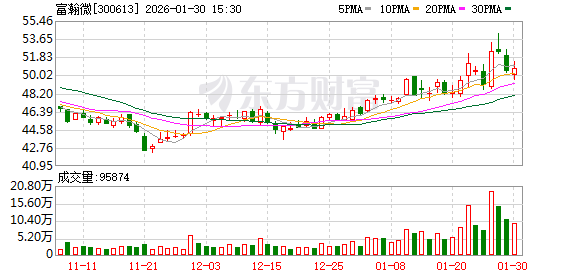
Core Viewpoint - The company Fuhang Microelectronics (富瀚微) has announced its earnings forecast for 2025, predicting a significant decline in net profit and non-recurring net profit compared to the previous year, primarily due to market changes and increased competition in low-cost products [4]. Financial Performance - The forecasted net profit for 2025 is expected to be between 120 million to 155 million yuan, representing a year-on-year decline of 39.84% to 53.43% [4]. - The expected non-recurring net profit is projected to be between 107 million to 142 million yuan, indicating a year-on-year decrease of 35.98% to 51.76% [4]. - As of January 30, the company's price-to-earnings ratio (TTM) is approximately 76.09 to 98.28 times, with a price-to-book ratio (LF) of about 4.28 times and a price-to-sales ratio (TTM) of around 7.24 times [4]. Market and Operational Insights - The company has been focusing on the visual technology sector, providing high-performance video encoding and decoding chips, image signal processors, and complete product solutions [12]. - The decline in revenue and gross profit is attributed to a shift in market demand towards lower-priced products and fluctuations in inventory from major clients, despite stable sales volume [12]. - To adapt to the deepening trends in AI applications, the company is enhancing its market expansion efforts and increasing investment in its sales team, which has led to a significant rise in sales expenses compared to the previous year [12]. - The company has also seen a decrease in government subsidies, which has negatively impacted net profit for the current period [12]. Historical Performance Trends - Historical data shows a downward trend in both net profit and non-recurring net profit over the past few years, with projections indicating continued declines into 2025 [13]. - The year-on-year growth rates for net profit and non-recurring net profit have shown significant decreases, with the forecast for 2025 reflecting a continuation of this trend [13].