超长锁定期

Search documents
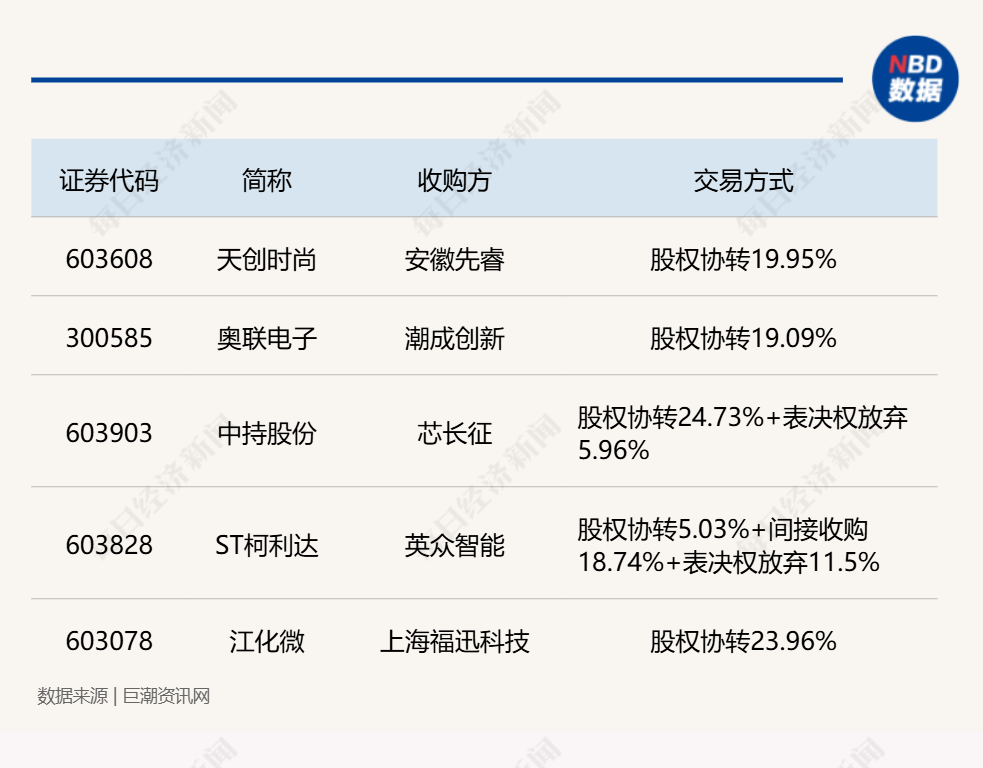
A股控制权交易现新动向:五家公司收购方集体承诺60个月超长锁定期,资本逻辑几何?
Mei Ri Jing Ji Xin Wen· 2026-01-22 06:56
Core Viewpoint - The announcement of a proposed change in control for Jianghua Microelectronics by Shanghai Fuxun Technology, which includes a 60-month share lock-up period, has sparked significant discussion in the capital market regarding extended lock-up periods, which exceed the statutory 18-month requirement by more than double [1]. Group 1: Control Change Cases - Jianghua Microelectronics is the fifth case in the A-share market within a month to feature a 60-month extended lock-up period for control changes, alongside Tianchuang Fashion, Aolian Electronics, Zhongchi Co., and ST Keli Da [1]. - The trend of extending lock-up periods to 60 months reflects a collective shift in the capital logic behind these transactions, indicating a focus on long-term investment strategies [1][11]. Group 2: Transaction Characteristics - The five cases predominantly utilized equity agreement transfers without employing the previously common voting rights entrustment model, likely due to regulatory uncertainties surrounding the latter [2]. - All five cases feature a 60-month lock-up commitment, signaling a strong long-term investment orientation from the acquirers [4]. - The funding sources for these transactions are primarily from the acquirers' own funds, with at least 50% of the total transaction amount being self-funded, enhancing transaction security [5][6]. Group 3: Pricing and Valuation - The transactions generally involved discounted pricing, with the transfer prices being lower than the closing prices prior to the announcements, which helps balance the interests of both parties involved [7][8]. - Jianghua Microelectronics' transfer price was set at 20 yuan per share, reflecting a discount of 6.63% compared to the previous closing price [8]. Group 4: Company Fundamentals - The companies involved are primarily small to mid-cap firms, with Jianghua Microelectronics having a market capitalization close to 10 billion yuan, while the others range between 3 billion to 5 billion yuan [9][10]. - Financial performance indicates that these companies are generally under pressure, with many facing declining profitability or losses, highlighting the need for strategic control changes [9][10].