防务一体化

Search documents
特朗普达沃斯讲话聚焦格陵兰岛,美军近期已做了这些军事调动
Xin Lang Cai Jing· 2026-01-26 23:59
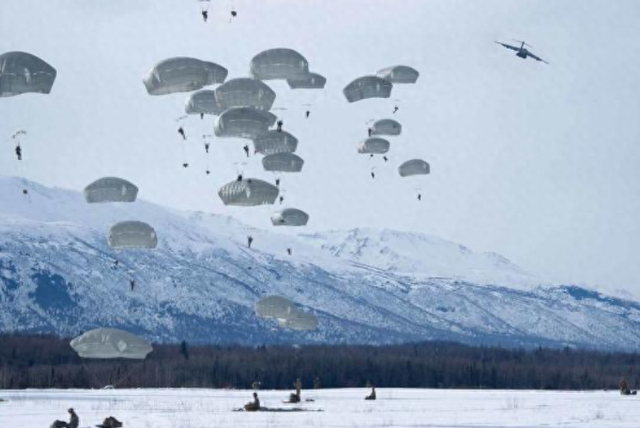
Core Viewpoint - The ongoing tensions between the United States and Denmark regarding Greenland's sovereignty have escalated, with President Trump indicating a willingness to consider military action to assert control over the territory, despite later statements downplaying the use of force [1][6]. Military Movements and Strategies - The North American Aerospace Defense Command (NORAD) announced the deployment of multiple aircraft to the U.S. base at Thule Air Base in Greenland to support planned operations, indicating a significant military presence in the region [2][4]. - The U.S. military has deployed dozens of F-22A and F-16 fighter jets to enhance its military presence in Greenland, emphasizing the strategic importance of the area [5]. - The 11th Airborne Division, known for cold weather operations, has been mobilized, with speculation that its troops could be prepared for potential deployment to Greenland [6][10]. Denmark's Military Response - In response to the geopolitical tensions, Denmark has decided to strengthen its military presence in Greenland, planning to send approximately 1,000 soldiers to the territory, alongside naval and air force support [10][11]. - Denmark's military capabilities are relatively limited, relying heavily on NATO and U.S. support, which raises concerns about its ability to counteract U.S. military actions if they were to occur [11][15]. NATO's Position and Implications - The situation has placed NATO in a precarious position, with internal conflicts potentially undermining its collective defense mechanisms, particularly the Article 5 mutual defense clause [13][14]. - There are fears that if the U.S. were to take military action against a NATO member, it could lead to a crisis for the alliance, with some experts suggesting it could signify the end of NATO as a cohesive entity [15][16]. - The recent military exercises involving multiple European nations in Greenland have been overshadowed by U.S. threats of tariffs against participating countries, further straining transatlantic relations [16].