隆达文化

Search documents
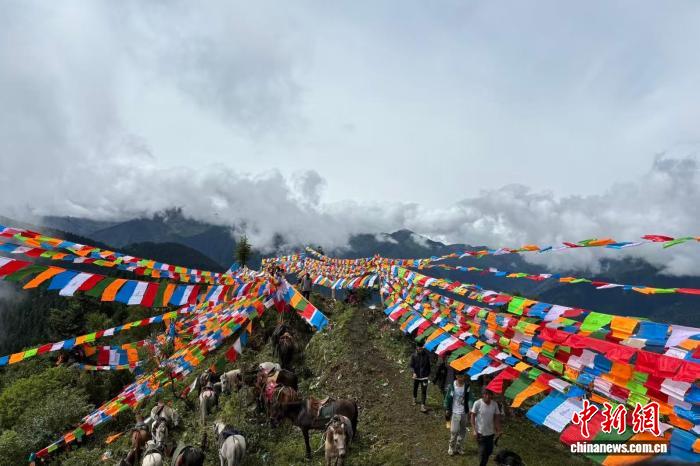
(新春见闻)雪域风马旗:高原上的“流动祝福”
Zhong Guo Xin Wen Wang· 2026-02-11 06:20
Core Viewpoint - The article discusses the cultural significance and evolution of the wind horse flag (风马旗) in Tibetan culture, particularly in the context of the upcoming Tibetan New Year, highlighting its role as a symbol of blessings and prayers [1]. Group 1: Cultural Significance - The wind horse flag, known as "隆达" in Tibetan, symbolizes the transmission of prayers and blessings to deities through the wind [1]. - The flag is intricately designed, often featuring a horse carrying a Mani jewel or prayer wheel, with four auspicious animals positioned at the corners, each holding specific symbolic meanings [3]. - The five colors of the wind horse flag represent the five elements in Tibetan cosmology, which resonate with the five elements in Han culture, showcasing a cultural fusion [3]. Group 2: Historical Development - The origin of the wind horse flag is believed to be linked to the Bon religion's sacrificial practices, evolving with the introduction of Buddhism and advancements in paper and printing technology [5]. - The flag's usage has expanded from ritualistic contexts to everyday life, becoming an essential cultural element in Tibetan society [5]. - Recent trends include the promotion of environmentally friendly materials for the flags, reflecting a blend of tradition and modern ecological awareness [5]. Group 3: Contemporary Relevance - The wind horse flag has found its way into contemporary creative industries, inspiring products like fridge magnets and ornaments, thus making ancient culture accessible to modern audiences [5]. - The upcoming Tibetan New Year is marked by the replacement of old flags with new ones, symbolizing renewal and hope within the community [1][3].