青少年网络安全

Search documents
青少年健康用网公益行动走进湖南两学校 700名学生共上防范隔空猥亵安全课
Sou Hu Wang· 2025-12-16 09:48
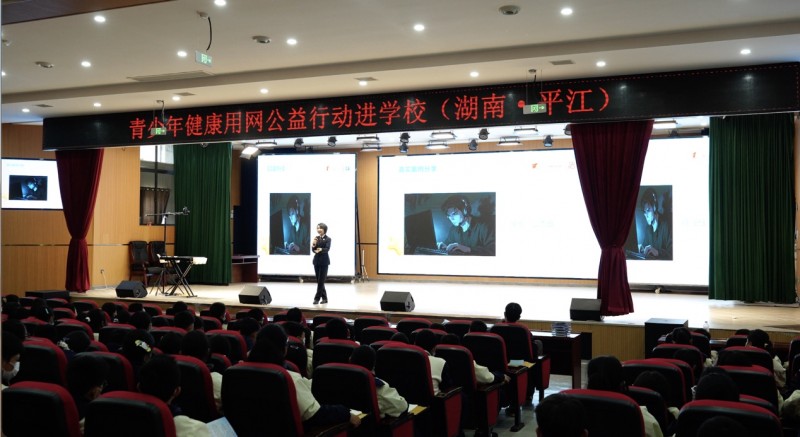
Core Viewpoint - The article highlights a public awareness campaign aimed at educating middle school students about online safety and the dangers of virtual sexual harassment, led by prosecutor Li Siyuan in collaboration with Kuaishou and local youth organizations [2][9]. Group 1: Event Overview - The campaign took place in Pingjiang County and Li Siyuan engaged nearly 700 first-year middle school students through lectures, interactive Q&A, and sand painting performances [2][9]. - The initiative is part of a broader effort by Kuaishou to promote safe internet usage among youth, responding to the central government's call for enhanced online safety measures [9]. Group 2: Educational Content - Li Siyuan conducted a survey among students regarding their internet usage and experiences with online traps, emphasizing the importance of recognizing and preventing virtual sexual harassment [3][5]. - She explained the definition, characteristics, and psychological impacts of virtual sexual harassment, using real cases and legal provisions to illustrate the issue [5][6]. Group 3: Prevention Strategies - Li Siyuan outlined three layers of defense against online harassment: mental vigilance (not trusting strangers), behavioral precautions (not sharing personal information), and technical measures (using parental controls and saving evidence) [6][7]. - She emphasized that boys can also be victims of virtual sexual harassment and provided a clear action plan for victims, including preserving evidence and seeking help from trusted adults [7]. Group 4: Collaborative Efforts - The campaign underscores the need for a collective approach to protect minors online, involving families, schools, society, government, and judicial departments [7]. - Kuaishou staff demonstrated features of their app designed to enhance online safety for minors, such as enabling minor mode and anti-violence functions [9].

某初中生长期沉迷网络虚拟世界,受队友蛊惑企图创立“同盟联军”并计划亲身模仿游戏内容于成年后轰炸学校,国家安全部披露——
Xin Jing Bao· 2025-12-16 01:32
Core Viewpoint - The rapid increase in the number of underage internet users in China, exceeding 196 million, has led to a concerning trend of younger children accessing the internet, which poses potential negative impacts alongside its benefits [1] Group 1: Negative Impacts on Youth - Some teenagers are becoming addicted to online games and are exposed to harmful information, which can distort their worldview and lead to negative attitudes towards life and society [2] - Exposure to extreme viewpoints online can blur the lines between morality and legality, potentially leading to behaviors such as bullying and even violent actions [2] - There is a risk of foreign entities using online platforms to undermine national identity and cultural confidence among youth, posing a threat to political and cultural security [3] Group 2: Regulatory and Protective Measures - The Chinese government has implemented regulations such as the "Regulations on the Protection of Minors Online" and has conducted special operations to combat harmful online environments for minors [5] - A comprehensive governance system is needed to create a healthy online environment for youth, involving collaboration between various stakeholders [5] - Schools and families are encouraged to work together to educate youth on identifying false information and understanding the dangers of extreme ideologies [7] Group 3: Awareness and Enforcement - National security agencies will work with relevant departments to raise awareness about the dangers of extreme online ideologies through case studies and public education [8] - There will be strict enforcement against the dissemination of harmful content that affects the mental health of youth, aiming to strengthen the protective network [8]

警惕互联网陷阱!合力守护青少年网络空间清朗 这四招很关键
Yang Shi Xin Wen Ke Hu Duan· 2025-12-15 23:40
Core Viewpoint - The rapid increase in the number of underage internet users in China, exceeding 196 million, has raised concerns about the negative impacts of online content on youth, including addiction to online games and exposure to harmful information [1] Group 1: Negative Impacts of Online Content - The internet exposes youth to extreme content that distorts values, promoting materialism and nihilism, which can lead to a negative worldview and conflict with family and society [2] - Some online content encourages violence and undermines legal norms, potentially leading to bullying and other dangerous behaviors among youth [2] - Foreign entities are using online platforms to spread anti-national sentiments and historical nihilism, which threatens national identity and cultural confidence among the youth [3] Group 2: Protective Measures and Regulations - The Chinese government has implemented regulations like the "Minor Internet Protection Regulations" and ongoing "Qinglang" campaigns to combat harmful online environments for minors [4] - Schools and families are encouraged to collaborate in educating youth about online literacy and the dangers of extreme ideologies, aiming for a unified approach to political, legal, and social outcomes [4] - Online platforms are being urged to enhance content moderation and improve mechanisms to identify and remove harmful content targeting youth [4] Group 3: Enforcement and Reporting - National security agencies are committed to strictly punishing the dissemination of extreme ideologies and harmful content, reinforcing a protective network for youth [5] - Citizens are encouraged to report harmful online information through various official channels to aid in maintaining national security [6]
Google says Australia’s teen social media ban ‘extremely difficult’ to enforce (GOOG:NASDAQ)
Seeking Alpha· 2025-10-13 10:04
Core Viewpoint - Alphabet-owned Google expressed concerns that Australia's new law prohibiting social media use for individuals under 16 would be "extremely difficult" to enforce and would not effectively enhance online safety for children [6] Group 1 - Australia is poised to become the first country to implement such a law regarding social media usage for minors [6] - Google highlighted that the enforcement of this law could lead to challenges in ensuring compliance and monitoring [6] - The company warned that the law may not achieve its intended goal of making children safer online [6]

印媒:禁用社交媒体,青少年就能安全吗?
Huan Qiu Shi Bao· 2025-08-07 22:57
Core Viewpoint - The recent Australian proposal to ban minors from using YouTube and other social media platforms has sparked intense debate, highlighting the challenges of ensuring online safety for youth in a digital age [1][2]. Group 1: Regulatory Changes - Australia has revoked the exemption previously granted to YouTube, mandating compliance with new online safety regulations aimed at protecting minors [1]. - The proposed "Social Media Minimum Age Law" will prohibit individuals under 16 from using platforms like YouTube, Facebook, and X [1]. Group 2: Effectiveness of Age Restrictions - Research indicates that strict age restrictions do not effectively prevent youth from encountering online dangers, as evidenced by Norway's experience where 72% of 11-year-olds continued to use social media despite a minimum age limit of 13 [1]. - The UK's Online Safety Act, intended to limit minors' access to social networks, has led to absurd situations where youth use virtual avatars to bypass facial recognition technology [1]. Group 3: YouTube's Influence and Risks - YouTube's viewing time surpasses that of traditional media giants like Disney and Netflix, showcasing its appeal but also revealing potential risks associated with its open platform [2]. - A study from Dartmouth College found that while YouTube's algorithm rarely recommends extremist content to users who do not seek it out, such content still exists on the platform [2]. Group 4: Call for Action - Policymakers are urged to push social media platforms to address inherent risks rather than simply imposing age restrictions, advocating for increased transparency in algorithms and targeted solutions from stakeholders [2].

Meta updates safety features for teens. More than 600,000 accounts linked to predatory behavior
CNBC· 2025-07-23 11:00
Group 1 - Meta introduced new safety features for teen users on Facebook and Instagram, including enhanced direct messaging protections to prevent exploitative content [1] - Teens will receive more information about their chat partners, such as account creation dates and safety tips, to help identify potential scammers [1] - The company reported blocking accounts 1 million times and receiving another 1 million reports after issuing a Safety Notice in June [2] Group 2 - Meta removed nearly 135,000 Instagram accounts earlier this year that were found to be sexualizing children, which included accounts leaving sexualized comments or requesting sexual images [3] - The takedown also involved 500,000 Instagram and Facebook accounts linked to the original profiles that were involved in the exploitation [3] - This initiative is part of a broader effort by Meta to protect teens and children on its platforms amid increasing scrutiny from policymakers [2]