
AI in All战略

Search documents
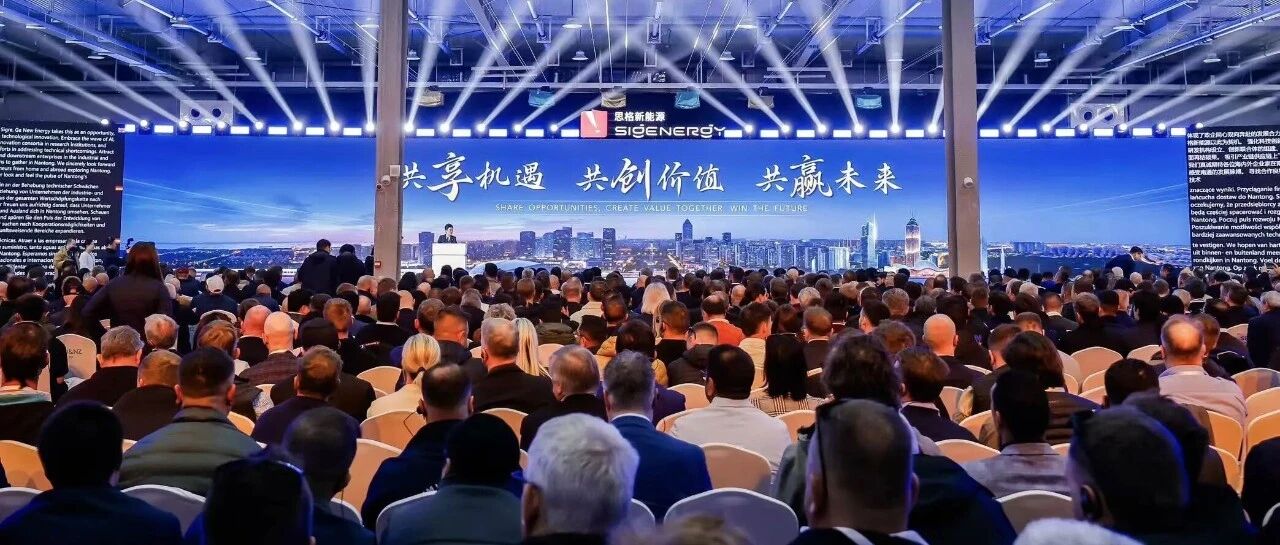
思格新能源南通智慧能源中心正式启用
中国能源报· 2026-03-13 09:49
Core Viewpoint - The article emphasizes the launch of the "AI in All" strategy by the company, aiming to deeply integrate artificial intelligence into products, software, manufacturing, and energy management systems, transitioning the energy system to a new stage of intelligence and optimization [2][5]. Group 1: Strategic Implementation - The "AI in All" strategy is designed to make AI a foundational capability across product design, system operation, energy dispatch, and user interaction, creating a smart energy system that continuously optimizes based on environmental changes and user needs [5]. - The company’s CEO highlighted the goal of achieving smarter energy management, optimized operational strategies, precise system control, and simplified user experiences through the integration of AI [5]. Group 2: New Energy Center - The newly inaugurated Nantong Smart Energy Center, covering an area of 136,000 square meters with an investment of 500 million yuan, is set to produce over 300,000 inverters and energy storage packs annually [7]. - This center represents a significant advancement in smart manufacturing, integrating AI throughout the entire industrial process, from research and development to precision manufacturing and global delivery [9]. Group 3: Manufacturing Capabilities - The Nantong center features a highly automated production line, achieving a production rate of one energy storage pack every 15 seconds and one inverter every 21 seconds, with a production pass rate of 99.9% [11]. - Advanced manufacturing techniques, such as high-level automatic welding and precision control, have been implemented to ensure high quality and efficiency, reducing labor needs by 80% and cutting process times by 50% [10]. Group 4: Product Launches - The company introduced several new products, including the SigenStor Neo for residential use, which integrates multiple energy management components into a single system for enhanced user experience [15]. - In the commercial sector, a 166kW photovoltaic inverter was launched, designed for high efficiency and reliability, alongside a modular energy storage solution that can scale from 50kWh to 10MWh [16]. - For large-scale solar power plants, a ground inverter was introduced with a maximum output of 460kW, featuring advanced safety and operational efficiency technologies [16][17]. Group 5: AI Integration - The company is incorporating AI capabilities into large-scale solar power operations, enhancing power generation efficiency and operational forecasting by integrating various data sources for more accurate predictions [17]. - This comprehensive product ecosystem aims to establish a full-scenario energy technology platform, supporting the transition to cleaner, smarter, and more sustainable energy systems globally [17].

集体大涨 三大利好速看!
Zheng Quan Ri Bao· 2025-12-05 11:13
Core Viewpoint - The collective surge in A-share and Hong Kong insurance stocks on December 5 is attributed to favorable news, fundamentals, and policies, alongside a positive market sentiment on that day [1] Group 1: Stock Performance - A-share insurance stocks saw significant increases, with China Pacific Insurance leading at a 6.85% rise, followed by Ping An at 5.88%, China Life at 4.61%, and New China Life at 4.57% [1] - Hong Kong insurance stocks also experienced gains, with China Taiping rising over 7%, Ping An nearly 7%, and China Life over 5% [1] Group 2: Positive News from Morgan Stanley - On December 5, Morgan Stanley included Ping An in its focus list, maintaining a "preferred" rating and raising the target price for Ping An A-shares from 70 yuan to 85 yuan (an increase of 21%) and H-shares from 70 HKD to 89 HKD (an increase of 27%) [2] - Morgan Stanley's positive outlook for Ping An is based on expected annual growth of 8% in Chinese residents' financial assets from 2024 to 2030, reaching 440 trillion yuan by 2030, and a growing demand for elderly care and high-end medical services [2] Group 3: Industry Fundamentals - Citic Securities expressed optimism about the insurance industry's future, stating that the sector is transitioning from a narrative of balance sheet recession to healthy expansion, with a confirmed upward trend expected to strengthen by 2026 [3] - The net assets of the insurance industry are projected to grow from 2.7 trillion yuan at the beginning of 2024 to 3.7 trillion yuan by September 2025, while total assets are expected to rise from 31.8 trillion yuan to 40.4 trillion yuan [3][4] Group 4: Sales and Investment Trends - The sales of participating insurance products are expected to exceed 50% of new policies for listed companies by 2025 [4] - The insurance sector is witnessing a rise in both volume and price in the bancassurance channel, with a 30% reduction in channel costs following the "reporting and operation integration" in 2023 [4] - The trend of insurance capital increasing its equity allocation is anticipated, with an estimated annual increase of 1.2 trillion yuan in equity funds based on a 20% equity ratio from a reallocated asset scale of 5 trillion to 6 trillion yuan [4] Group 5: Policy Support - On December 5, the National Financial Regulatory Administration released a new policy that benefits insurance stocks by adjusting risk factors for long-term holdings of certain indices [5] - The risk factor for stocks in the CSI 300 index and the CSI Dividend Low Volatility 100 index held for over three years was reduced from 0.3 to 0.27, while the risk factor for Sci-Tech Innovation Board stocks held for over two years was lowered from 0.4 to 0.36 [5][6] - This policy adjustment is expected to foster patient capital and support technological innovation, as well as enhance insurance companies' support for foreign trade enterprises [6]
