AI-assisted coding

Search documents
Introducing the Cognizant Enterprise Vibe Coding Blueprint: Services to Help Clients Accelerate AI-First Transformation
Prnewswire· 2025-10-17 04:01
Core Insights - Cognizant has launched the Enterprise Vibe Coding Blueprint, a suite of services designed to help Global 2000 organizations implement AI-assisted coding across various teams securely and at scale [2][3] - The initiative aims to empower employees, foster innovation, and facilitate a culture change within organizations by enabling rapid prototyping and collaboration [3][4] Group 1: Product Offering - The Enterprise Vibe Coding Blueprint includes advisory support, tool selection, security guardrails, and prototype evaluation to streamline the operationalization of AI-assisted coding [5][6] - Cognizant's approach is based on insights and tools developed during the record-setting Vibe Coding Week, which was recognized by Guinness World Records as the largest online generative AI-assisted coding event [2][6] Group 2: Market Demand and Impact - The suite is designed in response to sustained client demand for innovative solutions that bridge the gap between business intent and software delivery, particularly in large enterprises [3][4] - The Vibe Coding initiative has already seen significant participation, with over 250,000 employees registered and more than 32,000 prototype applications developed during the event [6] Group 3: Strategic Vision - Cognizant's CEO emphasizes that AI-first enterprises will differentiate themselves by empowering employees with structured tools for innovation [4] - The Vibe Coding Blueprint aims to democratize AI innovation by combining governance, enablement, and rapid prototyping to achieve tangible business outcomes [6]


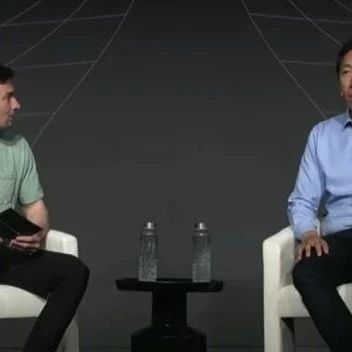
深度|吴恩达:语音是一种更自然、更轻量的输入方式,尤其适合Agentic应用;未来最关键的技能,是能准确告诉计算机你想要什么
Z Potentials· 2025-06-16 03:11
Core Insights - The discussion at the LangChain Agent Conference highlighted the evolution of Agentic systems and the importance of focusing on the degree of Agentic capability rather than simply categorizing systems as "Agents" [2][3][4] - Andrew Ng emphasized the need for practical skills in breaking down complex processes into manageable tasks and establishing effective evaluation systems for AI systems [8][10][12] Group 1: Agentic Systems - The conversation shifted from whether a system qualifies as an "Agent" to discussing the spectrum of Agentic capabilities, suggesting that all systems can be classified as Agentic regardless of their level of autonomy [4][5] - There is a significant opportunity in automating simple, linear processes within enterprises, as many workflows remain manual and under-automated [6][7] Group 2: Skills for Building Agents - Key skills for building Agents include the ability to integrate various tools like LangGraph and establish a comprehensive data flow and evaluation system [8][9] - The importance of a structured evaluation process was highlighted, as many teams still rely on manual assessments, which can lead to inefficiencies [10][11] Group 3: Emerging Technologies - The MCP (Multi-Context Protocol) is seen as a transformative standard that simplifies the integration of Agents with various data sources, aiming to reduce the complexity of data pipelines [21][22] - Voice technology is identified as an underutilized component with significant potential, particularly in enterprise applications, where it can lower user interaction barriers [15][19] Group 4: Future of AI Programming - The concept of "Vibe Coding" reflects a shift in programming practices, where developers increasingly rely on AI assistants, emphasizing the need for a solid understanding of programming fundamentals [23][24] - The establishment of AI Fund aims to accelerate startup growth by focusing on speed and deep technical knowledge as key success factors [26]