Advertising monetization

Search documents
Uber's Advertising Business May Be Bigger Than Investors Think
The Motley Fool· 2026-03-21 22:15
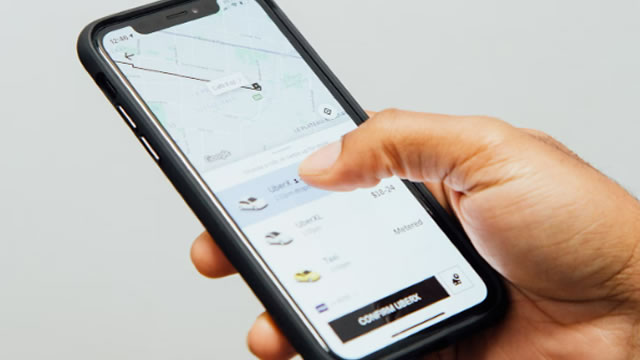
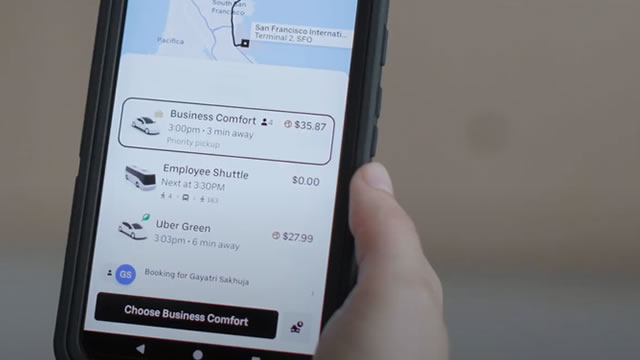
Core Insights - Uber Technologies is evolving beyond its traditional ride-hailing and food delivery services, with advertising emerging as a significant profit driver [1][3] - The advertising segment, initially seen as a limited monetization tool, is now recognized for its larger-than-expected potential [2][3] Advertising Business Potential - Uber's advertising penetration in delivery has surpassed the previously estimated 2% of gross bookings, achieving an annualized revenue run rate exceeding $2 billion [3] - Management's revised outlook on advertising indicates that early results are exceeding expectations, suggesting a promising growth trajectory [4] Advantages of Advertising - Advertising does not require additional resources like drivers or vehicles, allowing Uber to monetize existing demand on its platform [5] - The advertising business is expected to have significantly higher margins compared to Uber's core operations, similar to the successful model seen in companies like Amazon [6] Data-Driven Advertising - Uber's transaction-driven environment provides unique data that enhances the effectiveness of targeted advertising, creating strong commercial intent among users [8] - The ability to deliver relevant ads at the moment of transaction is a compelling advantage for advertisers seeking high returns on investment [8] Growth Opportunities - The advertising business is still in its early stages, with small and medium-sized businesses showing high adoption rates, while enterprise advertising is growing rapidly [9] - There is potential for advertising to expand beyond food delivery into areas such as grocery, retail, and mobility, which could unlock new revenue streams [10][11] Impact on Profitability - While advertising may not dominate revenue in the short term, it is expected to enhance overall profitability and earnings quality for Uber [13] - The introduction of high-margin revenue streams like advertising can significantly improve margins and contribute to long-term shareholder value [14]


Friday's Morning Movers: NFLX Upgrade, TTD Downgrade, GAP Misses Earnings
Youtube· 2026-03-06 15:30
GAP Performance - GAP reported quarterly earnings that missed expectations on both revenue and earnings per share (EPS), with EPS at 45 cents, falling short by one cent [2] - Revenue was reported at $4.236 billion, slightly below the expected $4.244 billion, indicating a miss on both metrics [3] - The company attributed the disappointing results to historic winter storms that caused temporary store closures, negatively impacting holiday quarter traffic and comparable sales, particularly at Old Navy [4] Brand Performance - Old Navy, GAP's largest brand, saw sales increase by only 3%, which was below expectations, while overall comparable sales also rose by 3% [5] - The GAP brand itself performed better, with comparable sales up 7%, exceeding expectations, and the CEO noted that the brand is regaining cultural relevance [5][6] - Athleta, another brand under GAP, experienced a decline in sales, with an 11% drop and a 10% decrease in comparable sales, prompting a need to reset product strategy [7][8] Market Reaction - Following the earnings report, GAP's stock experienced a decline, which was compounded by broader market weakness, despite a prior increase of 6% before the announcement [7] - The overall retail sector has seen negative reactions post-earnings, with other retailers like AEO and Abercrombie & Fitch also facing similar pressures [9]


Netflix Q4 Earnings Call Highlights
Yahoo Finance· 2026-01-20 23:12
Core Insights - The company is experiencing significant growth opportunities, currently capturing less than 10% of TV time in major markets and about 7% of the addressable market in consumer and advertising spend [1] Financial Performance and Guidance - For 2026, the company projects revenue of $51 billion, representing a 14% year-over-year increase, with key drivers being membership growth, pricing, and a doubling of ad revenue to approximately $3 billion [6][20] - The operating margin is expected to be 31.5% for 2026, with a two-point expansion anticipated, despite a half-point drag from M&A-related expenses [7] Content Strategy - The company will continue to invest in original content while expanding licensing agreements, including new deals with Sony, Universal, and Paramount [4][8] - Live programming is set to expand, with over 200 live events executed and plans to include international offerings [9] Acquisition of Warner Bros. Studios and HBO - The planned acquisition is framed as a complementary accelerator to enhance theatrical and production scale, with confidence in regulatory approval [5][18] - Post-acquisition, approximately 85% of revenues are expected to continue coming from the core business, emphasizing the deal's strategic alignment [17] Advertising and Monetization - The company aims to narrow the gap between average revenue per membership on ad-supported tiers and standard plans, with ad revenue expected to double in 2026 [20][22] - Initiatives to enhance the ad platform include expanding ad formats and interactivity, with modular interactive video ads set to roll out globally by Q2 2026 [22] Gaming Initiatives - The company is making strides in gaming, focusing on cloud-based TV games, with plans to expand access and develop new titles [24][25]

I Predicted Roku's Bounceback in 2025. Here's My Prediction for 2026.
The Motley Fool· 2026-01-20 19:05
Core Viewpoint - Roku's stock experienced a significant rebound in 2025, gaining 46%, but concerns about its future performance in 2026 have emerged due to potential issues in advertising monetization [2][3]. Group 1: 2025 Performance - Roku's stock rose 46% in 2025, outperforming the S&P 500, although it remains down 78% from its all-time high in 2021 [2]. - The company achieved strong growth with platform revenue increasing by 17% in each of the first three quarters of 2025 [6]. - Roku's cash flow improved significantly, reporting a trailing 12-month free cash flow of $443 million in Q3, the highest in years [7]. Group 2: Valuation and Growth Drivers - At the start of 2025, Roku's price-to-sales (P/S) ratio fell below 3, indicating a reasonable valuation for a company with double-digit growth [8]. - The company has two revenue streams: platform and device, with platform revenue being more attractive due to the negative gross margin of device revenue [6]. Group 3: Concerns for 2026 - There are concerns regarding the monetization of advertising, as growth metrics are strong but advertising revenue is not increasing at the same pace [10][12]. - Roku has access to a large audience, with 100 million households and 36.5 billion hours of content streamed in Q3, yet advertisers are not fully capitalizing on this viewership [11]. - The company faces competition from other platforms like Amazon and Walmart, which may impact demand for its advertising slots [13]. Group 4: Potential Upside - If advertising pricing improves in 2026, Roku could see significant upside, as large TV screens are appealing to advertisers [16]. - Roku is making strides in onboarding advertisers and has partnered with leading demand-side advertising platforms, which may enhance long-term growth [15].


What Would Have to Go Right for Uber Stock to Double From Here?
The Motley Fool· 2026-01-18 16:45
Core Viewpoint - Uber Technologies has successfully transitioned into a profitable global platform, generating consistent earnings and free cash flow, but for its stock to double, it requires a rerating driven by durable earnings growth rather than just revenue growth [1][2]. Group 1: Margin Expansion - Continued margin expansion is essential for Uber to double its stock value, with the market expecting steady mid-teens revenue growth while operating leverage is not fully priced in [3][4]. - The adjusted EBITDA margin has shown a gradual uptrend, and maintaining this trend is crucial for stock appreciation [4][6]. Group 2: Advertising as an Earnings Driver - Uber's advertising business is positioned as a significant driver for earnings acceleration, with higher incremental margins compared to rides or deliveries [7][8]. - For Uber's stock to double, advertising must evolve from a side business to a material contributor to earnings, requiring scale and discipline [9][10]. Group 3: Uber Eats and Investor Perception - Uber Eats influences investor valuation, and while it does not need to become a margin powerhouse, it must demonstrate margin expansion and increased engagement to shift from a valuation drag to a supporting asset [11][12]. - Removing structural discounts associated with Eats can significantly impact stock valuation, similar to adding a new growth engine [12]. Group 4: Execution Risks and Requirements - For Uber to achieve its stock doubling potential, all three factors—margin expansion, advertising scaling, and Eats stabilization—must work in concert [12][13]. - The company must maintain contribution-profit positivity at scale, ensure new category expansions do not erode unit economics, and reinforce higher-margin businesses [12][14].