Agricultural Intelligence

Search documents
临泽高标准农田建设冬季火热施工
Xin Lang Cai Jing· 2025-12-24 04:23
Core Viewpoint - The construction of high-standard farmland in Linze County is actively progressing, focusing on agricultural efficiency and farmer income enhancement through modern agricultural practices [1][2]. Group 1: Project Overview - The high-standard farmland project in Haowa Village commenced at the end of November, covering an area of 7,100 acres, and is being implemented in two phases [1]. - The total investment for the high-standard farmland projects in Linze County is 110 million yuan, with 85.3 million yuan coming from central and provincial subsidies, and 24.3 million yuan from local community contributions [1]. Group 2: Technological Integration - The smart water and fertilizer integration project will incorporate soil moisture monitoring, pest monitoring, weather alerts, and smart irrigation systems, creating a comprehensive smart management system [2]. - Compared to traditional irrigation methods, the new model can achieve water savings of 20% to 30%, while also allowing for precise fertilization based on crop growth needs, thereby enhancing fertilizer efficiency and grain yield per acre [2].
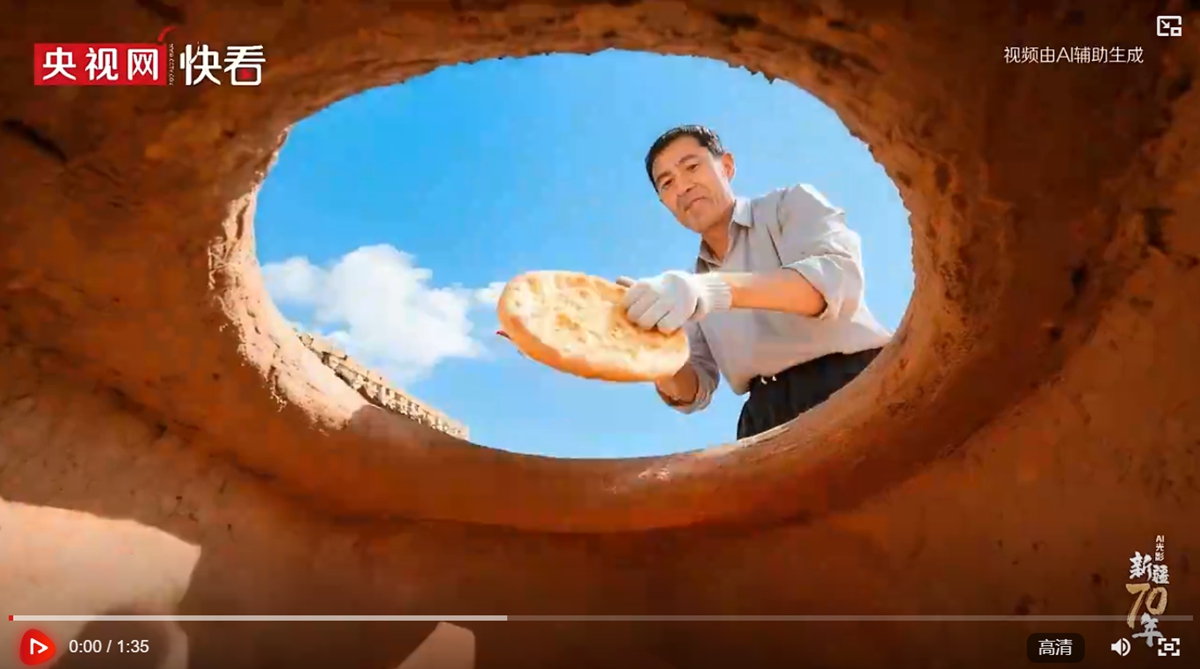
AI光影·新疆七十年|天山南北的丰饶赞歌
Yang Shi Wang· 2025-10-28 13:24
Core Insights - Xinjiang has transformed from a "desert wasteland" to a "grain warehouse" with significant agricultural advancements [2] - The irrigated area has expanded from over 27 million mu in 1955 to over 95.2 million mu today, with total grain production increasing from 1.1 million tons at the founding of New China to 23.302 million tons in 2024 [2] - Xinjiang is the only province in China to achieve a cumulative grain increase of over 10 billion jin in three years, marking a historic shift from "internal balance" to "national supply" [2] Agricultural Development - The region's agricultural success is attributed to the efforts of "turning desert into arable land" and the implementation of "smart irrigation" technologies [2] - Advanced technologies such as intelligent sensor networks and drone clusters are now utilized for precise agricultural management, replacing traditional labor-intensive farming methods [2] - Xinjiang boasts an average of over 4 mu of arable land per capita and continues to expand its oasis areas, contributing to its status as a significant grain-producing region in the country [2]