Altitude

Search documents
What it takes to film 60 Minutes on Mount Everest
60 Minutes· 2025-12-22 00:32
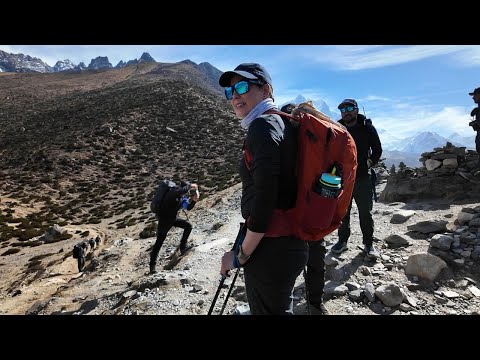
Project Overview - 60 Minutes team documented their journey to Everest base camp, highlighting the challenges and rewards [2] - The story focuses on the Sherpas of Nepal and the experience of hiking to Everest base camp [1] Team and Preparation - The crew included reporters, photographers, and sound recorders from various locations [4] - Pre-trip training was essential, involving exercise six days a week, including rowing, weight training, and cardio [5][6] - An altitude gym in Sydney simulated low oxygen conditions to prepare the team [6] Logistics and Support - Porters were crucial for carrying 800 lb (362.87 kg) of gear, as helicopters couldn't handle the weight at high altitudes [7] - The team relied on the porters for support, guidance, and cultural insights [7] Challenges and Risks - The journey included crossing a suspension bridge 45 stories high, causing fear and anxiety [9] - At base camp, the altitude made breathing difficult, with blue lips and audible heartbeats [9][10] - There was a risk of death during sleep, necessitating tent checks by the Sherpas [10] - An avalanche occurred near base camp, causing fear among the team [10][11] Altitude Effects - High altitude caused mental disorientation and slowed thinking [10] - Oxygen levels were monitored nightly, and the team was prepared to descend if necessary [9] Journey Highlights - The team hiked for five to six hours daily, stopping at villages for tea and meals like dal, rice, and momos [9] - Reaching base camp was a significant achievement, despite the harsh conditions [9] - The helicopter descent took only 3 hours, compared to the 10-day ascent [11] Reflections - The experience was physically and mentally challenging, with moments of wanting to quit [11] - The team was awestruck by the beauty and silence at high altitudes [11][12] - The journey was described as one of the most amazing and challenging experiences [12]