
Balance sheet expansion

Search documents
Northpointe Bancshares Q4 Earnings Call Highlights
Yahoo Finance· 2026-01-21 17:14
Core Viewpoint - Northpointe Bancshares reported significant balance sheet expansion and profitability growth in 2025, driven by its Mortgage Purchase Program (MPP) and retail mortgage channels, while providing initial guidance for 2026 [1] Group 1: Financial Performance - Total assets grew to over $7 billion in 2025, up from $5.2 billion at the end of 2024, largely due to the MPP business [2] - Full-year 2025 earnings per diluted share were $2.11, a 15% increase from $1.83 in 2024 [2] - Return on average assets improved to 1.33% from 1.08%, and return on average tangible common equity rose to 14.43% from 13.94% [2] Group 2: Mortgage Purchase Program (MPP) Highlights - Average MPP balances increased by $410.2 million from the prior quarter, with period-end balances up by $60.1 million [4] - Participations in MPP balances surged to $457.0 million by December 31, 2025, from $37.5 million at September 30, 2025 [5] - The average yield on the MPP business was 6.98% in the quarter, increasing to 7.22% when including fees, despite a 12 basis point decline from the prior quarter [6] Group 3: Residential Lending Performance - Northpointe closed $762.0 million in mortgages during the fourth quarter, an increase from $636.6 million in the prior quarter [6] - The company sold $665.6 million of mortgages in the quarter, representing about 87% of total closings, consistent with previous quarters [6] - 65% of saleable production came from the traditional retail channel, while 35% was from Consumer Direct, with the latter's increase linked to refinancing activity [6]
Wells Fargo Expects 2026 NII to Reach $50B: What's Fueling Growth?
ZACKS· 2026-01-19 18:46
Core Outlook - Wells Fargo & Company (WFC) projects total net interest income (NII) of $50 billion for 2026, indicating a strong growth momentum following the lifting of its $1.95 trillion asset cap in June 2025 [1][7] - The expected rise in markets-related NII is anticipated to reach $2 billion by 2026, reflecting management's ability to leverage a favorable operating environment [1][7] NII Growth Drivers - The bank has achieved a four-year compound annual growth rate (CAGR) of 7.5% in net interest income through 2025, driven by consistent loan expansion, disciplined deposit pricing, and active balance sheet management [5] - The removal of the asset cap allows Wells Fargo to compete more aggressively for loan and deposit growth, with expected mid-single-digit growth in average loans and deposits by Q4 2026 [6][9] - Stabilized funding costs due to Federal Reserve rate cuts are expected to support NII growth [6] Operational Efficiency - Wells Fargo is streamlining operations, investing in technology, and eliminating inefficiencies from past regulatory issues, which is expected to keep operating expenses well-controlled [8] - Lower operational costs will enhance the profitability of balance sheet growth, ensuring that rising NII translates into higher earnings and returns for shareholders [8][9] Peer Comparison - Bank of America (BAC) anticipates a 5-7% year-over-year increase in NII for 2026, following a 7.2% growth in 2025, supported by a favorable rate environment and technological efficiency [11] - Citigroup projects a 5-6% increase in NII for 2026, building on an 11% rise in 2025, with a stable interest rate environment aiding its outlook [12] Price Performance and Valuation - Wells Fargo shares have increased by 17.1% over the past year, compared to the industry's growth of 30.3% [13] - The company trades at a forward price-to-earnings (P/E) ratio of 12.46X, below the industry average of 14.83X [16] - The Zacks Consensus Estimate for WFC's earnings implies year-over-year increases of 12.3% for 2026 and 11.9% for 2027, with upward revisions in estimates over the past week [18]



Wells Fargo outlines $50B net interest income target for 2026 as balance sheet expansion accelerates (NYSE:WFC)
Seeking Alpha· 2026-01-14 18:57
Group 1 - The article does not provide any relevant content regarding company or industry insights [1]

Liquidity lifts bitcoin, but ‘halving cycle’ fears could limit rally in 2026, says Schwab
Yahoo Finance· 2026-01-06 15:59
Core Viewpoint - Bitcoin's price is influenced by a combination of long-term macro trends and short-term market-specific events as it approaches 2026 [1] Long-term Factors - The long-term factors affecting Bitcoin include global M2 money supply, disinflationary supply growth of Bitcoin, and its adoption [2] Short-term Drivers - Short-term drivers consist of market risk sentiment, interest rates, U.S. dollar strength, seasonality, central bank excess liquidity, supply of large Bitcoin wallets, and financial contagions [2] Current Market Conditions - As 2026 begins, several short-term variables are aligned favorably for Bitcoin, with tight credit spreads and a reduction in speculative derivative positions that contributed to the late 2025 selloff [3] - A supportive "risk-on environment" in equities is expected to benefit Bitcoin as it is viewed as a high-risk asset [3] Monetary Policy Impact - Monetary policy may provide a tailwind, with expectations of lower interest rates and a weaker dollar in the current year, alongside supportive liquidity from the end of quantitative tightening and renewed balance sheet expansion [4] Adoption Challenges - Adoption may slow in the first half of the year due to late-2025 volatility, but there is potential for improvement if regulatory clarity increases, particularly with the potential passage of the Clarity Act [4] Halving Cycle Considerations - The third year of the halving cycle has historically been challenging for Bitcoin, which may impact prices due to investor behavior following this cycle theory [5] - Historically, Bitcoin has gained about 70% from its annual low each year since 2017, but returns in 2026 are expected to fall short of this average [5] Correlation with Traditional Assets - There may be a shift in Bitcoin's correlation with traditional assets, with expectations that it will become less correlated to broader equity indexes, although it remains correlated to large-cap AI stocks [6]
Fed signaling they won't follow Trump-appointed dovish Fed chair, says Brookings' David Wessel
Youtube· 2025-12-08 19:08
Core Viewpoint - The Federal Reserve is likely to implement a quarter-point rate cut amid discussions of potential candidates for the next Fed chair, with current chair Jay Powell's influence somewhat diminished due to speculation surrounding his successor [2][4]. Group 1: Rate Cut Discussion - There is a push for a half-point rate cut, but rising bond yields suggest that a quarter-point cut is more probable [1][2]. - Some Fed bank presidents may dissent against the rate cut, indicating a divided opinion within the committee [2]. Group 2: Speculation on Fed Chair Successor - Speculation regarding Powell's successor is influencing the dynamics of the upcoming Fed meeting, potentially reducing Powell's clout [4]. - Candidates like Kevin Hasset and Scott Besson are mentioned, with Hasset being favored but not without opposition from some in the bond market [5][6]. Group 3: Balance Sheet and Monetary Policy - The Fed is expected to end its period of quantitative tightening (QT) and begin expanding its balance sheet again, although not at the scale of previous quantitative easing (QE) measures [9]. - The balance sheet expansion is anticipated to align with economic growth and currency supply, rather than a significant increase relative to GDP [9][11]. - The current regime of managing ample reserves is similar to practices of other central banks globally, and concerns about the Fed's large balance sheet are considered overstated [11][12].
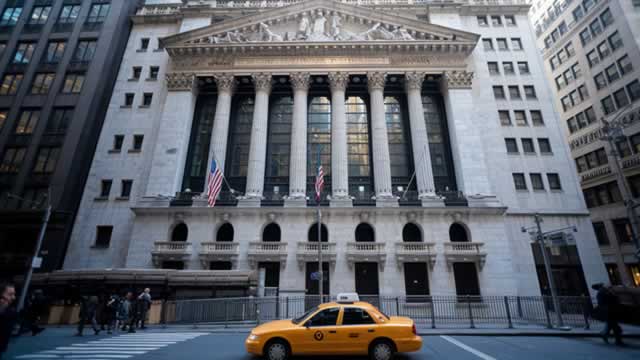
Fed's Williams: Fed may soon need to expand balance sheet for liquidity needs
Yahoo Finance· 2025-11-07 08:00
Core Viewpoint - The Federal Reserve Bank of New York is considering expanding its balance sheet through bond purchases as it assesses the level of reserves in the financial system [1][2]. Group 1: Balance Sheet Strategy - The next step in the Federal Reserve's balance sheet strategy involves determining when reserves have reached an ample level, transitioning from the current state of "somewhat above ample" [2]. - The Federal Reserve has decided to halt the process of shrinking its bond holdings, which had been in place for three years, effective December 1 [4]. - The overall balance sheet is currently maintained at $6.6 trillion, following a significant increase from $9 trillion during the pandemic due to aggressive bond purchases [4][6]. Group 2: Market Indicators and Expectations - Recent pressures in the repo market and signs of reserves shifting from abundant to ample suggest that the Federal Reserve may soon reach the ample reserves threshold [3][6]. - Analysts anticipate that the Federal Reserve could begin expanding its holdings through bond purchases in the first quarter of the upcoming year [6]. - The Federal Reserve is closely monitoring various market indicators related to the fed funds market and repo market to assess reserve demand conditions [7]. Group 3: Nature of Purchases - The bond purchases aimed at managing reserves will not be considered a form of monetary stimulus but rather a necessary step in implementing the ample reserves strategy [8].