
Brain drain

Search documents
Retirement is changing. Here’s why companies need to change, too
Yahoo Finance· 2025-12-31 14:05
Core Insights - The U.S. workforce is facing a significant transformation as a large number of employees are reaching retirement age, with more Americans turning 65 in 2025 than in any previous year, a trend expected to continue through 2027 [1] - A demographic decline in birth rates over the past two decades is leading to a projected labor shortage by 2032, marking the largest in U.S. history [2] Group 1: Phased Retirement - Employers are encouraged to adopt "phased retirement," which allows older employees to gradually reduce their work hours and responsibilities while still contributing their expertise [4] - This approach can help companies mitigate the effects of workforce contraction by retaining institutional knowledge and facilitating succession planning [6] Group 2: Workforce Needs - Over 70% of U.S. employers report difficulty in finding skilled workers, with many recent graduates lacking essential soft skills such as communication and leadership [5] - Retaining experienced employees as mentors can help instill these critical competencies in newer workers [5] Group 3: Older Workers' Perspectives - Many retirees are increasingly interested in continuing to work post-retirement, with those aged 65 and older nearly twice as likely to be employed today compared to the late 1980s [7] - Reasons for this trend include the desire for financial sustainability and the need for engagement in a workplace community [7][8] - Some retirees find the transition from full-time work to retirement abrupt and may seek to maintain a connection to their previous work structure and social networks [8]
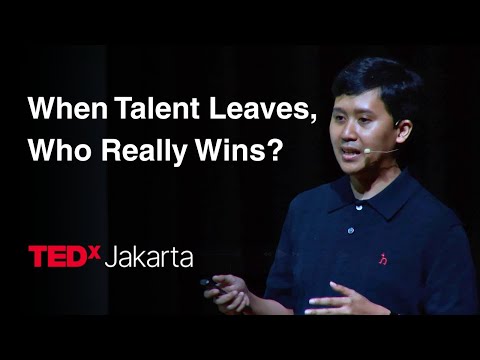
Indonesia’s Global Talent: Why Diaspora Matters | Primawan Satrio Bindono | TEDxJakarta
TEDx Talks· 2025-09-12 15:31
Job Market Analysis - Job market competitiveness is significantly influenced by the ratio of job openings to applicants, with Indonesia facing higher competition (1 job opening for almost 7 people) compared to countries X (1:0.8) and Y (1:4.6) [1][3][4] - Countries X and Y, facing aging populations, are actively seeking skilled foreign workers to address labor shortages [2][5] - Common considerations for job seekers when applying for overseas positions include career advancement, financial benefits, and improved quality of life [6] International Opportunities - Countries X and Y have multiple universities in the top 100 QS rankings, potentially offering better research grant opportunities [8] - Exposure to multinational companies enhances job prospects for professionals seeking international opportunities [9] - Countries X and Y offer stronger job security and support systems for employees facing layoffs [9][10] Economic Comparison - The minimum wage in the capitals of countries X and Y ranges from Rp129,000 to Rp270,000 per hour, requiring approximately 2 to 23 hours of work to purchase 10 kg of rice [11] - Jakarta's minimum wage is Rp30,700 per hour, necessitating about 49 hours of work to acquire the same amount of rice [11] Brain Drain & Brain Gain - Indonesia faces the challenge of brain drain but can transform it into brain gain by supporting its diaspora and facilitating their contributions [15][16] - Engaging the diaspora in knowledge sharing, joint research, and remote work can bridge talent gaps and benefit Indonesia [16][17] - Remittances from Indonesian migrant workers reached approximately Rp15 trillion in 2024 [19] - The diaspora can act as a bridge for foreign direct investment (FDI) into Indonesia [20] Government Initiatives - Indonesia needs long-term development plans, potentially focusing on STEM fields and material science, to leverage its diaspora [22][23] - Enhancing collaboration with the diaspora, supporting their career development, and offering competitive benefits are crucial for attracting them back to Indonesia [24]

X @The Economist
The Economist· 2025-07-19 20:20
Industry Risk - Brain drain and government policies could threaten the region's semiconductor supply chain success [1]