
Climate Investment and Financing

Search documents
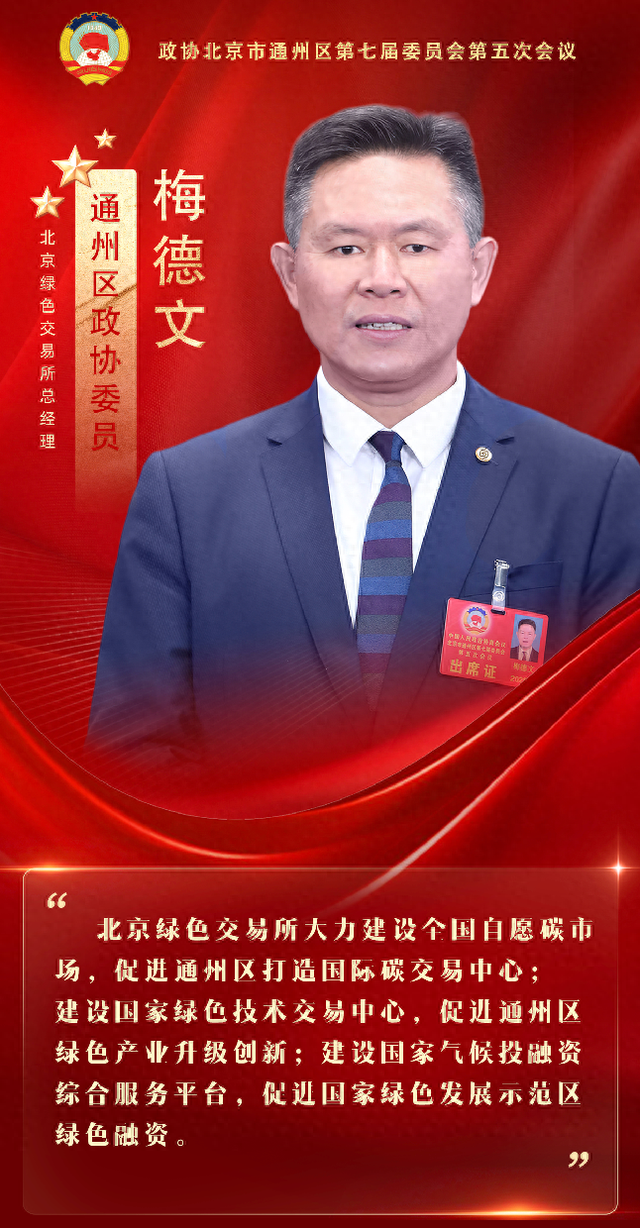
北京通州区政协委员履职实践赋能副中心“十五五”发展
Xin Lang Cai Jing· 2026-01-04 11:44
Group 1 - The core focus of the Beijing Tongzhou District's development during the 14th Five-Year Plan period is on high-quality growth, with an emphasis on green transformation and social governance [1][2][5] - The district aims to establish itself as a national model for green development, leveraging its status as a core area for climate investment and financing [2] - The integration of carbon trading, green technology transactions, and climate financing is being prioritized to support the district's green development initiatives [2] Group 2 - Social governance efforts are being enhanced through community engagement and collaborative problem-solving to create a participatory urban governance model [5] - Urban planning initiatives focus on improving transportation networks, public service distribution, and green energy applications to elevate the district's functional capabilities [5] - Legal services are being extended to grassroots levels to prevent conflicts and enhance the legal foundation of social governance in the district [5][6]

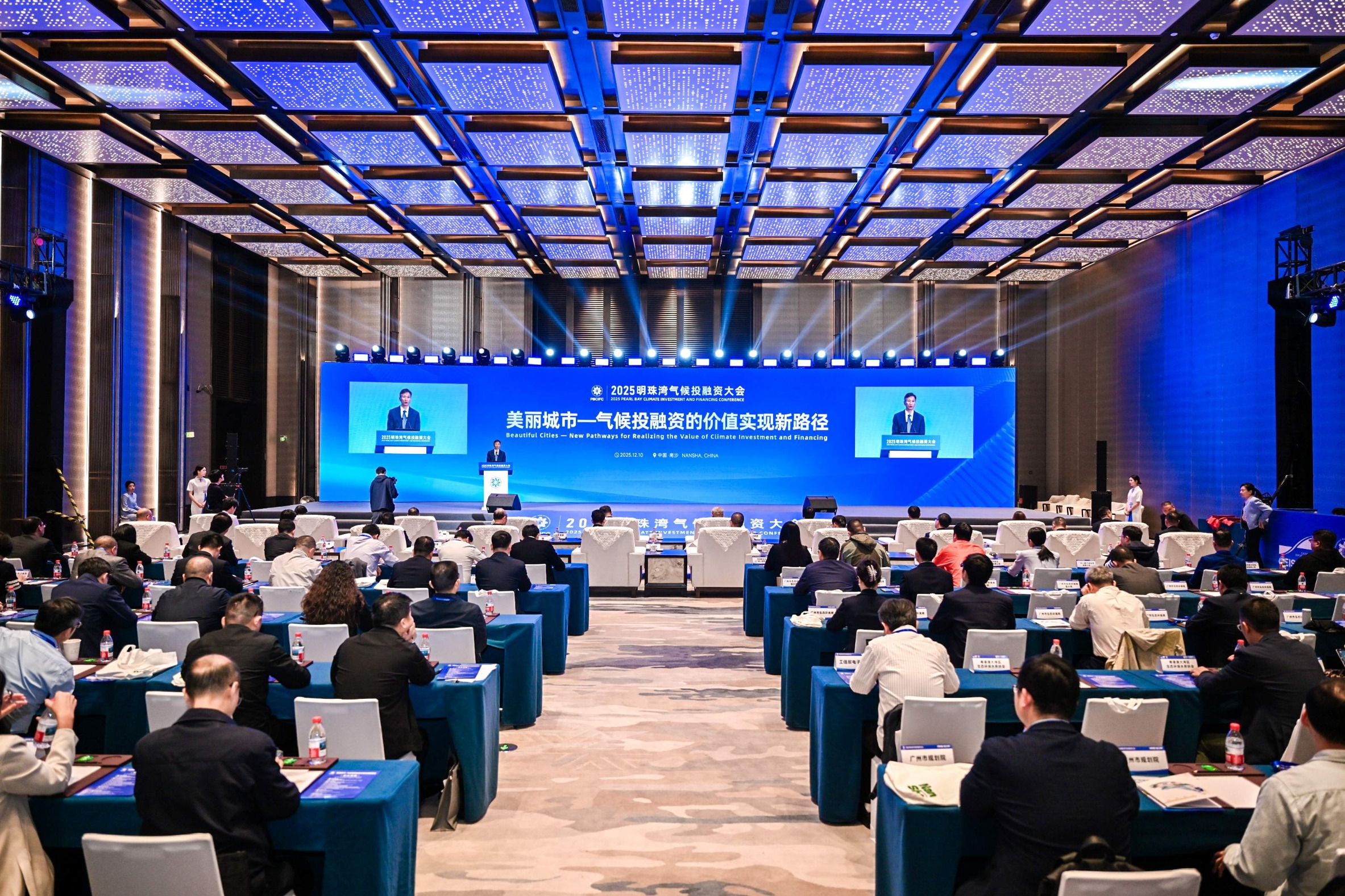
凝聚绿色发展动能 绘就美丽湾区新画卷——2025明珠湾气候投融资大会聚焦气候投融资赋能美丽城市建设
Xin Hua Cai Jing· 2025-12-11 13:48
Core Insights - The conference focused on climate investment and financing as a key lever to direct funds towards green and low-carbon sectors, aiming to explore a win-win path for ecological civilization and high-quality development in mega cities [1][3]. Group 1: Climate Investment and Financing - Climate investment and financing are recognized as essential for achieving a virtuous cycle of urban development and supporting the construction of beautiful cities [3]. - The Guangdong province is leading the way in innovative mechanisms for climate investment, establishing a provincial-level promotion mechanism and supporting Guangzhou in creating a multi-dimensional construction model [3][5]. - Guangzhou has integrated climate investment into its urban planning and governance processes, establishing a dedicated working group and a technical support unit for beautiful city construction [3][5]. Group 2: Innovative Practices and Financial Mechanisms - Guangzhou has developed a project library with nearly 100 billion yuan in total investment, facilitating the launch of eight projects and securing financing of nearly 10 billion yuan [5]. - The city’s green loan balance has surpassed 1.6 trillion yuan, with green bonds issued exceeding 259 billion yuan, showcasing the depth of green financial product innovation [5]. - The "Guangdong Carbon Label" pilot program has been initiated to enhance the competitiveness of local enterprises in international markets by managing carbon footprints [6]. Group 3: Ecological Restoration and Urban Resilience - The conference highlighted successful ecological restoration projects, such as the rehabilitation of wetlands in Macau, which have improved biodiversity and attracted rare bird species [4]. - The construction of climate-resilient cities has evolved into a comprehensive system that includes monitoring, natural solutions, and regional collaboration [4]. - The Guangdong-Hong Kong-Macao Greater Bay Area is implementing a high-precision monitoring network for disaster early warning and promoting nature-based solutions [4]. Group 4: Future Plans and Goals - The "Beautiful Guangzhou Construction Planning Outline" aims for significant achievements by 2027 and a harmonious coexistence between humans and nature by 2035, with 28 specific indicators set for implementation [14]. - The upcoming 2025 National Games in Guangzhou will focus on green, low-carbon, and sustainable practices, with a commitment to achieving carbon neutrality through various initiatives [15]. - The South China region is expected to enhance its ecological environment as a foundation for high-quality development, with a vision for a future city characterized by beautiful rivers, coastlines, and strategic platforms [15].
政策引导银行业加快发展碳金融 绿色金融助力实现双碳目标
新华财经信息咨询· 2025-03-17 06:13
Investment Rating - The report emphasizes the importance of developing carbon finance in the banking and insurance sectors to support green and low-carbon economies, aligning with national dual carbon goals [2][7]. Core Insights - The report outlines a comprehensive plan for enhancing green finance, focusing on carbon market construction and innovative financial services related to carbon accounts [2][8]. - It highlights the necessity of integrating climate investment and financing into the financial system, addressing both mitigation and adaptation strategies for climate change [14][15]. Summary by Sections Section 1: Supporting Carbon Market Construction - The report discusses the implementation of the "High-Quality Development Implementation Plan for Green Finance in Banking and Insurance," which aims to strengthen financial support for key areas, including carbon market development [2][8]. - It identifies carbon trading as a market-based policy tool to encourage companies to reduce carbon emissions and adjust energy structures [7][9]. Section 2: Innovating Financial Services Around Carbon Accounts - Carbon accounts are becoming essential for financial pricing, with banks using them to monitor and manage emissions and reduction efforts [10][11]. - The report encourages banks to leverage carbon account data to create innovative financial products, such as "carbon loans," which provide differentiated support based on carbon reduction performance [10][12]. Section 3: Climate Investment and Financing - The report defines climate investment and financing as crucial for achieving national low-carbon development goals, focusing on both mitigation and adaptation efforts [14][15]. - It outlines various strategies for mitigating climate change, including optimizing energy structures and supporting carbon capture technologies [16][17]. - The report also emphasizes the importance of financing agricultural projects that enhance climate resilience, such as high-standard farmland construction [17].