
Closing Costs

Search documents
Mortgage Rates Just Dipped Below 6%–Here's When to Refinance
The Wall Street Journal· 2026-02-26 17:42
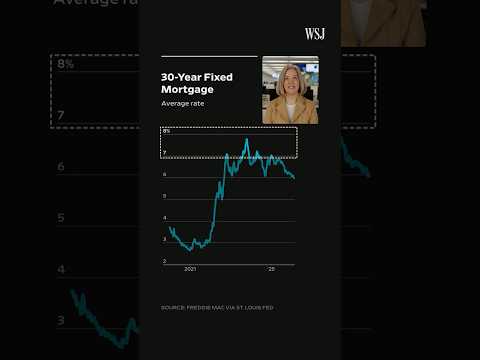
Mortgage rates are dipping below 6% and that's tempting for people who want to refinance, especially those who have mortgage rates in the 7 to 8% [music] range. But before you refi, you need to do the math. Closing costs have surged in recent years, and they typically range from 2 to 6% of your new loan balance.On a $400,000 mortgage, that translates to about $8,000 to $24,000 in fees. To make a refi worthwhile, you need a rate that's at least half a percentage point lower than your current rate, and you'll ...

Refinancing a home? Here's what you need to know
Yahoo Finance· 2025-10-12 20:00
Well, refinancing a mortgage allows a homeowner to trade in their existing loan for a new one with better terms like a lower principal, interest rate, or monthly payment. But there is a cost to refinancing. Here to break down what homeowners can expect to pay, Yahoo Finance personal finance editor Laura Grace Tarpley.So, Laura Grace, what are some of the closing costs that people have to be aware of with refinancing. >> Hi, Julie. Yeah.So, like you just said, when you refinance your mortgage, what you're ac ...
Are closing costs tax deductible?
Yahoo Finance· 2024-10-31 17:18
Core Insights - Closing costs are an essential consideration when purchasing a home, typically ranging from 2% to 5% of the home's purchase price, with a national median sale price of $446,000 translating to upfront costs between $8,920 and $22,300 [1][2] Closing Costs Overview - Closing costs encompass fees for lender and third-party services related to mortgage loans, including appraisal, surveying, real estate taxes, prepaid interest, and various insurance types [2] - Buyers pay closing costs alongside their down payment at the closing appointment, where loan documents are signed and the mortgage is finalized [3] Tax Deductions - Tax deductions can help offset some closing costs, with most closing costs being non-deductible, but exceptions include mortgage interest, discount points, and property taxes [6][17] - The mortgage interest deduction allows homeowners to deduct interest paid on mortgage balances up to $750,000, or $375,000 for married couples filing separately [7][8] - Discount points, which are fees paid to lower the mortgage interest rate, can also be deducted, provided they are incurred on a mortgage for a primary residence [10][11] Property Taxes - Property taxes prepaid at closing are tax-deductible and are part of the SALT deduction, with a temporary increase allowing up to $40,000 in deductions starting from the 2025 tax year [13] Itemized vs. Standard Deductions - Homeowners must choose between itemizing deductions or taking the standard deduction, which for the tax year 2025 is $15,750 for single filers [4][6] - If itemized deductions are less than the standard deduction, the latter may be more beneficial [15] Strategies to Offset Closing Costs - Homebuyers can seek assistance for closing costs through donations, crowdfunding, or local assistance programs, which may not require repayment if certain conditions are met [15][16] - Improving credit scores before applying for a loan can lead to lower down payments or interest rates, reducing overall costs [16] - Shopping around for mortgage lenders and service providers can help identify which closing costs are negotiable [17]