Cloud Storage

Search documents
Backblaze's Laquie T.N. Campbell to Moderate SMPTE Panel on the Future of Live Sports Systems at NAB Show 2026
Businesswire· 2026-03-26 21:13
SAN MATEO, Calif.--(BUSINESS WIRE)---- $blze #Cloud--Backblaze, Inc. (Nasdaq: BLZE), the high- performance cloud storage platform for the AI era, today announced that Laquie T.N. Campbell, Senior Product Marketing Manager, Media & Entertainment at Backblaze, will speak at NAB Show 2026 in the SMPTE panel session, "From Build to Broadcast to Fan Experience in Live Sports Systems.†The panel will take place Saturday, April 18, from 3:00 to 3:55 p.m. in room N259. Presented as part of the SMPTE Visual Innovatio ...



Backblaze(BLZE) - 2025 Q4 - Earnings Call Transcript
2026-02-23 23:02
Financial Data and Key Metrics Changes - For Q4 2025, total revenue was $37.8 million, in line with guidance, and adjusted EBITDA margin reached 28%, doubling from the prior year [6][17] - Full year revenue grew 14% year-over-year, with B2 Cloud Storage growing 26% [6][17] - Adjusted Free Cash Flow was positive $4 million in Q4, representing a margin of 11% [20][23] Business Line Data and Key Metrics Changes - B2 revenue grew 24% year-over-year in Q4, up from 22% in the prior year [17] - B2 net revenue retention (NRR) was 111%, down from 116% in the prior quarter, reflecting variability from a large customer [18] - The number of customers generating over $50,000 in ARR increased by 35% year-over-year, with their ARR growing 73% year-over-year to $26 million [8][18] Market Data and Key Metrics Changes - The market for NeoClouds is projected to reach $237 billion within the next five years, with Backblaze estimating a $14 billion opportunity in NeoCloud storage by 2030 [13] - The company added 12,000 customers in its self-serve platform this year, indicating strong demand from AI developers [15] Company Strategy and Development Direction - Backblaze is focusing on a go-to-market transformation to drive growth, including initiatives to increase awareness, drive pipeline consistency, and expand revenue within the existing customer base [9][10] - The company is positioning itself to take advantage of the AI opportunity by becoming the storage backbone for AI workflows [11][12] Management's Comments on Operating Environment and Future Outlook - Management expressed confidence in the long-term growth opportunity presented by AI, despite potential market volatility [11] - The company anticipates some pressure on gross margins due to increased costs but is launching a gross margin optimization initiative [19] Other Important Information - The company closed its largest contract in history with over $15 million in total contract value, validating product-market fit at scale [17] - Management is shifting part of compensation to Performance-Based Stock Units to align incentives with shareholders [21] Q&A Session Summary Question: Can you explain how B2 Neo differs from B2 and the demand patterns? - B2 Neo is a white label offering designed for NeoClouds, allowing them to manage storage for their customers through APIs, while B2 is sold directly to end customers [27][28] Question: What is the duration of the $50 million contract? - The contract is a three-year deal [75] Question: What is the expected decline in the computer backup business? - The computer backup business is expected to decline by 5% year-over-year, with a -3% decline in Q1 [32] Question: What factors are affecting gross margins? - Increased data center costs and the need to accelerate capital expenditures are expected to reduce gross margins by a few hundred basis points [52] Question: What is the outlook for NRR in 2026? - NRR could drop to around 100% for 1 or 2 quarters due to the lumpiness of a large customer, but is expected to stabilize around 110% by year-end [61][63]
NetApp Gearing Up to Report Q3 Earnings: Here's What to Expect
ZACKS· 2026-02-20 15:51
Core Insights - NetApp, Inc. (NTAP) is expected to report third-quarter fiscal 2026 earnings on February 26, with non-GAAP earnings per share projected between $2.01 and $2.11, and a Zacks Consensus Estimate of $2.07, reflecting an 8.4% year-over-year growth [1][10] Financial Performance - Anticipated net sales for the quarter are between $1.615 billion and $1.765 billion, with a Zacks Consensus Estimate of $1.69 billion, indicating a 2.9% increase from the previous year [2] - NTAP has beaten earnings estimates in three of the last four quarters, with an average surprise of 2.68% [2] Demand and Product Performance - There is increasing demand for NetApp's modern all-flash arrays, particularly the C-series and ASA products, with All-Flash Array revenues rising 9% year-over-year to $1 billion in the fiscal second quarter, equating to an annualized run rate of $4.1 billion [3][10] - The company is also seeing growth in its cloud storage and AI solutions, having launched AFX and AIDE, and closed around 200 AI-related deals [4] Public Cloud Segment - The Public Cloud segment's revenues increased by 2% to $171 million, with an 18% growth year-over-year when excluding the divested Spot business; first-party and marketplace cloud storage services grew by 32% [5] - The Zacks Consensus Estimate for the Public Cloud segment revenues is $179 million for the fiscal third quarter [5] Recent Developments - On December 9, 2025, NetApp and F5 expanded their collaboration to deliver AI data solutions, integrating NetApp's data infrastructure with F5's security platform [7] - On December 2, 2025, NetApp introduced a new capability to connect AWS AI and Analytics services directly to its data across cloud and on-premises environments [8]


Western Digital Stock Just Got a New Street-High Price Target. Should You Buy WDC Now?
Yahoo Finance· 2026-02-05 16:03
Core Viewpoint - Western Digital (WDC) has experienced a strong recovery driven by increasing investor interest in AI infrastructure and cloud storage, with expectations of a multi-year upgrade cycle for hard disk technology due to AI-driven data growth [1][2]. Group 1: Company Performance - WDC's stock has been upgraded by Morgan Stanley, which raised its price target to $369, citing AI as a sustainable growth driver for data storage [2]. - The company reported record shipments of 215 exabytes of storage in Q2, marking a 22% year-over-year increase, with significant demand for its 32TB UltraSMR HDDs [4]. - WDC's stock price has surged approximately 433% over the past 12 months, rising from the low $40s to around $172, as the company consistently exceeded forecasts and raised guidance [6]. Group 2: Strategic Initiatives - WDC has rebranded itself to emphasize its focus on AI, with about 90% of its revenue coming from AI/cloud customers [3]. - The company introduced a new "intelligent" storage platform at Innovation Day, aimed at facilitating the integration of its HDDs into large AI clusters for cloud providers [5]. - The demand from hyperscale customers is so strong that management indicated they are "pretty much sold out" of capacity into 2026 [6].

Backblaze Named Finalist in Most Innovative Data Storage Solution of SiliconANGLE Media's 2026 Tech Innovation CUBEd Awards
Businesswire· 2026-01-28 21:44
Core Insights - Backblaze, Inc. has been recognized as a finalist for the Most Innovative Data Storage Solution at the 2026 Tech Innovation CUBEd Awards by SiliconANGLE Media [1] - The company's B2 Overdrive service redefines cloud object storage by eliminating the traditional trade-off between cost and performance [1] - Backblaze claims to offer the best price-to-performance value in the industry, providing up to 1Tbps of sustained throughput [1]

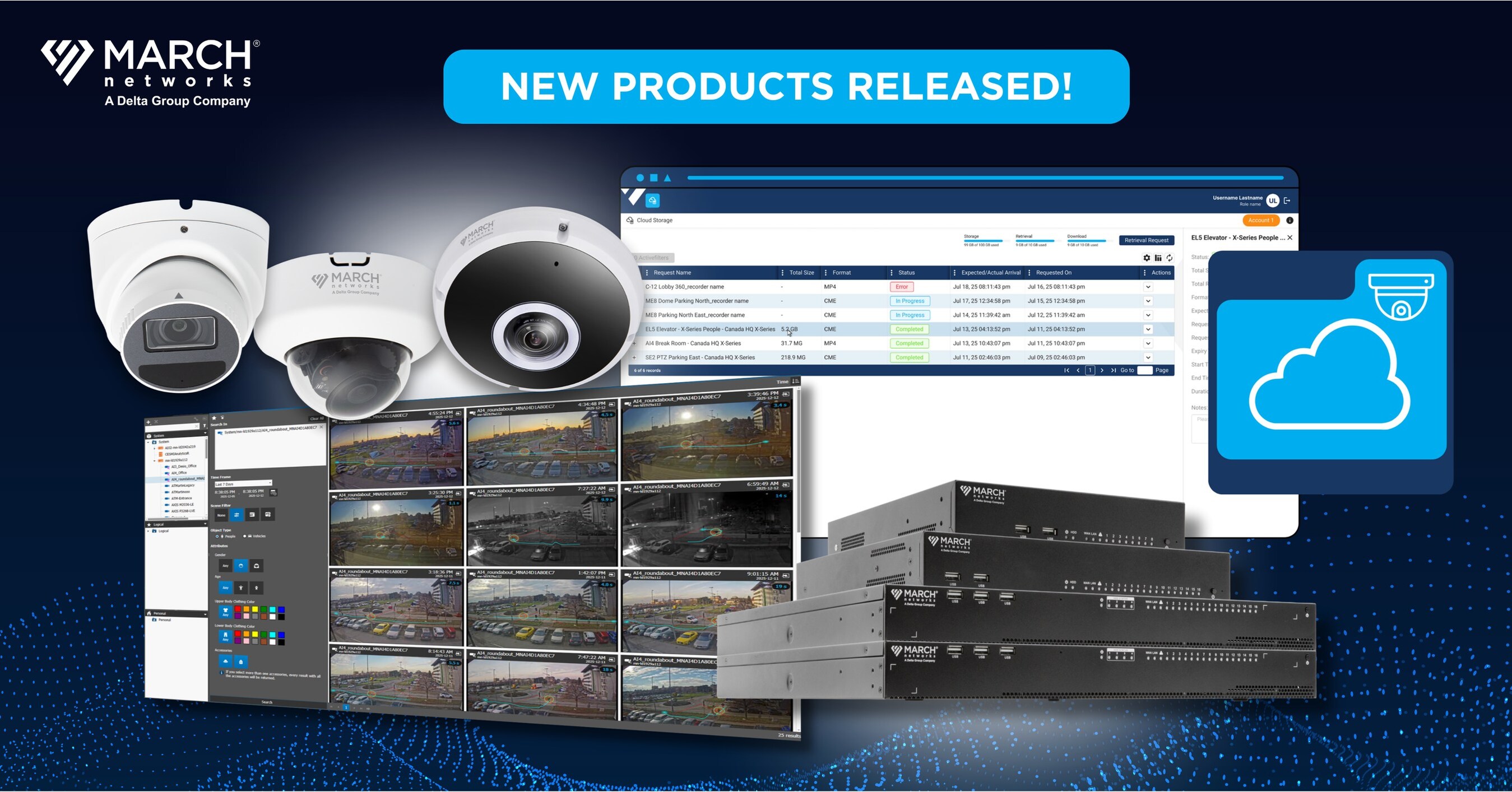
March Networks Presents New Cloud Storage at Intersec Dubai, Reducing Video Storage Costs by up to 80%
Prnewswire· 2026-01-12 04:15
Core Insights - March Networks has launched a new tiered cloud storage model designed to address the challenges of securely retaining large volumes of video data without incurring additional infrastructure costs [1][2][4] - The new cloud storage solution, developed in collaboration with Amazon Web Services (AWS), is now available globally and aims to reduce long-term video storage costs by up to 80% over five years [1][5][6] Cloud Storage Model - The flexible cloud storage model allows organizations to manage video retention more effectively, reducing the need for frequent hardware upgrades and lowering operational overhead [3][4] - The solution includes a cold storage model for long-term video archiving, utilizing Amazon S3 Glacier for cost-effective storage while ensuring quick access to recent footage [4][5] Cost Efficiency - A case study revealed that for 580 cameras generating approximately 5,600 TB of archived video, the annual cost of cloud storage was estimated at $347,000, significantly lower than the $1.7 million required for on-premise storage [7] - This hybrid solution not only provides immediate access to recent footage but also significantly cuts long-term video retention costs [7] Software Enhancements - The release includes various software enhancements aimed at improving operational efficiency, security, compliance, and safety across different industries [8] - New features such as improved AI Smart Search and a Smart Rules Wizard enhance usability and streamline the process of finding and managing video data [10] Hardware Updates - March Networks has expanded its edge portfolio with new camera and recorder options, contributing to a fully integrated video platform that modernizes infrastructure and maximizes the value of video data [11][15] - The new hardware offerings include cost-effective cameras designed for general surveillance and high-capacity recorders that integrate seamlessly with cloud services [15]
3 Storage Devices Stocks to Buy in a Flourishing Industry
ZACKS· 2025-12-16 14:31
Core Insights - The Zacks Computer-Storage Devices industry is experiencing long-term growth driven by digital transformation, edge computing, AI workloads, and enterprise cloud adoption, with companies like Western Digital benefiting from increased demand for high-capacity HDDs and SSDs [1][2]. Industry Overview - The industry includes companies that design, develop, manufacture, and market HDDs and SSDs for various applications, including PCs, servers, and consumer electronics. Some players also offer software-defined storage solutions and purpose-built servers [3]. Trends Influencing the Industry - The rapid proliferation of AI is reshaping the tech landscape, increasing demand for high-speed, high-capacity storage solutions. Traditional storage architectures are being replaced by NVMe-based SSDs and software-defined storage to meet the needs of AI applications [4]. - Innovation in cloud storage technologies is driving industry growth, with companies leveraging AI and machine learning to optimize storage solutions amid increasing data complexity [5]. - Companies are focusing on virtualization and edge computing to enhance data storage efficiency, with a shift towards recurring revenue models as cloud-native storage gains traction [6]. Market Performance - The Zacks Computer-Storage Devices industry has outperformed the S&P 500, rising 57.7% over the past year compared to the S&P 500's 14.7% growth, although it lags behind the broader sector's 21.1% increase [12]. Valuation Metrics - The industry is currently trading at a forward 12-month Price/Earnings (P/E) ratio of 18.66X, below the S&P 500's 23.35X and the sector's 28.15X, indicating potential undervaluation [15]. Company Highlights - **Western Digital (WDC)**: The company is experiencing strong demand for its high-capacity drives, with shipments of its ePMR products exceeding 2.2 million units in the September quarter. WDC expects fiscal second-quarter revenues of $2.9 billion, up 20% year-over-year, driven by data center demand [18][20]. - **Sandisk Corporation (SNDK)**: Demand for Sandisk's NAND products is expected to exceed supply, with data center revenues growing 26% sequentially. The company anticipates fiscal second-quarter revenues between $2.55 billion and $2.65 billion, driven by bit growth and price increases [23][24]. - **Teradata (TDC)**: TDC is well-positioned in the hybrid cloud space, with public cloud ARR increasing 11% year-over-year. The company expects free cash flow in the range of $260-$280 million for fiscal 2025 [29][30].


Western Digital (NasdaqGS:WDC) FY Conference Transcript
2025-12-09 09:32
Summary of Western Digital FY Conference Call Company Overview - **Company**: Western Digital (NasdaqGS: WDC) - **Date of Conference**: December 09, 2025 Key Industry Insights - **Industry**: Data Storage, specifically focusing on Hard Disk Drives (HDDs) and the impact of AI on storage demand Core Points and Arguments 1. **Strong Demand for HDDs**: Demand for HDDs has been strong for the last three to four quarters, driven by the transition from on-prem storage to cloud storage, which is growing at a mid-teens exabyte growth rate [4][5][7] 2. **AI Impact on Data Storage**: The value of data is increasing due to AI, leading to more data being stored. Data generation rates are expected to triple over the next three years, with the percentage of stored data increasing from 2%-3% to mid-single digits [7][8] 3. **Video as a Storage Driver**: Video storage remains a significant driver, with applications in both consumer and industrial sectors, such as autonomous vehicles, which require extensive data storage for telemetry and training models [9][10][12] 4. **Hyperscaler Demand**: The majority of demand is coming from established hyperscalers rather than new AI-native vendors. These hyperscalers are focusing on investments in GPUs and memory but still rely on traditional storage solutions [15][21] 5. **Exabyte Growth Projections**: Western Digital projects a compound annual growth rate (CAGR) of 15%-23% for exabyte growth, with recent trends suggesting growth rates in the mid-20% range [22][23] 6. **Supply Discipline**: The company is not adding unit capacity but is focusing on improving areal density, which allows for higher storage capacity per drive. Current flagship drives are at 32 terabytes, with potential increases to 40-100 terabytes in the future [28][29][31] 7. **Long-term Contracts**: Firm purchase orders from top customers extend through 2026, with one customer extending to 2027, indicating strong visibility and demand [24][26][61] 8. **Technology Innovation**: Western Digital is advancing its technology with plans to launch a 36-terabyte Ultra SMR drive in 2026 and HAMR technology expected to be in volume production by 2027 [78][81] 9. **Pricing Environment**: The pricing environment is stable to slightly increasing, contrasting with previous expectations of a 7% annual price decline. Current pricing is flat to slightly up year-over-year [95][97] 10. **Competitive Positioning**: The company believes it is not at a competitive disadvantage despite competitors advancing in HAMR technology, as customers prioritize exabyte delivery over specific technology types [90][92] Additional Important Insights - **Customer Relationships**: The relationship with hyperscalers has evolved from transactional to more strategic, with customers providing better visibility into their storage needs [73][75] - **TCO Advantage**: HDDs maintain a significant total cost of ownership (TCO) advantage over enterprise SSDs, which is expected to continue due to stable pricing and lower acquisition costs [112][114] - **Financial Health**: Western Digital has a strong balance sheet, with plans to monetize its 7.5 million shares of SanDisk to reduce debt and return cash to shareholders [118][120] This summary encapsulates the key points discussed during the conference call, highlighting Western Digital's position in the data storage industry, the impact of AI, and the company's strategic focus on technology and customer relationships.
又一知名网盘撑不住了?大调整
猿大侠· 2025-11-28 04:11
Core Viewpoint - The recent adjustments to 123 Cloud Disk's free user rights focus on "traffic limits, functionality restrictions, and encouraging paid subscriptions," significantly increasing the cost of usage for ordinary users [1][11]. Summary by Sections Free Traffic Reduction - The free monthly download limit has been drastically reduced from 30GB to 10GB, representing a 67% decrease [3]. Excess Download Charging Mechanism - Users exceeding the free limit of 10GB will be charged at a rate of 0.05 yuan per GB, with a minimum charge of 0.5 yuan for any download under 10GB [5]. Cancellation of Guest User Download Functionality - Previously, guest users could download files under 100MB for free, but this option has been removed, requiring all users to register and log in to download files [7]. New Traffic Charging Scenarios - Streaming audio and video files will now consume part of the monthly free 10GB limit, with high-definition video playback quickly depleting this allowance [8]. Retention of Sharing Traffic Package Mechanism - If a file sharer purchases a "sharing traffic package," others downloading that file will not use their own traffic quota, as the cost will be borne by the file sharer [9]. Reasons for Adjustments - The adjustments aim to combat resource abuse by free users who exploit bulk account registrations and high-frequency downloads, leading to increased server costs. The company has reported that its registered user base approached 50 million by September 2024 [11][12]. - The overall tightening of policies is attributed to cost pressures from user growth and an imbalance in the profit model, with a high proportion of free users and insufficient conversion to paid subscriptions [13].

NetApp Shares Dip Despite Q2 Earnings Beat and Strong AI-Driven Demand
Financial Modeling Prep· 2025-11-26 21:43
Core Insights - NetApp Inc. reported fiscal second-quarter results that exceeded analyst expectations, driven by increased adoption of AI workloads and cloud storage services [1][2] - The company's shares fell over 2% despite the positive earnings report [1] Financial Performance - Adjusted earnings for the quarter ended October 24, 2025, were $2.05 per share, surpassing the consensus estimate of $1.89 [1] - Revenue increased by 3% year over year to $1.71 billion, slightly above the estimated $1.69 billion [1] Segment Performance - All-flash array revenue grew by 9% to $1.0 billion [2] - Public cloud revenue reached $171 million, with first-party and marketplace storage services experiencing a growth of 32% [2] - The company achieved a record Q2 adjusted operating margin of 31.1% [2] Future Guidance - For fiscal 2026, NetApp projected adjusted EPS between $7.75 and $8.05, with a midpoint of $7.90, which is above the $7.75 consensus [2] - Revenue guidance for fiscal 2026 is set between $6.63 billion and $6.88 billion, aligning with market expectations [2]