Consumo consciente

Search documents
E A FESTA CONTINUA | Mariana Pinho | TEDxRio Salon
TEDx Talks· 2026-02-19 17:27
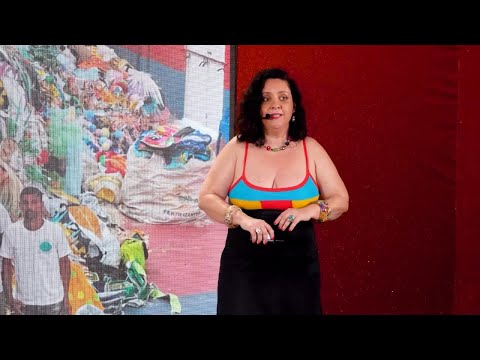
Quem é que sabe onde vão parar as fantasias depois do maior espetáculo da terra. Antes de falar de carnaval, eu vou explicar o que que eu tenho a ver com isso. Eu sou uma mulher de 1,5 m, mãe solo e autodidata.E o carnaval faz parte da minha vida desde sempre. Eu venho de uma família que ajudou a compor Brasília. saíram do Rio e dedicaram a vida à justiça do trabalho, mas ao mesmo tempo eram mulheres artesãs.Então eu cresci num grande atelier onde misturar técnicas e materiais, sair com uma bolsa de balão, ...

O ponto de partida é de um vestido | GIULIANA MORRONE | TEDxJardimdosSeixas
TEDx Talks· 2025-11-18 17:08
Core Argument - The current linear economic model (take-use-dispose) leads to social inequalities and climate crisis, causing environmental damage and resource depletion [6][11][12] - The speaker advocates for a shift towards a circular economy model, where resources are reused and regenerated, minimizing waste and pollution [7][10][11] - The fashion industry serves as a key example, highlighting the contrast between sustainable organic materials and environmentally damaging synthetic fabrics [7][9] Proposed Solutions & Actions - Consumers should adopt a mindset of "refuse, reuse, repair, redistribute, recondition, remanufacture" before recycling, prioritizing longevity and reducing consumption [18][19] - Industries need to revolutionize their processes by creating sustainable packaging and durable products [17] - The speaker emphasizes the interconnectedness of individuals, businesses, and the environment, urging collective action for a sustainable future [22][26] Supporting Data & Examples - By 2050, urban areas are projected to produce 5 billion tons of waste annually [13] - Currently, the world produces approximately 2.3 billion tons of waste per year [14] - The speaker uses a personal anecdote about a 15-year-old dress made of organic cotton to illustrate the principles of circular economy [5][7][27] - The speaker highlights the work of a local shoemaker as an example of circular economy practices, emphasizing the need to value such professions [23][24][25]
Contos sustentáveis para adormecer consciências | César Henriques | TEDxAveiro
TEDx Talks· 2025-09-03 16:20
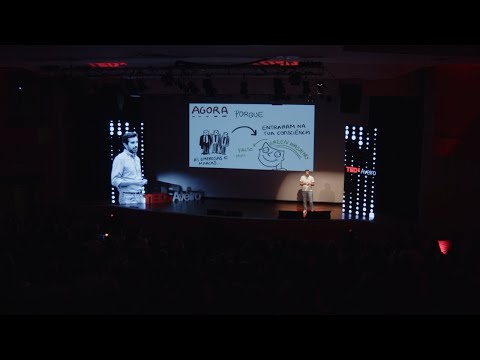
Sustainability Claims & Greenwashing - The industry is seeing a rise in "eco" versions of products with claims of sustainability, but these claims are often superficial and misleading, potentially constituting greenwashing [1] - Companies are applying sustainable claims to products without integrating sustainability into their core business strategy, primarily to maximize profits [1] - Many products labeled as "recyclable" are only potentially recyclable, and the terms "recyclable" and "recycled" are often used interchangeably to confuse consumers [1] - Products marketed as "chemical-free" still contain chemicals, highlighting the misleading nature of such claims [1] - Some companies promoting "conscious" collections have a history of labor exploitation, raising concerns about ethical practices [1] Sustainability & Business Strategy - Companies focused solely on profit are deemed unsustainable in the long term, as consumers will eventually demand genuine sustainability [2] - Businesses should balance profit with the well-being of people and environmental protection, aligning with economic, social, and environmental sustainability [2] - The United Nations' ESG (Environment, Social, and Governance) concept, created in 2004, encourages companies to develop a strategic sustainability plan [2] - A sustainability report is increasingly required for companies to access funding and remain competitive [2] Consumer Action & Alternatives - Consumers are encouraged to question companies and challenge them to integrate sustainability genuinely [2] - Consumers are encouraged to avoid purchasing products labeled as "eco-friendly" that lack transparency and third-party certifications [2] - Sustainable solutions, though currently representing a small market share, are becoming more accessible and are often priced similarly to traditional products [2][3] - The cost of environmental damage and health issues far outweighs the perceived higher cost of sustainable alternatives [3]