Credit Tightening

Search documents
Pimco's Stracke Addresses Private Credit Market Concerns
Youtube· 2026-03-18 16:52
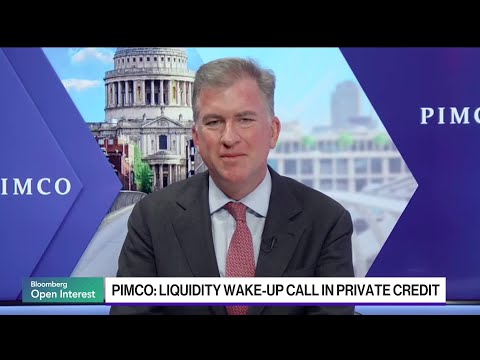
Market Overview - The direct lending market is experiencing a normalization after a period of lax underwriting standards and excessive leverage on companies that did not require it [1] - Default rates are projected to rise from low single digits (1-2%) to approximately 4-6% annually, leading to a decrease in returns from 10-12% to mid-single digits [2][3] Industry Consequences - The current situation is not indicative of a crisis but rather a realization that high returns in direct lending may not continue [3][4] - Concerns exist regarding the performance of software companies and cyclical sectors like energy and consumer goods within the direct lending space [3][4] Credit Tightening - A protracted crisis in the Middle East could further impact direct lending returns, necessitating strong performance from borrowers to maintain high returns [4] - Credit tightening is expected to slow growth in direct lending and below-investment-grade lending, which has been a significant source of credit extension in recent years [12][13] Default Rates and Recovery - The default rate is anticipated to remain in the mid-single digits for several years, with a gradual process of addressing weaker loans rather than an extreme peak in defaults [15][16] - The lack of new buyers for loans may exacerbate the situation, making it difficult for troubled companies to renew loans [15][16] Investment Opportunities - Current market conditions are leading to a focus on asset-based finance opportunities, such as residential mortgages and consumer lending, which have shown resilience and less leverage [20][21] - The tightening of credit across the system is expected to create higher borrowing costs, but may also present interesting opportunities in higher-quality assets that are undervalued [21][22] Divergence in Credit Quality - There is a noticeable divergence in quality and performance between investment-grade and high-yield bank loans, with many large software companies expected to perform well despite market shocks [23][24] - Investment-grade opportunities may become more attractive as credit tightening spreads, reducing the risk of fundamental impairment compared to more leveraged sectors in direct lending [24]


Pimco's Stracke Addresses Private Credit Market Concerns
Bloomberg Television· 2026-03-18 16:02
So where do we stand now. You've warned about underwriting. How poor does it look.Sure. So I think what we're starting to see is just a normalization in the space for far too long. There was lax underwriting standards in direct lending and with too much leverage put on companies that really didn't need that much leverage on them.What we're seeing is not really a crisis, though. What we're seeing is, is a cooling in this market. And what we're seeing is a move in default rates from low single digits, call it ...
China Markets Weigh Credit Tightening Against Growth Momentum
FX Empire· 2026-02-03 02:29
Core Viewpoint - The content emphasizes the importance of conducting personal due diligence and consulting with competent advisors before making any financial decisions, particularly in relation to investments in complex instruments like cryptocurrencies and CFDs [1]. Group 1 - The website provides general news, personal analysis, and third-party materials intended for educational and research purposes [1]. - It explicitly states that the information should not be interpreted as a recommendation or advice for investment actions [1]. - The accuracy and reliability of the information are not guaranteed, and users are cautioned against relying solely on the content provided [1]. Group 2 - The website discusses the high risks associated with cryptocurrencies and CFDs, highlighting that they are complex instruments with a significant potential for financial loss [1]. - Users are encouraged to conduct their own research and fully understand the workings and risks of any financial instruments before investing [1].

Americans Are Being Denied Credit At Record Rates As Lenders Tweak Rules And Trump's 50-Year Mortgage Plan Enters Spotlight
Benzinga· 2025-11-28 12:41
Core Insights - Credit tightening is evident across the U.S., with the overall rejection rate for credit applications reaching 24.8%, the highest since 2014 [1][2] - The surge in rejection rates reflects banks' concerns over economic uncertainty, influenced by inflation and tariffs [2] - The housing sector is experiencing significant tightening, with mortgage refinance rejection rates at 45.7% and new mortgage application rejections at 23.0% [2] Credit Application Rejections - The overall rejection rate for U.S. credit applications has increased by 10.4 percentage points since February 2020, indicating a sharp tightening in lending standards since the pandemic [2] - Auto loan rejection rates have risen to 15.2%, marking the second-highest level on record, driven by elevated monthly payments and stricter credit assessments [4] - Credit card rejection rates remain historically high at 21.2%, signaling a broad pullback in consumer credit availability [4] Housing Market Developments - President Trump's proposal for a 50-year mortgage aims to improve housing affordability, but critics warn of potential higher long-term borrowing costs and slower equity buildup [3] - Mortgage underwriting standards are evolving, with Fannie Mae removing minimum credit-score requirements for most loans and Freddie Mac expanding approvals for borrowers without traditional scores [5] - Regulators are allowing both agencies to adopt newer scoring models that incorporate "trended" data and alternative payment information [5]