Decisiones

Search documents
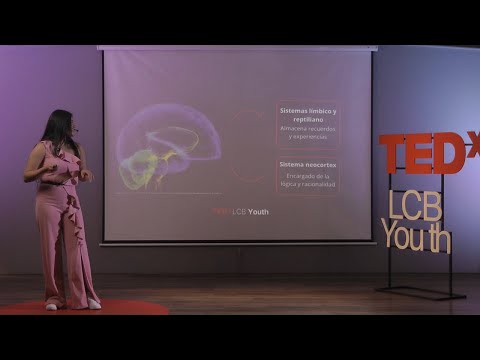
Emociones al volante: entre el corazón y la razón | Danna Vanessa Ramírez Sandoval | TEDxLCB Youth
TEDx Talks· 2026-01-28 16:44
¿Cuántas veces hemos tomado una decisión que luego lamentamos. Solo porque estábamos demasiado enojados, tristes o incluso felices. Imagina que estás discutiendo con alguien.Sientes que la ira te consume y en un arrebato sueltas comentarios que no querías. Minutos después, cuando la emoción baja, te das cuenta que cometiste un error. Entonces, ¿fuiste tú quien habló o fue tu emoción.Las emociones son una parte esencial de nuestra vida, pero cuando no aprendemos a gestionarlas pueden convertirse en nuestros ...

Tu narrador invisible | Victoria Gameros | TEDxUniversidad Panamericana Bonaterra
TEDx Talks· 2025-12-01 16:59
Limbic System & Social Media Influence - The limbic system, described as a set of brain structures translating experiences into emotions, impulses, and decisions, significantly influences human behavior before conscious thought [2] - Social media platforms and algorithms can manipulate the limbic system, affecting how individuals feel and act [3][6] - Algorithms filter information, prioritizing responses that evoke strong emotions, subtly shaping user experiences [6] - Social media leverages sensationalism to activate the amygdala, prompting reactions before reflection, potentially leading to impulsive behavior [8] - Constant exposure to diverse content on social media can overwhelm the limbic system, hindering its ability to process information effectively [10] - The rapid pace of information on social media reduces the time available for the cingulate gyrus to moderate emotions, potentially leading to flawed judgment [12] - Algorithms exploit user history to trigger specific emotions repeatedly, creating cycles of emotional response [15] Limbic System Components & Functions - The thalamus filters sensory information, prioritizing relevant stimuli and sending urgent signals to the amygdala for rapid responses [5][6] - The amygdala triggers fight-or-flight responses in perceived danger, prioritizing survival over nuanced assessment [8] - The cingulate gyrus moderates emotions, evaluating the severity of situations and regulating emotional responses [11][12] - The hippocampus stores past experiences, influencing current reactions based on pleasant or painful associations [14] - The insula translates bodily sensations into emotional arguments, highlighting the physical component of decision-making [17][18] - The hypothalamus directs physiological responses, such as heart rate and hormone release, in reaction to stimuli [20]