Dollar decline

Search documents
What the Slide in the Dollar Means for Trade, Travel and Investment
WSJ· 2026-01-28 23:00
Core Viewpoint - The decline of the currency raises concerns about the diminishing strength of America's position in global markets [1] Group 1 - The currency's depreciation is seen as a potential indicator of weakening economic influence for the United States [1] - Analysts are closely monitoring the implications of this decline on international trade and investment [1] - The situation may lead to increased volatility in financial markets as investors reassess their strategies [1]


Trump’s Embrace of Weaker Dollar Fuels Bets on New Downtrend
Yahoo Finance· 2026-01-28 10:14
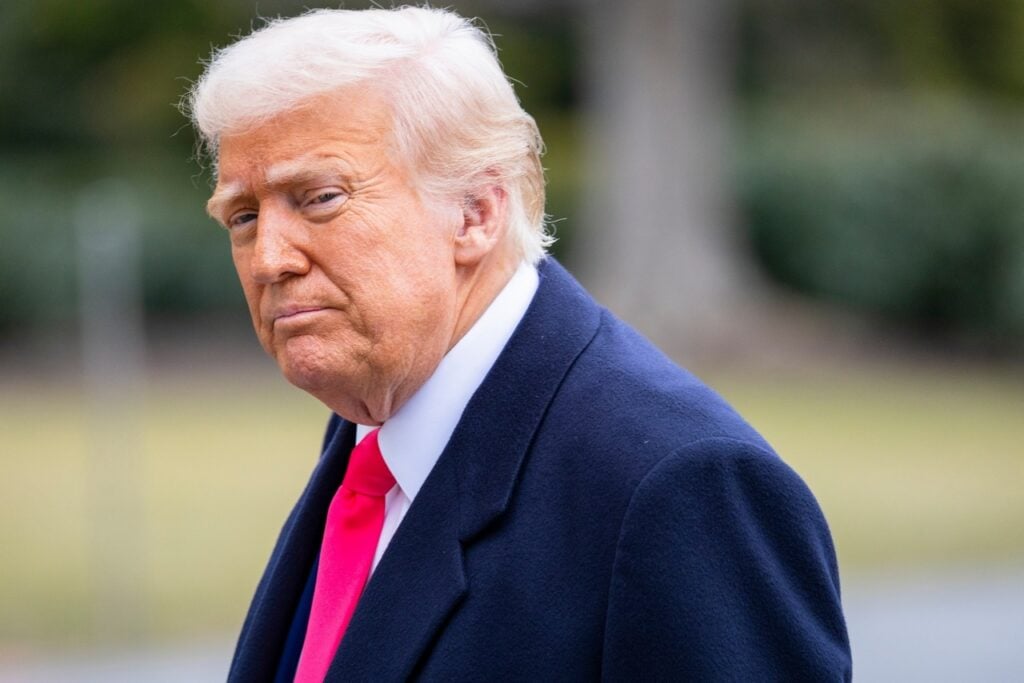
Core Viewpoint - President Trump's relaxed stance on the dollar's decline suggests the potential for a longer-term depreciation of the US currency, impacting market perceptions and investment strategies [1][2]. Group 1: Market Reactions - The dollar experienced its largest one-day drop since the implementation of tariffs, with Bloomberg's dollar gauge falling by as much as 1.2% following Trump's comments [1]. - Bloomberg's dollar index reached its lowest level in nearly four years, contributing to significant gains for the euro, pound, and Swiss franc, while gold prices surged to a record above $5,300 per ounce [4]. Group 2: Expert Insights - Stephen Jen, founder of Eurizon SLJ Capital, indicates that the Trump administration's perspective on the dollar may signal the beginning of a new phase of declines aimed at supporting US exporters [2]. - Anthony Doyle, chief investment strategist at Pinnacle Investment Management, notes that the lack of concern from key figures regarding the dollar's stability raises questions about the US's appeal to investors, potentially leading to higher risk premiums [5]. Group 3: Economic Implications - Trump's assertion that the dollar's decline is beneficial for US businesses aligns with previous government commentary, suggesting a strategic shift in currency management [3]. - The current environment may challenge analysts accustomed to a strong dollar and robust US economy, as they navigate the implications of a weakening dollar alongside economic strength [3].
Dollar Falls, Hovers Close to Lowest Since 2022
Barrons· 2026-01-28 08:38
Core Viewpoint - The dollar has fallen and is hovering near its lowest level since 2022, influenced by various economic concerns and comments from President Trump [1] Group 1: Dollar Performance - The dollar reached a low late Tuesday, marking its weakest point in nearly four years [1] - Concerns over government shutdown fears and a weak consumer confidence survey contributed to the dollar's decline [1] Group 2: Contributing Factors - Analysts from Deutsche Bank highlighted several factors pushing the dollar lower, including questions regarding the Federal Reserve's independence, uncertainty in tariff policy, and the fiscal trajectory [1]
Trump Says Dollar Is 'Doing Great' As Greenback Slides To 4-Year Low, Cites Edge Against China And Japan - Invesco DB USD Index Bullish Fund ETF (ARCA:UUP)
Benzinga· 2026-01-28 02:05
Core Viewpoint - President Trump downplays concerns about the declining value of the U.S. Dollar, asserting it is "doing great" despite the U.S. Dollar Index (DXY) hitting a four-year low of 95.66 against other currencies [2]. Group 1: Dollar Value and Economic Impact - The U.S. Dollar has decreased by 2.09% over the past month and 10.6% since Trump took office, amid various fiscal and macroeconomic uncertainties [2]. - Economists suggest that a weaker dollar could benefit U.S. companies with international exposure, making American exports more competitive [3]. - The Invesco DB US Dollar Index Bullish Fund (NYSE:UUP), which tracks the U.S. Dollar Index, has seen a decline of 1.16% on Tuesday, closing at $26.47 per share, and is down 9.38% over the past year [4]. Group 2: Criticism and Alternative Perspectives - Economist Peter Schiff criticizes Trump's stance, questioning why the U.S. economy, described as the "hottest," has the "coldest currency," highlighting the dollar's decline against the Swiss franc [4]. - Anna Wong, Chief Economist at Bloomberg, notes that Trump has consistently shown a preference for a weaker dollar, which aligns with his long-standing views on trade competitiveness [3].
Dollar Breaks From Rates as Yen Shock Triggers Capitulation
Bloomberg Television· 2026-01-27 17:14
Kit Juckes, Chief FX Strategist at Societe Generale, discusses the balance between US political pressure and Japan’s fiscal constraints. While the dollar decline has been punchy and one-sided, the move was already underway before last Friday’s speculation of a USD/JPY rate check. The greenback has fallen across the board, with NOK, AUD and NZD gaining the most ground so far this month. Yen strength ultimately accelerated the move, turning what had been steady dollar selling into an avalanche into the weeken ...
Why a weaker dollar isn't all bad
CNBC Television· 2026-01-26 20:51
Everyone is freaking out about the dollar's decline lately. And to be fair, it's been pretty dramatic. It's down 11% in the past year.But here's the thing, and I wrote about this in my column today. You can check it out if you look at the link in the comments. The dollar was actually a much bigger deal a year ago.No one talked about it then, but we were at some of the highest levels we've been since the 1980s. The dollar index was trading at 110. That's a big problem for exporters. That's a big problem for ...
The Great ‘Dollar Dump’ of 2026: How To Capitalize on the Greenback's Retreat
Yahoo Finance· 2026-01-23 17:55
Group 1 - The article discusses the reliability of exchange-traded funds (ETFs) as market trackers, particularly focusing on the Invesco DB US Dollar Index Bullish Fund (UUP) and its performance in relation to the U.S. Dollar Index (DXY) [1][2] - UUP has been a consistent tracking device for the U.S. Dollar Index since 2007, but its distribution payments can affect its charting accuracy, as evidenced by a recent price drop of 3.7% compared to a 0.33% drop in DXY [2][4] - The article highlights a structural shift in the U.S. dollar's dominance, with Morgan Stanley predicting a decline in the Dollar Index to around $94 by the second quarter of 2026, the lowest level since 2021 [6][7] Group 2 - Factors contributing to the dollar's potential decline include narrowing interest rate differentials, ongoing fiscal deficits, and a shift in global capital towards undervalued international markets [7] - The dollar is currently facing resistance around the $100 mark, and if it fails to maintain this level, a "sell dollars" trade could emerge as a significant macroeconomic theme [7] - For investors anticipating a structural decline in the dollar, moving into inverse ETFs like the Invesco DB US Dollar Index Bearish Fund (UDN) is suggested as a strategy to capitalize on the dollar's weakness [8]
Here's Why Gold And Stocks Are Both Setting Record Highs, Something That Rarely Happens
Forbes· 2025-09-23 17:17
Core Insights - The simultaneous rise of gold and stocks is unusual and indicates a potential clash between fear and confidence in the market [1][7] - Gold has increased by 44% this year, while the S&P 500 Index has risen by 14%, with both asset classes reaching new highs on the same day multiple times in 2025 and 2024 [2][3] Economic Context - Gold is typically viewed as a safe haven during economic uncertainty, which has been rare in recent decades, with only four all-time highs in gold over the last 54 years [3] - The U.S. Dollar Index has decreased by 10% this year, marking its worst performance since a 15% drop in 2003, which supports gold prices and makes U.S. equities more attractive to foreign investors [4][5] Market Dynamics - The decline of the dollar is seen as the primary driver for the concurrent rise in gold and equities, as expectations of U.S. economic outperformance have diminished [5][6] - Inflation has been decreasing since 2022, benefiting corporate profits and stock prices, while the weaker dollar has increased the appeal of gold [6] Historical Parallels - The current market dynamics draw parallels to the early 1970s, where falling inflation supported stock growth, but rising inflation later led to significant market declines [6][7] - The relationship between gold and stocks may not be sustainable, as historical trends suggest one asset will eventually diverge from the other based on economic conditions [7]
The dollar staying here becomes a tailwind for forward quarters, says Deutsche Bank's Bankim Chadha
CNBC Television· 2025-07-11 15:38
Tariffs and Trade - Uncertainty surrounding tariffs is hindering mergers and acquisitions [1] - The impact of tariffs on the S&P 500 earnings is estimated to be around 17% [6] - The market is waiting to see the actual impact of tariffs on earnings this earning season [3] - A tariff level around 20% is considered a threshold where adjustment time increases [3] Macroeconomic Factors - The underlying economy is showing signs of being "okay to good" based on US GDP growth forecasts [4] - A sharp decline in the dollar could become a tailwind for future quarters [5] Analyst Estimates and Market Expectations - Analyst estimate dispersion is wide, potentially leading to more conservative estimates [7] - Wider analyst dispersion tends to lead to bigger beats for the S&P 500 as a whole [7]