Drug pricing pressure

Search documents
Why Health Care ETFs Aren't Panicking Over Big Pharma's Price Cuts
Benzinga· 2025-12-19 20:17
Core Insights - The upcoming deal between major pharmaceutical companies and the U.S. government aims to reduce prescription drug prices, raising questions about the potential impact on Big Pharma's profitability [1] - The current focus is on Medicaid pricing, which represents about 10% of total U.S. prescription drug spending and often features discounts exceeding 80% [2][3] Group 1: Market Reactions - Concerns regarding price compression and margins have led Pfizer to predict a challenging year, but analysts generally do not foresee significant issues for the broader pharmaceutical sector [3] - Market fluctuations initially driven by political concerns have eased, particularly following efforts to align U.S. drug prices with those in other developed countries [4] Group 2: ETF Performance - Diversified health care ETFs, such as the Health Care Select Sector SPDR Fund and the Vanguard Health Care ETF, have shown resilience, with both funds increasing by over 1% [5] - Managed care companies and health care technology firms, which are less affected by Medicaid pricing, provide a buffer against potential pressures on pharmaceutical stocks [6] Group 3: Specialized ETFs - More focused ETFs like the iShares U.S. Pharmaceuticals ETF and the SPDR S&P Pharmaceuticals ETF are directly impacted by pricing negotiations, but their diversified structures mitigate risks associated with individual companies [7][8] - Despite the challenges, these specialized ETFs have also seen positive performance, with increases of 1.3% and 2% respectively [8] Group 4: Investment Outlook - The pressure on drug pricing is viewed more as a volatility issue rather than a fundamental threat to the industry, with broad health care ETFs well-positioned to manage the situation [9] - Diversification remains a key strategy for investors to navigate potential market fluctuations related to drug pricing policies [9]


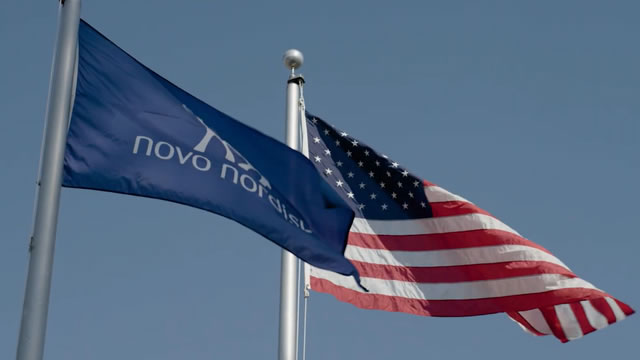
Ozempic maker Novo Nordisk lowers growth outlook for its weight loss drugs as pricing pressures mount
CNBC· 2025-11-05 06:47
Core Insights - Novo Nordisk has lowered its growth expectations for its obesity and diabetes treatments due to prescription trends, competition, and pricing pressure [2][4] - The company's net profit for the quarter was 20 billion Danish kroner ($3.1 billion), slightly below analyst expectations [1][4] Financial Performance - Net profit for the quarter was 20 billion Danish kroner ($3.1 billion), aligning closely with the anticipated 20.12 billion Danish kroner [1] - Novo Nordisk's shares have dropped over 50% this year, reflecting investor concerns [4] Market Dynamics - The growth in diabetes and obesity care was initially driven by the uptake of Wegovy and Ozempic, but recent trends have prompted a reassessment of growth expectations [2] - Increasing competition in the obesity drug market and challenges from U.S. drug pricing policies have contributed to the company's revised outlook [4] Analyst Sentiment - Analysts have mixed views on Novo Nordisk's stock, with Jefferies downgrading it to underperform, while Berenberg maintains a positive outlook, citing "peak uncertainty" [5] - Berenberg believes Novo's growth profile and R&D returns justify a higher valuation compared to peers [5] Acquisition Activity - Novo Nordisk has made a rival bid to acquire American biotech firm Metsera, increasing its offer to up to $10 billion, surpassing Pfizer's previous bid [7][8] - Pfizer has filed a lawsuit against Novo and Metsera, claiming Novo's bid is anticompetitive, which Novo has denied [7][8] - Metsera has indicated that Novo's revised offer is superior to Pfizer's latest bid [8]