ENPP1 Deficiency

Search documents
Inozyme Pharma Reports First Quarter 2025 Financial Results and Provides Business Highlights
Globenewswire· 2025-05-14 11:30
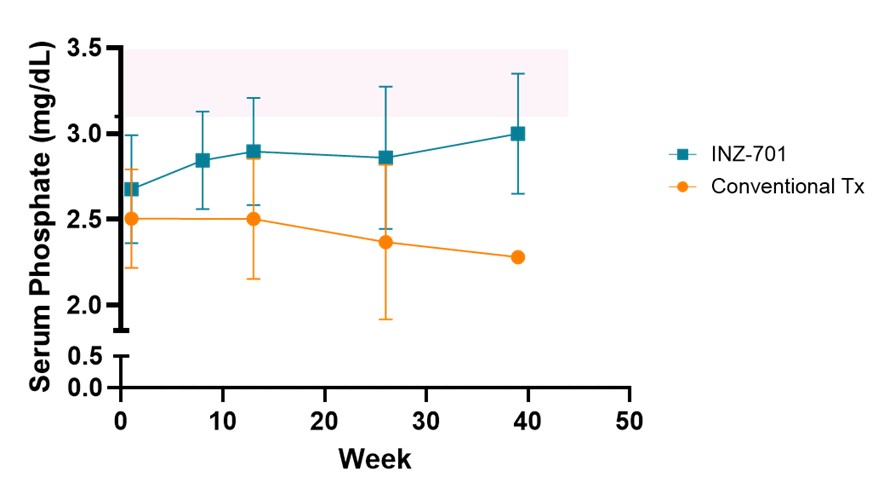
Core Insights - The ENERGY 3 trial is progressing positively, with INZ-701 showing potential to modify the disease course in ENPP1 Deficiency, evidenced by sustained phosphate increases and a favorable safety profile [1][2][3] - The trial is on track for topline data in the first quarter of 2026, with no patient dropouts or safety concerns reported [1][3] - The company has appointed Petra Duda, M.D., Ph.D. as Chief Medical Officer, succeeding Kurt Gunter, M.D. [1][15][16] Trial Progress and Data - The ENERGY 3 trial completed enrollment in January 2025, with dosing expected to conclude in January 2026 and topline data anticipated in Q1 2026 [3][24] - No patient discontinuations or dose adjustments have occurred due to safety concerns, and the Data Safety Monitoring Board has not identified new safety signals [3][11] - Preliminary anti-drug antibody (ADA) data show that 15 out of 17 patients had no detectable ADAs or low titer responses, indicating a favorable immunogenicity profile [5][7] Serum Phosphate Levels - Interim data indicate that mean serum phosphate levels increased over time in the INZ-701 treatment arm, with a +8.2% increase at Week 13 compared to a -0.04% decrease in the conventional treatment arm [11][12] - By Week 39, mean phosphate levels increased by +12.1% in the INZ-701 arm, while the conventional treatment arm saw a -9.0% decrease [11][12] - Overall, 35% of patients treated with INZ-701 achieved normal serum phosphate levels at least once, while no patients in the conventional treatment arm reached normal levels [11][14] Leadership Transition - Petra Duda, M.D., Ph.D. has been appointed as Chief Medical Officer, bringing over two decades of experience in clinical development and regulatory leadership [15][16] - Dr. Duda's previous roles include Global Development Lead at UCB and significant contributions to the approval of therapies for rare diseases [16][17] Financial Overview - As of March 31, 2025, the company reported cash, cash equivalents, and short-term investments of $84.8 million, expected to fund operations into Q1 2026 [22][26] - Research and development expenses for Q1 2025 were $20.4 million, an increase from $19.1 million in the prior year, primarily due to INZ-701-related expenses [22][26] - The net loss for the quarter was $28.0 million, or $0.44 loss per share, compared to a net loss of $23.3 million, or $0.38 loss per share in the prior year [22][26]


Inozyme Pharma Announces JBMR Plus Publication Demonstrating Real-World Impact of ENPP1 Deficiency
Globenewswire· 2025-04-10 12:30
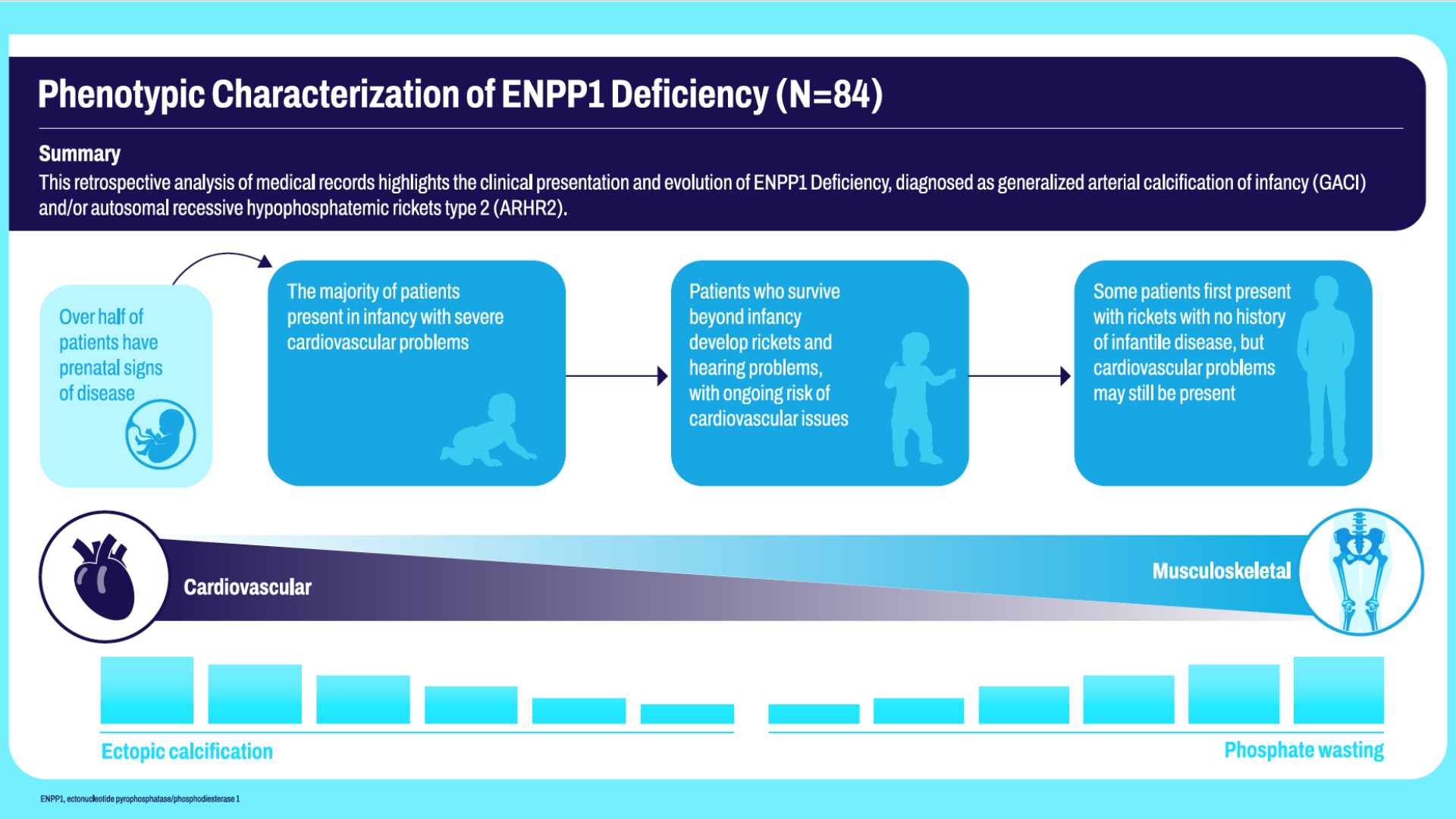
Core Insights - The publication of a comprehensive study on ENPP1 Deficiency reveals its severe cardiovascular and musculoskeletal complications, emphasizing the need for early diagnosis and effective treatments [1][2][4] Company Overview - Inozyme Pharma, Inc. is a clinical-stage biopharmaceutical company focused on developing therapeutics for rare diseases affecting bone health and blood vessel function [1][6] - The company's lead investigational therapy, INZ-701, is designed to address the underlying causes of ENPP1 Deficiency and is currently in late-stage clinical development [6] Disease Characteristics - ENPP1 Deficiency manifests as Generalized Arterial Calcification of Infancy (GACI) and Autosomal Recessive Hypophosphatemic Rickets Type 2 (ARHR2), with significant age-dependent progression [3][5] - Of the 84 individuals analyzed, 51 had GACI, with only 19 surviving beyond infancy, highlighting the disease's severity [3][9] - By age 55, over 95% of patients will experience cardiovascular, musculoskeletal, and other organ complications, with 60% showing arterial calcification within the first 3 months of life [9] Clinical Implications - The findings indicate that ENPP1 Deficiency is a progressive condition requiring multidisciplinary care, with ongoing complications for those who survive infancy [4][5] - Approximately 70% of patients develop serious musculoskeletal complications by age 10, significantly impairing quality of life [9]