Energy Sovereignty

Search documents
Energy Sovereignty: Localized Methanol Production Emerges as Strategic Alternative to Volatile Oil Routes
Globenewswire· 2026-03-09 09:47
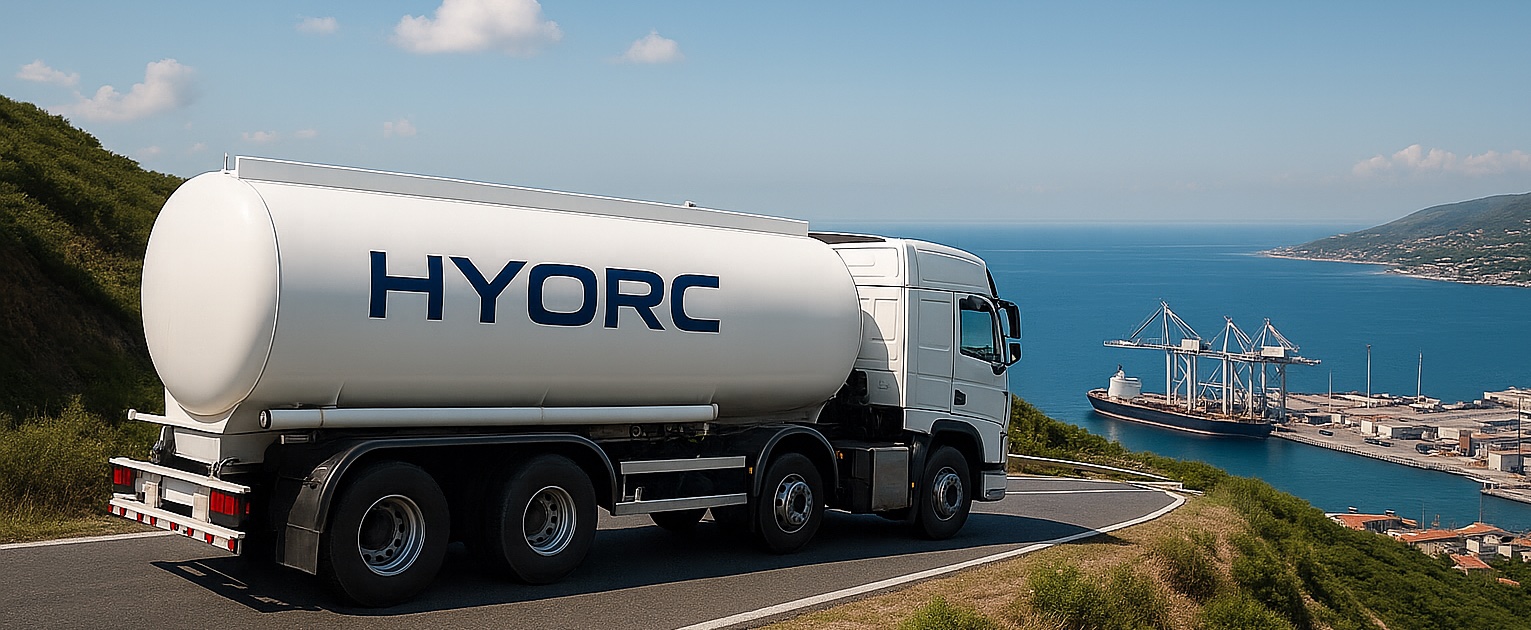
Core Insights - The global shipping industry is increasingly vulnerable due to its dependence on fuel passing through narrow maritime chokepoints, which poses risks to energy supply chains [1][2] - The shipping sector is exploring localized production models for fuel to enhance resilience and reduce reliance on imported hydrocarbons [3][4] Industry Overview - A significant portion of the world's seaborne energy is transported through critical corridors, and instability in these areas can lead to increased costs for consumers, particularly in Europe, which has limited domestic hydrocarbon reserves [2] - The transition to renewable fuels is becoming essential for energy security and decarbonization, with green methanol emerging as a viable alternative for the shipping industry [4] Company Focus - HyOrc Corporation has developed modular systems to convert processed municipal waste into green methanol at port locations, effectively shortening the supply chain and creating a local energy reserve [3][5] - The company’s initial deployment in Portugal aims to produce approximately 8 tonnes of green methanol per day, with plans for modular expansion to 80 tonnes per day [5] - As the International Maritime Organization's 2028 carbon reporting and fuel standards approach, the availability of scalable, regionally produced marine fuels will be crucial for energy autonomy and cost stability [5]

Commodity Big Picture: Why Silver, Gold & Rare Earth Rallies Will Continue as Crude Oil Slides
Youtube· 2026-01-24 21:01
Core Insights - The discussion highlights the significant impact of geopolitics on the Canadian economy, particularly in the natural resources sector, which constitutes a third of the TSX [2] - The transition in energy consumption is noted, with electricity emerging as the fastest-growing energy source, driven by advancements in artificial intelligence [3] - The outlook for crude oil is uncertain, with growth rates fluctuating around 0%, and geopolitical factors playing a crucial role in supply dynamics [4] Natural Resources and Oil Market - Natural resources are central to the Canadian economy, with oil being a major component, but the growth in oil consumption is stagnating [2][4] - The potential for increased oil supply from countries like Venezuela and Iran could influence gasoline and diesel prices in the Western world [6] - The current focus is on natural gas and renewable energy sources as more viable options for future energy needs [4][9] Metals and Commodities - There is a bullish sentiment towards metals such as copper and gold, with significant price increases observed, including a 50% rise in Freeport Mac's stock over the past year [12] - The importance of securing energy sovereignty and the role of critical minerals in renewable technologies are emphasized, with China currently dominating the processing of these materials [13][19] - The potential for gold prices to reach new highs is linked to geopolitical developments, with current prices hovering around 4,900 [15] Geopolitical and Economic Context - The disruption in global trade is creating uncertainty, leading investors to seek alternatives like gold as a hedge against inflation and trade ruptures [16][17] - Increased national defense spending is anticipated as countries aim to secure their energy supply and reduce dependence on foreign sources [18][20] - The processing of rare earths and other minor metals remains a challenge in the Western world, with China being the largest processor [19][20]
普京预测实现!俄罗斯能源寻得新客户,欧洲通胀高涨自食其果
Sou Hu Cai Jing· 2025-10-29 04:08
Core Insights - The global energy landscape is undergoing a significant transformation, with Russia finding new buyers for its energy resources while Europe faces high inflation as a consequence of its energy policies [1][3]. Group 1: Energy Market Dynamics - Russia's natural gas consumption is steadily increasing in the Asia-Pacific region, the Middle East, and Latin America, as President Putin stated at the "Russian Energy Week" forum [3][8]. - Despite initial declines, Russian natural gas exports are now on the rise, supported by a vast gas transmission network of approximately 100,000 kilometers laid over the past five years [9][8]. - The European Union is set to ban all new contracts and spot trading of Russian natural gas by the end of 2025, with a complete termination of existing long-term contracts by the end of 2027 [13][22]. Group 2: Challenges in Energy Transition - The energy relationship is being reshaped due to the rise of new economic centers and the impact of Western sanctions, which have led to industrial decline and increased prices in Europe [5][6]. - Renewable energy sources like solar and wind are not immediate substitutes for natural gas, as they are intermittent and cannot fully meet industrial and peak power demands [15][16]. - The EU's energy transition appears to be progressing, with a record 56 GW of new solar capacity added in 2023, but the reliance on natural gas remains critical for the transition [14][17]. Group 3: Russia's Strategic Shift - Russia is pivoting its energy exports towards Asia and other regions, effectively opening new markets as Europe closes its doors [7][12]. - The country aims to establish "comprehensive energy sovereignty," transitioning from being merely a resource exporter to a leader in energy technology and production [26][29]. - Russia's nuclear technology dominates the global market, accounting for nearly 90% of the nuclear power plant construction market, with plans to deepen cooperation with Global South countries through BRICS [11][30]. Group 4: European Energy Dependency - Despite efforts to reduce reliance on Russian energy, European countries still depend on Russian energy for about one-third of their needs, while the shift to U.S. LNG introduces new risks due to higher prices and political influences [31][22]. - The ongoing energy crisis in Europe highlights the challenges of transitioning away from Russian energy while managing the costs and logistics of alternative sources [24][22].