Energy self - sufficiency

Search documents
Goldman Sachs: China equities have the 'best risk vs reward' amidst Iran conflict
Youtube· 2026-03-12 08:16
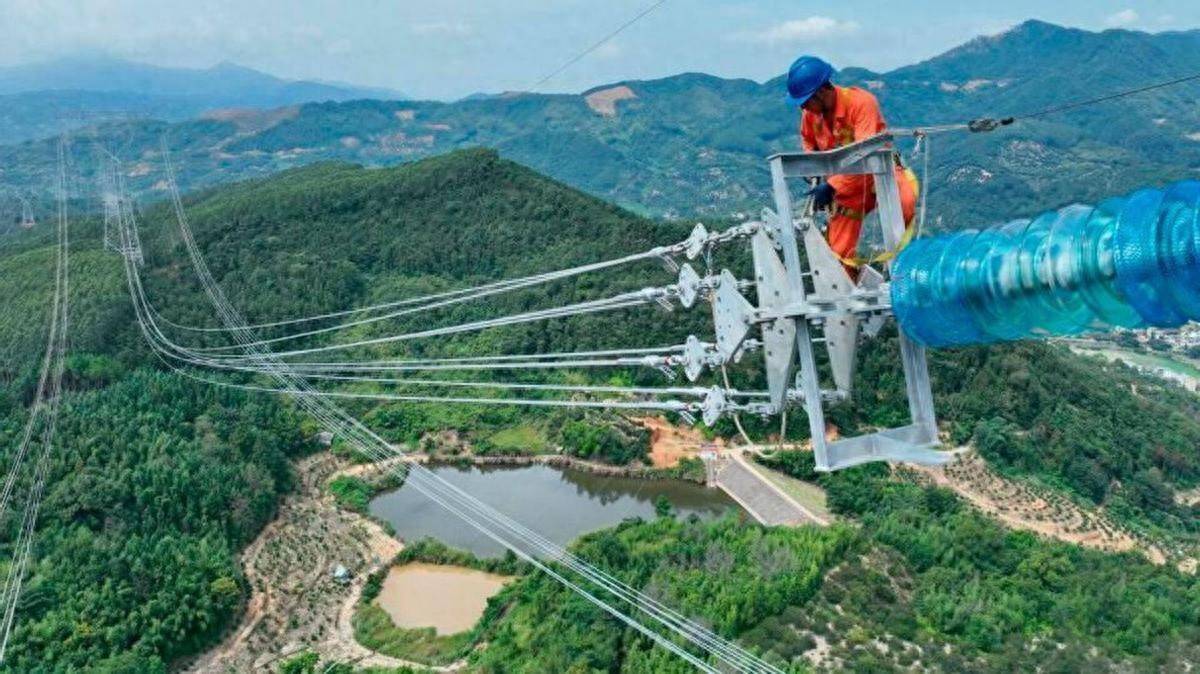
分组1 - China is focusing on energy self-sufficiency by stockpiling oil and advancing domestic energy production, particularly in renewables and electricity grid development [1] - The ongoing Iran conflict is reinforcing China's strategic objective of energy self-sufficiency [1] - China's A shares have outperformed other markets in Asia Pacific, remaining flat while other markets like Korea have seen significant declines [2][3] 分组2 - Starting conditions matter, as China was in a 10% corrective trading range for about five months, making it less vulnerable to profit-taking compared to Korea [3][4] - A shares have outperformed H shares by approximately 7% due to lower foreign ownership and a lower correlation with global markets [5][6] - The recent reporting season has shown better earnings for A shares compared to H shares, which have been affected by competition in the food delivery sector [8] 分组3 - A $35 per barrel oil shock could lead to a significant decline in Asian earnings, with the effects being nonlinear as oil prices rise [10][11][12] - The impact of oil prices on equities is not only through earnings but also through risk premiums and market volatility [14] - The US equity market has performed relatively well during the conflict, with a smaller drawdown compared to Asian markets, indicating its insulation from energy vulnerabilities [16][17] 分组4 - China is viewed as having a better risk-reward profile currently, with lower valuations and expected earnings growth of about 14% for both A shares and MSI China [20][22] - Hedge fund positioning in China is at a lower percentile compared to other markets, indicating potential for recovery as risk appetite rebuilds [23][29] - The duration and magnitude of the oil shock will significantly influence market dynamics and investor behavior moving forward [24][26][27]


Wharton's Jeremy Siegel: The Fed still has room to cut interest rates this year
Youtube· 2026-03-11 14:06
Economic Outlook - The upcoming inflation data is expected to be favorable, with some numbers potentially coming in below expectations, particularly in core inflation which excludes food and energy [1] - Shelter prices have significantly slowed, with rents virtually unchanged nationally for three years and home price index increases at the lowest levels in many years, contributing positively to the core index and CPI [1] Energy Market Dynamics - The U.S. has become more energy independent, which has led to a stronger dollar, making imported goods less expensive and helping to offset inflation [1] - The energy intensity of the U.S. economy has decreased by more than 50%, reducing the impact of oil price spikes on economic performance [1] - The recent oil spike due to geopolitical tensions did not lead to a recession, indicating a more insulated economy compared to past decades [1] Import Dependencies - Despite energy independence, the U.S. still imports refined products, such as jet fuel, which could lead to higher prices if geopolitical tensions persist [2] - An increase in gasoline prices could negatively impact GDP, with estimates suggesting that a $2 increase in gasoline could reduce GDP by up to one percentage point [2] Geopolitical Risks - The situation in the Middle East, particularly regarding the Strait of Hormuz, poses significant uncertainty for oil supply, as it is a critical passage for 20% of the world's oil [2]

Yogi Adityanath's Japan visit: Uttar Pradesh CM takes ride on Maglev train — check its features
MINT· 2026-02-26 09:43
Group 1: Core Insights - Uttar Pradesh Chief Minister Yogi Adityanath's visit to Japan includes participation in events and a test ride on the SC Maglev train, highlighting the importance of technological collaboration between India and Japan [1][4] - The SC Maglev train, developed by the Central Japan Railway Company, utilizes superconducting magnets to achieve speeds over 600 km/h, setting a world record of 603 km/h in 2015 [2][3] - The visit aims to enhance modern transport infrastructure in Uttar Pradesh, exploring opportunities in high-speed rail and sustainable transport, which could significantly impact future infrastructure development in the region [6][7] Group 2: India-Japan Relations - Adityanath expressed gratitude to the Japanese government and the Governor of Yamanashi for their role in strengthening India-Japan relations and promoting clean energy initiatives [4][5] - The Chief Minister emphasized the partnership in green hydrogen technology and academic excellence, with plans to develop IIT Kanpur as a Centre of Excellence [5][6] - The visit is part of a broader framework of collaboration in high-speed rail and smart mobility, which is expected to influence infrastructure projects in Uttar Pradesh [7]

10万亿度需求也不买!中国摊牌,输电专线全叫停,国产电价教做人
Sou Hu Cai Jing· 2026-01-24 04:13
Core Viewpoint - China's decision to suspend electricity imports from Russia reflects significant changes in its power industry and highlights the challenges faced by Russia in the current energy landscape [1][12]. Historical Context - Over a decade ago, China faced electricity shortages in the Northeast, leading to the establishment of long-term contracts with Russia for electricity imports, which were mutually beneficial [3][5]. - The agreement included a total electricity delivery of 1,000 billion kilowatt-hours, with annual imports ranging from 35 to 45 billion kilowatt-hours [3]. Recent Developments - As of January 1, 2026, China officially ceased using the electricity transmission line with Russia, resulting in a near-zero export of electricity from Russia to China [5]. - In 2023, China's total electricity consumption exceeded 10 trillion kilowatt-hours, with industrial electricity demand growing at a rate of 4% to 6% [5][10]. Price Dynamics - The primary reason for halting imports is the rising cost of Russian electricity, which has increased by 42% in 2023, making it more expensive than domestic electricity [7][10]. - The cost of purchasing Russian electricity is now over 10% higher than using domestic sources, leading to a significant reduction in cross-border electricity transmission [7][10]. Supply Chain Changes - The increase in electricity prices in Russia is attributed to sanctions following the Ukraine conflict, which have disrupted the supply of essential components for power generation [8][10]. - In contrast, China's investment in renewable energy sources has led to a surplus of cheap electricity, making imports from Russia less attractive [10][12]. Strategic Implications - The suspension of Russian electricity imports signifies a shift in China's energy strategy, showcasing its confidence in domestic power supply capabilities [12][16]. - This decision indicates a new phase in Sino-Russian economic cooperation, where price and efficiency are prioritized over mere political relations [14][15]. Future Outlook - The transition to a self-sufficient and competitive electricity market positions China favorably in the global energy landscape, emphasizing the importance of reliable and affordable power for future technological advancements [15][16].