Environmental Impact

Search documents
How recycling could help power America's rare earth future
60 Minutes· 2026-03-22 23:01
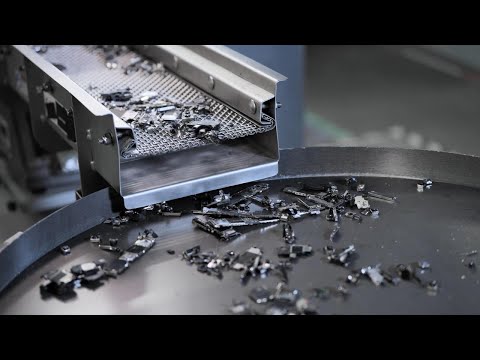
60 Minutes overtime. If we want to achieve supply chain security, maybe we don't actually have to be opening dozens of new rare earth mines. Maybe we could actually achieve rare earth and other critical mineral supply chain security just by cleaning up the waste that we already have.This week on 60 Minutes, we report on rare earths, a group of 17 metallic elements on the periodic table that are essential for so many modern technologies. From smartphones and laptops to wind turbines and fighter jets, they ma ...


X @The Wall Street Journal
The Wall Street Journal· 2026-03-10 08:35
Exclusive: Emissions from a Chinese cobalt-processing plant in central Africa sickened residents and workers as the company raced to increase production of a mineral critical to making electric-car batteries, an environmental group says. https://t.co/7lGMJAKlmm ...
X @The Wall Street Journal
The Wall Street Journal· 2026-03-09 23:33
Exclusive: Emissions from a Chinese cobalt-processing plant in central Africa sickened residents and workers as the company raced to increase production of a mineral critical to making electric-car batteries, an environmental group says. https://t.co/2h77Lu240J ...
X @Nick Szabo
Nick Szabo· 2026-03-08 05:45
RT Atoosa Kasirzadeh (@Dr_Atoosa)What is happening tonight is that US and Israel are targeting oil depots and desalination plants. These aren’t military targets. They’re the infrastructure of everyday life of 90 millions. This isn’t a liberatory war. It’s an attempt to break the backs of Iran and Iranian people. The environmental impact of these strikes on oil depots should not be minimized. Air pollution is Tehran, a city of 10 millions, has reached unbearable levels. This is anything but a targetted attac ...
Rethinking Sustainable Cities | Mohammad Pejman | TEDxSadjad University
TEDx Talks· 2026-02-27 16:34
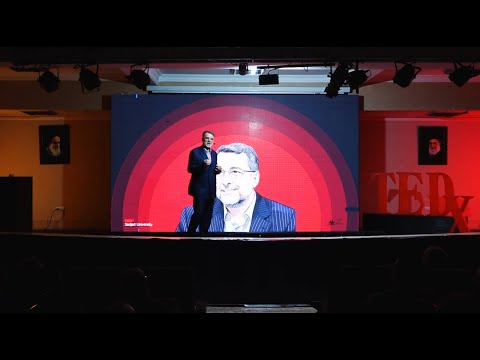
بسم الله الرحمن الرحیم حضار محترم دیگه با این صرف وقت پ ۶ ساعته احتمالاً خیلی خسته شده باشن ولی من سعی میکنم که خیلی کوتاه همین پروژهای که دادن نکاتی رو تقدیمتون کنم. گرچه به من تأکید کرده بودن که دیسیپلین بحث تدکس اینه که نه کاغذ داشته باشی دیدم آقای دکتر کاغذ داره گفتن که پاورپوینتم نباید داشته باشین گفتیم خب بدون سلاح بیایم اینجا رو سن چی بگیم خلاصه همش از حافظه استفاده کنیم به هر صورت یه عنوانی رو که برگزار کنندگان ان این محفل گرم و صمیمی تعیین کرده بودن که من پیرامونش صحبت کنم موضوع شهرسازی بود و توس ...
Clashes break out at anti-Olympics protest in Milan
NBC News· 2026-02-07 23:07
Protesters clashed with police at a demonstration in Milan against the environmental and economic impacts of the Winter Olympics in Italy. For more context and news coverage of the most important stories of our day, click here: https://www.nbcnews.com » Subscribe to NBC News: http://nbcnews.to/SubscribeToNBC » Subscribe to Here's the Scoop podcast: https://www.nbcnews.com/heres-the-scoop-daily-podcast Every day, NBC News helps people understand what’s happening and why it matters — through fact-based report ...

Invesco MSCI Sustainable Future ETF (ERTH US) - Portfolio Construction Methodology
ETF Strategy· 2026-01-20 09:30
Core Insights - The Invesco MSCI Sustainable Future ETF (ERTH US) is designed to provide global exposure to companies addressing six environmental impact themes, including alternative energy and sustainable agriculture [1] Group 1: Portfolio Construction Methodology - The underlying index, MSCI Global Environment Select Index, requires eligible companies to derive at least 75% of their revenue from specified environmental activities [1] - The index employs a free-float market-cap weighting with a 5% cap on single issuers to limit concentration and ensure broad theme representation [1] - Quarterly rebalancing is conducted to refresh eligibility based on revenue exposure and to reset issuer caps, adhering to MSCI's standard practices for corporate actions [1] - The design emphasizes high thematic purity and investability by enforcing substantial revenue alignment and explicit weight limits at the name level [1]

X @Bloomberg
Bloomberg· 2025-12-09 17:39
Pollution in parts of Manhattan declined by 22% in the first six months of this year after motorists began paying a new toll to drive south of 60th Street, according to a Cornell University analysis https://t.co/fSaBC7R048 ...
The public isn’t buying the AI hype, even if CEOs are
Yahoo Finance· 2025-12-09 13:42
Core Insights - There is a significant enthusiasm for artificial intelligence (AI) among corporate leaders (93%) and investors (80%), while only 58% of the general public shares this positive outlook [1][2] Group 1: Investment and Valuation Concerns - Tens of billions in public funds are being allocated to semiconductor manufacturing and AI research, with major tech firms committing hundreds of billions to data centers, specialized chips, and infrastructure [3] - Concerns are rising about a potential investment bubble, as companies like OpenAI and Anthropic continue to incur substantial losses despite high valuations [3] Group 2: Safety and Spending Priorities - There is broad agreement that AI can enhance productivity and innovation, but safety, job disruption, and environmental concerns are significant issues [4] - While both investors and the public expect companies to allocate over 5% of their AI budgets to safety measures, most executives plan to spend only 1% to 5% [4] Group 3: Profit Distribution and Worker Support - Executives are more inclined to direct profit gains from AI to shareholders (28%) and research and development (30%), rather than to worker training (17%) [5] - Public and investor support for AI is heavily contingent on companies providing adequate training for workers, raising concerns about the potential for some employees to be left behind [5] Group 4: Environmental Impact - Only about 17% of business leaders are incorporating environmental planning into their AI strategies, despite a third of respondents anticipating that AI will exacerbate environmental pressures [6] Group 5: Strategic Importance of AI Deployment - The current period is critical for business leaders to determine how to effectively deploy AI to create value for companies, shareholders, and society [7]
拝啓「ごみ」様 | Misuzu Asari | TEDxKyotoUniversity
TEDx Talks· 2025-12-04 17:41
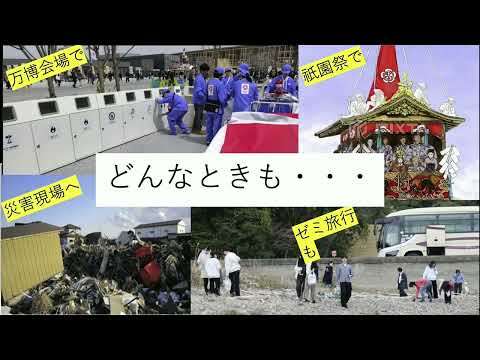
Environmental Awareness and Waste Management - The speaker founded a "Garbage Club" (兄弟ゴミ部) aiming to create a society where people wouldn't have to pick up trash [1] - The speaker was criticized for using katakana (ゴミ) instead of hiragana (ごみ) to write "garbage," as it was seen as a form of discrimination [1] - The speaker emphasizes the importance of discussing environmental issues with friends and family, noting that in Japan, a significant portion of people (indicated by the "yellow part" of a survey result) do not discuss these issues even once a month [2] - The speaker advocates for carrying reusable items like water bottles, bags, and chopsticks as a simple eco-friendly action and conversation starter [2] - The speaker points out the hypocrisy of carrying reusable items but still accepting disposable items, highlighting the convenience-driven habits of society [3] Waste Composition and Societal Changes - The speaker mentions a study that began in 1980, categorizing household waste in Kyoto into approximately 400 types, and has continued for 45 years [2] - Disposable diapers became popular in Japan after the introduction of American-made diapers in 1975 and Japanese tape-style diapers in 1981, leading to mass production, consumption, and disposal [1][2] - While the use of children's disposable diapers is decreasing due to the declining birth rate, the use of adult and pet diapers/sheets is increasing [2] - The speaker acknowledges the essential use of disposable diapers for caregiving, despite advocating for waste reduction [2] Personal Reflection and Values - The speaker's encounter with garbage has changed their perspective, allowing them to see society from a different angle and appreciate those who are marginalized or in need [3]