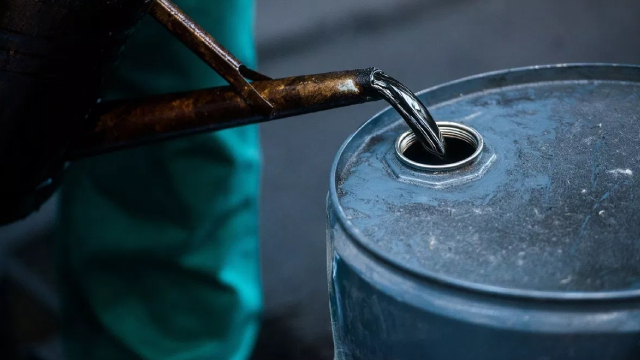
Falling oil prices

Search documents
General Motors Shares Rally As Falling Crude Boosts Outlook For Auto Demand
Benzinga· 2026-03-23 20:16
Core Viewpoint - General Motors (GM) stock is experiencing a rally, primarily driven by falling oil prices, which enhance consumer affordability and sentiment towards vehicle purchases [2][4]. Group 1: Impact of Oil Prices - The price of West Texas Intermediate crude has decreased by more than 8% to approximately $90.10 per barrel, while Brent crude has dropped nearly 8% to around $103.31 [3]. - Lower oil prices can alleviate pressure on household budgets, making consumers more willing to invest in large-ticket items like new vehicles [4]. - Reduced gasoline prices can enhance perceptions of driving costs, supporting demand for GM's diverse range of trucks, SUVs, and crossovers [5]. Group 2: Market Sentiment and Earnings Outlook - The de-escalation of tensions regarding Iranian energy assets may reduce macroeconomic uncertainty related to supply disruptions, positively impacting GM's demand outlook and earnings sentiment [6]. - GM's Relative Strength Index (RSI) has recently trended lower towards the mid-30s to low-40s range, indicating weakening momentum but not yet reaching deeply oversold conditions [7]. Group 3: Upcoming Earnings and Analyst Consensus - GM's next significant catalyst will be the earnings report scheduled for April 28, which investors are closely monitoring [8]. - The stock currently holds a Buy rating with an average price target of $92.42, with recent analyst actions reflecting a range of price targets from $90 to $97 [9][10]. - The earnings per share (EPS) estimate is $2.60, down from $2.78 year-over-year, and revenue is estimated at $43.70 billion, down from $44.02 billion year-over-year [10]. Group 4: Recent Stock Performance - GM shares closed up 4% at $75.72, indicating positive market movement [11].



Oil glut predicted to drive prices down to 20-year low
Yahoo Finance· 2025-11-25 16:24
Core Insights - Oil prices are predicted to fall to their lowest levels in two decades, with Brent crude oil expected to average $42 per barrel in 2027 due to increased production from OPEC, leading to a supply glut [1][5] - JP Morgan forecasts that without intervention, oil prices could slide into the $30s by year-end, a level not seen since 2004 [2] - The International Energy Agency reported a significant increase in global oil supply, with Saudi Arabia boosting output by nearly 1.5 million barrels per day from January to October [8] Supply Dynamics - OPEC's increased output is aimed at protecting market share, resulting in Brent crude prices dropping from over $82 in January to $62 [2] - The surplus in oil production is expected to rise to 2.8 million barrels per day next year, up from 1.5 million barrels per day this year [4] - Saudi Arabia's production increase aligns with its higher quota, while Russian production has only increased by 120,000 barrels per day due to sanctions [8][9] Demand Trends - Demand for oil is being negatively impacted as Chinese consumers shift from petrol and diesel vehicles to electric vehicles [3] - The increase in oil supply and subsequent price drops are anticipated to benefit consumers, particularly in terms of lower transportation costs [5][6] Economic Implications - Lower oil prices are expected to contribute to a significant decrease in inflation, although global economic volatility may affect this outcome [7] - The International Energy Agency noted a substantial rise in global oil stockpiles, reaching the highest level since July 2021, indicating a potential oversupply situation [8]
How ExxonMobil's Upstream Business is Coping With Falling Oil Prices
ZACKS· 2025-06-11 15:00
Core Insights - Exxon Mobil Corporation (XOM) is significantly impacted by declining oil prices, particularly in its upstream business, which is closely tied to the price of West Texas Intermediate (WTI) crude oil [1][3][8] - The U.S. Energy Information Administration (EIA) projects a decrease in WTI prices, with an average of $62.33 per barrel in 2025, down from $76.60 per barrel last year, and further declining to $55.58 per barrel in 2026 [2] Group 1: Company Performance - XOM's upstream earnings are under pressure due to a more than 7% drop in WTI crude prices this year, but its low-cost operations in the Permian Basin help mitigate outright losses [3][8] - XOM's shares have gained only 1.6% year to date, slightly outperforming the industry average of 0.9% [7] - The current enterprise value to EBITDA (EV/EBITDA) ratio for XOM is 6.65X, which is higher than the industry average of 4.15X [9] Group 2: Earnings Estimates - The Zacks Consensus Estimate for XOM's 2025 earnings has remained unchanged over the past week, with estimates at $6.11 per share [10][11] - Historical earnings estimates for XOM have shown a downward trend over the past 90 days, with previous estimates for 2025 being as high as $7.41 per share [11] Group 3: Industry Context - Other major players in the industry, such as Chevron Corporation (CVX) and BP plc (BP), are also experiencing challenges due to lower oil prices, as they generate significant earnings from upstream operations [4][6] - Both CVX and BP have low breakeven costs in the Permian Basin, which helps them navigate the current pricing environment [5][6]