Fast Fashion

Search documents
X @Forbes
Forbes· 2026-03-20 20:38
A pioneer in fast fashion, Amancio Ortega of Spain is the cofounder of Inditex, known for its Zara fashion chain. It's made him one of the wealthiest clothing retailers in the world.He's ranked No. 10 on the list of #ForbesBillionaires.Here's who else made the list: https://t.co/JYn52gRk2zPhoto: fotopress/Matteo Della Torre/NurPhoto via Getty Images ...
Industria de Diseño Textil, S.A. (OTC:IDEXY) Surpasses Earnings Estimates
Financial Modeling Prep· 2026-03-12 01:00
Core Insights - Inditex, the parent company of Zara, reported earnings per share of $0.148, exceeding the estimated $0.147, indicating strong financial performance [1][6] - The company generated revenue of approximately $13.62 billion, slightly below the estimated $13.64 billion, yet maintains a robust strategic positioning [2][6] - Inditex experienced a 9% increase in currency-adjusted sales at the start of Q1 2026, aligning with analysts' expectations, and reported a 7% increase for the entire year of 2025 [3][6] Financial Metrics - The price-to-earnings (P/E) ratio stands at approximately 27.12, reflecting investor confidence in the company's earnings potential [4] - The price-to-sales ratio is about 4.18, and the enterprise value to sales ratio is around 4.16, indicating strong market valuation [4] - The earnings yield is approximately 3.69%, with a debt-to-equity ratio of about 0.29, suggesting low debt levels compared to equity [5] - The current ratio of approximately 1.30 indicates reasonable liquidity to cover short-term liabilities, ensuring operational stability [5]



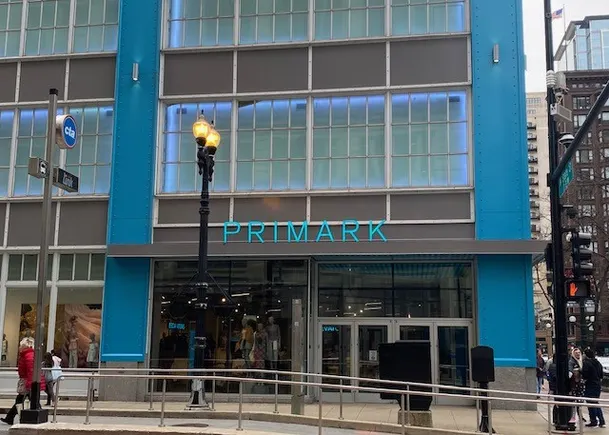
Primark is retail’s ‘best kept secret.’ It’s ready to move beyond that.
Retail Dive· 2026-03-09 15:03
Core Insights - Primark has appointed Eoin Tonge as CEO, transitioning from his role as interim CEO, and is focusing on expanding its presence in the U.S. market with new store openings and a flagship store in New York City [1][6][14] Company Developments - The company is celebrating its 10-year anniversary in the U.S. and has been expanding its footprint with new locations in Texas, Illinois, Tennessee, and Florida [1] - Primark's U.S. head of marketing, Rene Federico, emphasizes the need for greater brand awareness and aims to move away from being perceived as a "best kept secret" in retail [2] - The retailer has reported a 12% increase in constant currency sales in the U.S., driven by international store expansion despite challenging trading conditions [11] Leadership Changes - Eoin Tonge has improved Primark's product offerings and digital capabilities during his interim period, and he is now leading the company into a new era [6][9] - Filip Ekvall has been appointed as chief commercial officer, a new role aimed at integrating product, retail, digital, and customer functions [7] Market Position and Strategy - The apparel market has shown resilience, with a 4% increase reported in January, and Primark is capitalizing on this trend with its expansion strategy [10] - Primark is enhancing its value proposition through improved product offerings and stronger communication regarding prices [12] - The company is also focusing on sustainability, with nearly 75% of its clothes made from recycled or sustainably sourced fibers, up from 66% last year [17] Expansion Plans - Primark is set to open a flagship store in Herald Square, New York City, which will serve as a significant marketing tool and brand experience hub [14][13] - The retailer plans to open five new locations in the Middle East, including three in Dubai, and is also expanding its presence in Romania [20][21] Future Considerations - Analysts suggest that separating Primark from its parent company, Associated British Foods, could be beneficial due to differing business models [18][19] - The company is undergoing a review of its structure to assess the potential for a split, which could enhance its focus on international operations and supply chain resilience [20]
X @BBC News (World)
BBC News (World)· 2026-02-23 00:42
How budget fast fashion is taking small-town India by storm https://t.co/Tu5IkmQ9he ...
X @Bloomberg
Bloomberg· 2026-01-29 08:10
Net sales at the fast fashion retailer hit 59.22 billion kronor in the fiscal fourth quarter, compared with analyst estimates of 59.5 billion kronor https://t.co/8Mn6hodC6J ...
Mills and Manufacturers Go Beyond the Basic Blue Jean to Capture Trends and Customers
Yahoo Finance· 2026-01-28 16:00
Core Insights - The denim industry is shifting towards a fashion-oriented business model, with brands increasing the frequency of product refreshes to meet consumer demand for newness [1][5] - Fast fashion trends are influencing consumer preferences, leading to a decline in demand for basic garments and a rise in unique, differentiated products [2][11] - Sustainability is becoming a key differentiator, although price sensitivity among consumers poses challenges for adopting environmentally friendly solutions [7][10] Product Development Trends - Mills are focusing on innovative designs and material compositions, such as blends with linen and fibers like Tencel Lyocell and Filagen, to create unique offerings [6][8] - The demand for comfort and vintage aesthetics is driving the development of denim that combines modern comfort with retro styles [8][9] - Stretch fabrics are evolving, with a trend towards slight stretch in looser fits while rigid options remain popular [15][16] Market Dynamics - The U.S. market is showing signs of recovery after a period of cautious underbuying, with brands reporting growth in sales [23] - Manufacturers are diversifying their sourcing strategies in response to tariff uncertainties, with production shifting to countries like Pakistan, Sri Lanka, and Vietnam [19][20] - The premium denim market is gaining traction, as consumers seek unique and individualistic products despite price pressures [11][12] Consumer Behavior - Budget-conscious consumers are prioritizing differentiation and comfort in their purchases, leading to a focus on unique fabric characteristics [8][10] - There is a generational divide in preferences for stretch versus rigid jeans, with younger consumers gravitating towards comfort stretch while older demographics prefer rigid options [17][18] Industry Outlook - The denim market is expected to continue growing incrementally, with manufacturers optimistic about future demand despite current challenges [22][23] - Companies are expanding their customer bases beyond traditional markets, targeting regions like the EU, Japan, and Australia for new opportunities [21]
Target Cuts Production Times, Keep Its Fashion Moving at Internet Speeds
Yahoo Finance· 2025-12-22 18:04
Core Insights - Target Corp. is enhancing its private-label fashion offerings to align with the rapid pace of social media trends, aiming to meet the expectations of Gen Z and Millennial shoppers who want to purchase trending products within 24 hours of seeing them [1][2] Group 1: Speed and Agility in Production - The company has implemented "speed tracks" in its private brands, reducing production timelines by up to 80% and utilizing a proprietary GenAI trend platform to enhance responsiveness [3] - Target has transitioned brands like A New Day and Universal Thread to flexible production calendars, allowing for timely access to raw materials and quicker launches of trending styles, such as baggy leopard-print jeans, which saw a 25% reduction in lead time [4] Group 2: Sales Impact and Technology Utilization - The ability to deliver trending styles quickly has resulted in "millions in incremental sales" for the company [5] - Target is leveraging 3D modeling to replace physical sampling with virtual tests, significantly cutting development times [5] - The Target Trend Brain is automating the analysis of trend data, providing insights in hours rather than weeks, which has already influenced seasonal color choices for collections [6]

X @Bloomberg
Bloomberg· 2025-12-22 05:26
Market Dynamics - Shein's decision to open its first physical store in Paris has sparked controversy among French retailers and politicians [1] - Concerns are rising about the potential negative impact of the fast-fashion retailer on local businesses [1]
Hundreds of Zara stores have closed over the last few years, but this budget Inditex fashion brand is rising fast
Fastcompany· 2025-12-19 16:11
Core Insights - Zara, owned by Inditex SA, has reduced its global store count by 16% from approximately 2,139 stores in 2019 to just under 1,800 stores in 2024 [2][3] - The new accounting metrics reveal that Zara's store count is now reported at 1,528 as of October 31, 2024, which is lower than previously reported figures [3] - Inditex's strategy focuses on optimizing store locations, with smaller stores being absorbed into larger, upgraded spaces, resulting in a 2% increase in commercial space and a 5.9% increase in sales in 2024 [4] Store Count Trends - Zara has seen a decline in store counts in core European markets, including Spain (256 stores in 2024 vs. 306 in 2017), France, Germany, and Italy [6] - The most significant decline occurred in China, where store counts dropped from 183 in 2017 to just 73 in 2024 [7] - Conversely, the United States has experienced growth, with store counts increasing from 87 in 2017 to 98 in 2024 [7][8] Lefties Brand Growth - Lefties, Inditex's discount chain, is viewed as a vital part of the company's future, with 213 global locations as of the third quarter of 2025, up from 203 the previous year [2][9] - The brand, which started as an outlet for Zara's leftover stock, has gained popularity among price-conscious consumers, particularly Gen Z shoppers [9] - Lefties currently operates in 18 countries, primarily in Europe, North Africa, and the Middle East, with expectations for further expansion [10]


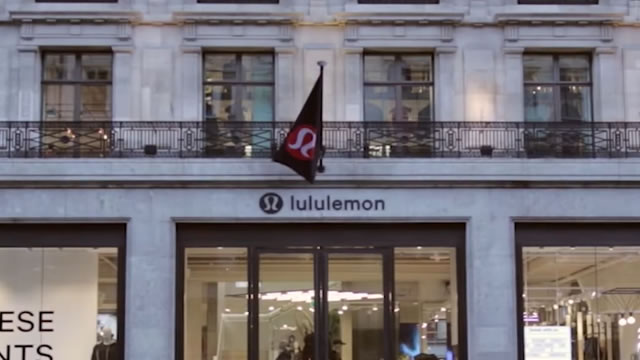
This Is What Lululemon's Founder Says Is Wrong With the Company
The Motley Fool· 2025-12-11 03:00
Core Viewpoint - Lululemon Athletica has experienced a significant decline in stock performance, dropping over 50% this year, which has raised concerns about the company's direction under its current CEO, Calvin McDonald [1][2]. Group 1: Company Performance - Lululemon's stock has been one of the worst performers on the S&P 500, contrasting with the index's overall increase of nearly 17% [1]. - The company's market capitalization is currently $22 billion, with a price-to-earnings ratio of 13, significantly lower than the S&P 500 average of 25 [8][11]. - There has been a clear slowdown in Lululemon's business growth since late 2021, coinciding with rising inflation and stretched consumer budgets [8][10]. Group 2: Brand Strength and Competition - Chip Wilson, the founder of Lululemon, believes the brand has lost its appeal and is overly focused on financial metrics rather than creativity [4]. - The rise of fast fashion and cheaper alternatives has made it challenging for Lululemon to justify its premium pricing, particularly for products like leggings and pants priced over $100 [4][10]. - Lululemon has faced increased competition, exemplified by its recent lawsuit against Costco for selling knock-off products, highlighting the difficulties in protecting brand identity in the apparel industry [5]. Group 3: Future Outlook - Investors are currently concerned about the company's direction and the impact of economic conditions on future results, leading to a heavily discounted stock price [12]. - While the low valuation may present potential for strong returns, the company must first convince investors of its brand strength and growth potential [12].