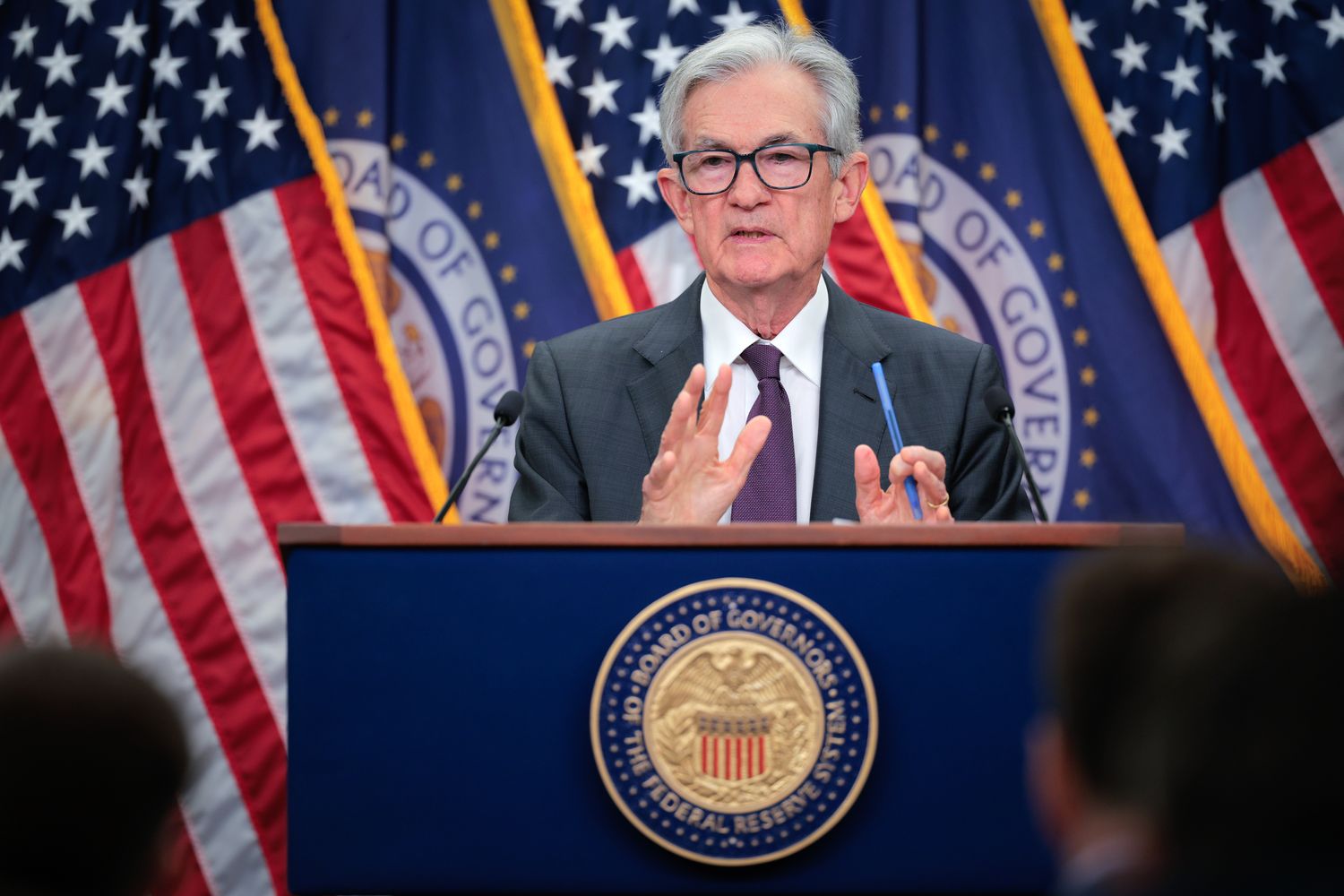
Federal Reserve's interest rate decision

Search documents
API shows weekly rise in US crude stocks, fuel inventories fall, sources say
Reuters· 2026-03-17 20:55
Group 1 - U.S. crude stocks increased by 6.56 million barrels for the week ending March 13 [2] - Gasoline inventories decreased by 4.56 million barrels, while distillate inventories fell by 1.39 million barrels [2] - The rise in crude stocks contrasts with the decline in fuel inventories, indicating a mixed supply situation in the market [1][2] Group 2 - Brent crude prices have rebounded above $100 per barrel, influencing market dynamics [2] - Investors are focusing on the Federal Reserve's interest rate decision, which may impact oil demand and pricing [2]


What To Expect From Friday's Report on Inflation
Investopedia· 2026-02-19 01:00
Core Insights - The Fed's inflation benchmark is expected to worsen, with consumer prices measured by Personal Consumption Expenditures (PCE) projected to rise 2.8% over the 12 months through December, and core PCE forecasted to increase to 3.0% from 2.8% in November [1][2][7] - The anticipated rise in core PCE inflation is significant as it is the measure the Federal Reserve uses to assess its 2% annual inflation target [2][4] - Financial markets are currently predicting a quarter-point cut in the Fed's key fed funds rate by June, but clarity on inflation trends is needed before any rate cuts can be made [5][6] Economic Implications - Persistently high inflation is negatively impacting household budgets and maintaining elevated interest rates [3] - Some economists, such as those at Goldman Sachs, predict that the annual PCE measure will continue to rise as companies pass on tariff costs to consumers, with core PCE potentially reaching 3.05%, the highest since March 2024 [4] - The Federal Reserve will closely monitor upcoming inflation data, particularly PCE, to determine whether to lower borrowing costs to stimulate the job market or maintain higher rates to control inflation [4][6]

The Fed Is Unlikely to Make Moves Next Week, But There Could Still Be Drama
Investopedia· 2026-01-24 01:01
Core Viewpoint - The Federal Reserve is expected to maintain its key interest rate steady at its upcoming meeting, with ongoing discussions about the independence of the central bank from political pressures [1][9]. Interest Rate Expectations - Financial markets anticipate that the Federal Open Market Committee will keep the fed funds rate unchanged in the range of 3.5% to 3.75%, with a 97% probability of no change according to CME Group's FedWatch tool [2]. - Following three consecutive rate cuts, Fed officials show little interest in further reductions, opting to hold rates steady for several months to evaluate economic responses [3][11]. Economic Implications - The decision to keep rates unchanged is likely to influence market reactions regarding potential future rate cuts later in the year [4]. - Inflation has remained above the Fed's 2% target since 2021, and the job market is experiencing a slowdown, although recent data suggests improvements [5]. Political Pressures - President Trump has publicly pressured the Fed to lower interest rates and has initiated legal actions against Fed officials, which Powell has described as intimidation [7]. - The perception of the Fed's independence is crucial for its ability to control inflation, and political interference could undermine this perception [8]. Future Outlook - Economists expect the Fed to pause rate cuts and establish a higher threshold for future reductions, as the job market stabilizes and inflation approaches target levels [11].