Financial Black and Grey Industry

Search documents
姣姣说消保 职业背债局中局 金融黑灰产现形记
Xin Hua Wang· 2025-12-19 06:34
警惕,侦测到黑灰产"职业背债"陷阱!看上海姣化身消保守护者,层层击破职业背债伪装。打击黑 灰产的行动正在上演,跟着姣姣的脚步,一起揭露骗局。 【纠错】 【责任编辑:梁栋飞】 ...
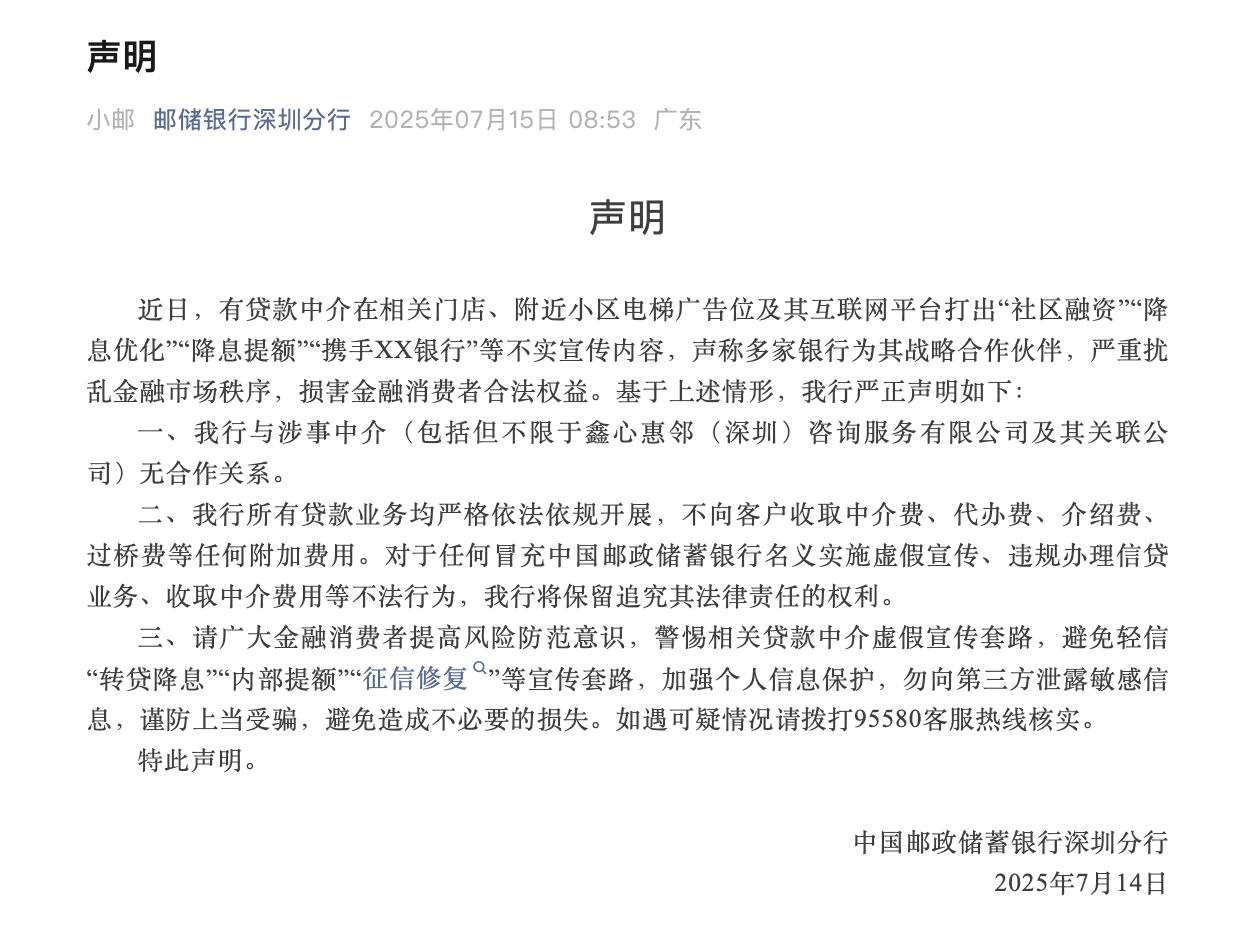
贷款中介假冒合作、推广转贷降息,深圳多家银行罕见点名澄清
Di Yi Cai Jing· 2025-07-17 10:34
Core Viewpoint - The banking sector is tightening its collaboration with loan intermediaries amid increasing regulatory scrutiny, with several banks publicly denying any association with illegal loan intermediaries, particularly naming "Xin Xin Hui Lin" as a problematic entity [1][2][4]. Group 1: Regulatory Actions - Regulatory authorities, including the Ministry of Public Security and the Financial Regulatory Bureau, have launched a special campaign to combat illegal loan intermediaries and related financial crimes, focusing on four main areas: illegal loan intermediary services, malicious debt evasion, illegal insurance claims, and improper debt collection practices [4][5]. - The Shenzhen Financial Regulatory Bureau has emphasized that addressing illegal loan intermediaries is a key focus of their work [4]. Group 2: Bank Responses - Approximately 15 banks in Shenzhen, including major institutions like Bank of China and Agricultural Bank of China, have issued statements clarifying that they do not collaborate with illegal intermediaries [2][4]. - Banks are enhancing their management of intermediary partners, with some institutions completely halting cooperation with loan intermediaries and conducting strict internal audits to prevent collusion [5][6]. Group 3: Issues with Loan Intermediaries - "Xin Xin Hui Lin" has been accused of misleading marketing practices, claiming to lower loan interest rates from 4.5% to 2.5%, which raises concerns about exaggerated claims [1][8]. - The company has been reported to use aggressive marketing tactics, including misleading advertisements in public spaces, to create the illusion of partnerships with banks [9]. - New trends in the loan intermediary market include the use of fraudulent marketing practices to attract consumers and the manipulation of property valuations to secure excessive loans [10].