Financial System Vulnerability

Search documents
IMF:全球金融体系脆弱性上升,银行对私募股权风险敞口增大
Di Yi Cai Jing· 2025-10-14 14:23
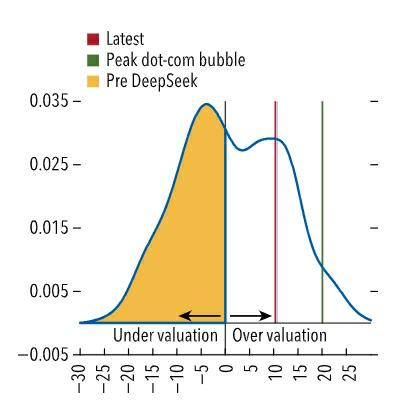
Core Viewpoint - The current asset valuations are significantly higher than fundamentals, increasing the likelihood of disorderly corrections during adverse shocks, as highlighted by the IMF and global financial leaders [1][2][4]. Group 1: Financial Stability Risks - The IMF's Global Financial Stability Report indicates that despite rising trade tensions and geopolitical uncertainties, asset prices have returned to elevated valuations, with financial conditions generally easing [2]. - The interconnectedness of banks and non-bank financial institutions (NBFIs) is increasing, with persistent maturity mismatches that could amplify shocks to the financial system [4][7]. - A recent bankruptcy in the U.S. auto parts sector has exposed potential risks within the burgeoning private credit market, emphasizing the vulnerabilities in the financial system [4]. Group 2: Non-Bank Financial Institutions - NBFIs are becoming increasingly reliant on banks for funding, with banks providing significant loans to various non-bank entities, including mortgage companies and investment funds [7]. - The risk exposure of banks to NBFIs is substantial, with NBFI loans averaging 9% of bank loan portfolios in Europe and the U.S., amounting to approximately $4.5 trillion [7]. - The concentration of risk is particularly high among large regional banks and those with assets under $100 billion, which face greater risk from their exposure to private equity and credit funds [7]. Group 3: Liquidity and Capital Ratios - The IMF warns that if NBFIs encounter difficulties, such as downgrades or declines in collateral value, it could significantly impact banks' capital ratios [8]. - Sensitivity analyses indicate that if NBFI borrowers fully draw on their credit lines, 4% of U.S. banks may lack sufficient liquid assets to meet outflows, potentially leading to negative net liquid assets [8]. - In the Eurozone, the number of banks facing severe liquidity pressures could rise to 5%, while in the U.S., it could increase to 14% under stricter definitions of liquid assets [8].