GLP - 1药物对消费市场的影响

Search documents
速递|GLP-1药物,正在重塑美国人的食物账单
GLP1减重宝典· 2025-12-29 08:46
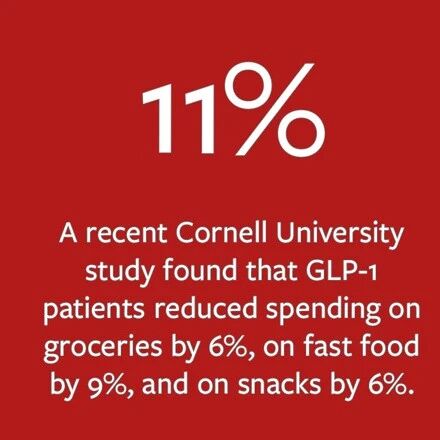
Core Insights - GLP-1 drugs like Ozempic and Wegovy are reshaping not only individual health management but also macro consumption trends in the U.S. economy, impacting various sectors including consumer, retail, and food industries [4][10] Group 1: Impact on Food Spending - A study from Cornell University indicates that households using GLP-1 drugs experienced an average food spending decrease of approximately 5.3% within nine months of starting the medication, with high-income households (annual income over $100,000) seeing a decline exceeding 8% [6] - Spending on limited-service dining, such as fast food and coffee shops, also dropped by nearly 8%, indicating a simultaneous reduction in dining out frequency and impulse purchases [6] Group 2: Structural Changes in Food Consumption - The impact of GLP-1 on food consumption is not uniform; highly processed and calorie-dense foods saw the most significant declines, with spending on salty snacks, sweets, cookies, and baked goods dropping close to 10% [7] - Basic food items like bread, meat, and eggs also experienced spending reductions, but the declines were much smaller compared to processed foods [7] - Some categories, such as yogurt, fresh fruits, nutrition bars, and meat snacks, showed growth, but the scale of this growth was insufficient to offset the overall decline in food consumption [7] Group 3: Long-term Effects of GLP-1 Usage - Continuous use of GLP-1 drugs can maintain lower food spending levels for an extended period, and even after discontinuation, food consumption remains below pre-medication baseline levels for some time, although this effect diminishes over time [9] - This suggests that while GLP-1 drugs can significantly alter consumption decisions in the short to medium term, they do not permanently reshape all dietary habits [10] Group 4: Implications for the Food and Beverage Industry - The findings signal potential long-term changes in the demand curve for the U.S. food market, indicating that businesses relying on high-calorie, ready-to-eat, snack-type products may face ongoing pressure [10] - Brands, retailers, and food service companies may need to rethink their product offerings, portion sizes, and marketing strategies in response to a market where appetite is systematically suppressed by medication [10] Group 5: Public Policy Considerations - The research highlights that GLP-1 drugs have a more direct and rapid impact on consumer behavior compared to traditional interventions like taxes or nutritional education, linking public health with market demand [10] - This marks a significant shift in how medical technology influences consumption structures and industry evolution [10]