Geopolitical impact on shipping

Search documents
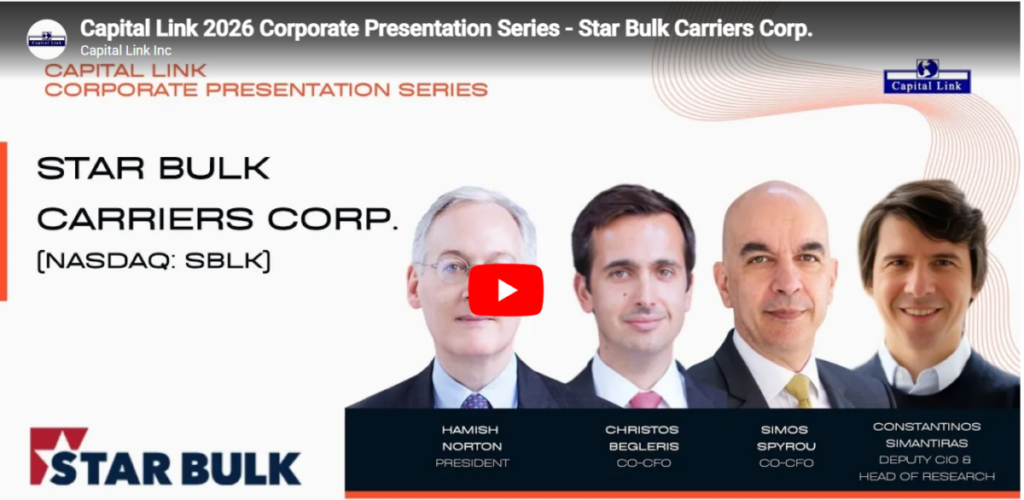
Star Bulk Highlights Operating Leverage As Dry Bulk Fundamentals Strengthen - Star Bulk Carriers (NASDAQ:
Benzinga· 2026-03-30 18:35
Company Positioning and Scale - Fleet growth is projected to increase modestly by approximately 3.5% over the next two years, but this will be partially offset by structural inefficiencies, including increased drydock activity due to aging vessels over 15 years, reducing effective fleet growth by at least 0.5% annually [1] - The order book is relatively low at about 12.5% of the fleet, with shipyard capacity constrained until at least the second half of 2029, as shipyards prioritize more complex vessel types like LNG carriers and container ships [2] Market Dynamics: Supply Side - Environmental regulations and efficiency requirements are expected to incentivize slower steaming and fleet renewal, which will support tighter effective supply [2] Geopolitics and Rate Support Dynamics - Geopolitical developments have led to significant increases in bunker fuel prices, which can support freight markets and incentivize slower vessel speeds, thereby reducing available capacity and acting as a natural support mechanism for charter rates [3] Demand Outlook and Trade Flows - The demand environment is generally supportive, with dry bulk trade volumes increasing by approximately 5% year-over-year in 2025, driven by strong export growth, particularly in bauxite shipments from West Africa and stable iron ore demand [4] - China's import profile remained stable, with a first-half decline offset by a second-half recovery due to easing geopolitical tensions and stockpiling, although elevated inventory levels may pose downside risks [5] - Outside of China, imports grew by approximately 3.2% in 2025, supported by lower commodity prices, a weaker U.S. dollar, and resilient demand across Southeast Asia, India, the Middle East, and Africa [5] Strategic Acquisitions and Fleet Expansion - Management expressed confidence in the strategic rationale behind the proposed conditional acquisition of vessels linked to the Diana Shipping–Genco transaction, which, if completed, would enhance Star Bulk's scale, earnings capacity, and market positioning [6]


Hafnia Limited(HAFN) - 2025 Q3 - Earnings Call Transcript
2025-12-02 11:02
Financial Data and Key Metrics Changes - In Q3, the company reported a TCE income of $247 million, with an adjusted EBITDA of $150.5 million, leading to a net profit of $91.5 million or $18 per share [15][16] - The company has a dividend payout ratio of 80% of net profit, resulting in a distribution of $73.2 million or $14.7 per share for this quarter [16][24] - The company sold four older MR vessels, with three recognized in Q4 and one in the current quarter [21] Business Line Data and Key Metrics Changes - The company operates a fleet of 126 vessels, including 117 owned and nine long-term time chartered vessels, with a focus on product and chemical tankers [6][7] - The company has eight commercial pools managing over 200 ships globally, enhancing operational scale and efficiency [7] Market Data and Key Metrics Changes - The company has booked 71% of its bookings for Q4 as of mid-November, indicating an improvement in rates, with current bookings around $26,040-$25,600 [29] - The company experienced 230 extra dry docking days in Q3 due to a significant number of ships requiring maintenance, which is expected to taper off in the current quarter [30] Company Strategy and Development Direction - The company is focused on strategic growth through acquisitions, joint ventures, and fleet modernization, including a recent agreement to purchase 14.1 million shares of TORM [10][22] - The company aims to maintain a low-cost operation with a strong focus on shareholder distributions, linking its balance sheet strength to its dividend policy [8][9] Management's Comments on Operating Environment and Future Outlook - Management noted that Q3 is typically a weaker quarter for product tankers, but this year saw a strong market due to increased ton miles and tighter supply from sanctioned vessels [15] - The management expressed optimism about the winter market, citing a tight tonnage situation and refinery closures in Europe leading to increased demand for their services [49][50] Other Important Information - The company is actively monitoring geopolitical developments, including the situation in the Red Sea and the impact of Russian oil transportation dynamics on the market [39][43] - The company is cautious about the potential return of Venezuelan oil exports and its implications for the market [45] Q&A Session Summary Question: What is the status of the TORM share purchase? - The company is awaiting the appointment of a new independent board chair at TORM to finalize the transaction [22][28] Question: How does the company view the impact of the Red Sea reopening? - Management believes the reopening may not significantly impact the market, as the dynamics of traffic and supply have already adjusted [40][41] Question: Why has the order book fallen in Q3? - The decline in the order book is attributed to a shift of vessels into dirty trades rather than an increase in scrapping [51] Question: What is the company's strategy regarding fleet renewal? - The company is focusing on extending the life of existing vessels rather than ordering new builds at high prices, while remaining open to opportunities for fleet purchases or M&A [54][55]

航运:地缘政治行动手册(2025 年冬季版)-Shipping-Geopolitics Playbook Winter 2025 Edition
2025-11-25 05:06
Summary of Key Points from the Shipping Geopolitics Playbook: Winter 2025 Edition Industry Overview - **Industry**: Shipping - **Key Geopolitical Dynamics**: Gaza cease-fire, Russia-Ukraine war, US-China trade tensions, IMO decarbonization [1][11] Core Insights and Arguments Gaza Cease-fire and Red Sea Rerouting - The potential end of Red Sea rerouting is a significant concern for container shipping, having reduced effective capacity by approximately 10% [2][15] - Oversupply has negatively impacted profitability in the container shipping segment since Q4 2024, but a return to the Suez Canal could lead to a sharp recovery in earnings [2][17] Russia-Ukraine War - Increased restrictions on Russian oil exports or a peace deal could positively impact crude tankers, driving demand for legitimate tankers and supporting a multi-year up-cycle [3][41] - The VLCC (Very Large Crude Carrier) market has seen a rally due to tighter sanctions on Russian oil, with spot market prices reaching multi-year highs [40][42] US-China Trade Tensions - The shift in global supply chains away from China due to near-shoring initiatives may benefit dry bulk shipping, while container shipping faces long-term demand risks [4][62] - A recent truce between the US and China has temporarily reduced trade barriers, but long-term risks remain due to ongoing geopolitical tensions [64][68] IMO Decarbonization - Slower vessel speeds may reduce effective supply, necessitating a recalibration of traditional supply/demand forecasts [5][5] - Compliance costs and capital expenditures are expected to rise, with varying impacts across shipping segments [5][5] Segment Preferences - **Preferred Segments**: VLCC tanker shipping is favored due to a rational supply side and increased demand for legitimate vessels [6][14] - **Least Preferred Segment**: Container shipping is viewed negatively due to potential oversupply and geopolitical risks [6][14] Stock Ratings - **Overweight (OW)**: CSE-H, CMES - **Equal Weight (EW)**: CSE-A, Pacific Basin - **Underweight (UW)**: Maersk, CSH-H/A, OOIL, NYK, MOL, K-Line [10][14] Additional Important Insights - The container shipping order book represents 32% of the total fleet, with a significant increase in new orders since 2020, leading to an effective supply growth forecast of 8.3% in 2025 [28][29] - The geopolitical dynamics are reshaping investor expectations regarding global trade flows, with shipping being a critical component of global trade [11][12] - The ongoing geopolitical events have caused unexpected disruptions in shipping cycles, diverging from traditional supply and demand forecasts [11][12] Conclusion - The shipping industry is currently navigating complex geopolitical landscapes that significantly impact various segments. The potential end of rerouting in the Red Sea, ongoing tensions between the US and China, and the implications of the Russia-Ukraine conflict are critical factors influencing market dynamics and investment strategies in the shipping sector.