Global Financial Stability

Search documents
Trump's war on the Fed threatens global financial stability, European central bankers warn
CNBC· 2026-01-14 13:53
Central Bank Independence - The Trump administration's actions are seen as a threat to the long-held consensus of central bank independence, which has been a cornerstone in developed economies for nearly 50 years [1][3] - Central bank independence is emphasized as crucial for financial and price stability, with warnings of potential structural rises in global inflation if the Federal Reserve's credibility is compromised [5][6] Political Pressure on the Federal Reserve - Fed chair Jerome Powell disclosed a criminal investigation into the $2.5 billion renovation of the Fed's headquarters, which he claims is a political attack due to the Fed's refusal to lower interest rates as pressured by Trump [2] - Global central bank leaders, including those from the Bank of England and the European Central Bank, have publicly defended Powell against these political pressures [2] Economic Vulnerability - Trichet highlighted a bipartisan consensus in the U.S. to increase spending, which contributes to economic and political vulnerability, as investors become cautious about financing deficits and high debt-to-GDP ratios [6] - The current level of debt as a proportion of GDP is reportedly higher than before the Lehman Brothers collapse, indicating significant economic vulnerability [7] Global Economic Implications - The potential subservience of the Federal Reserve to the executive branch could have damaging effects on global economic stability, with Trichet expressing concerns about the overall vulnerability of the global economy [8] - Citi warns that risks to central bank independence from populist governments could extend beyond the U.S., affecting global financial markets and policy decisions [10][11]


US rescue of Argentina is “unconventional,” Summers says #shorts #argentina #milei #trump
Bloomberg Television· 2025-10-15 17:26
as we've seen now Secretary of Treasury Bessant first create a swap arrangement of $20 billion and then actually intervene in the currency markets uh last week. Uh you actually were there uh during the Mexican peso crisis back in 1994. Uh what can you tell us about when that makes sense and when it does not.I'm somebody who's a strong believer that the United States has to support global financial stability, that when countries face uh crisis involving a sudden loss of liquidity that there needs often to be ...

IMF:全球金融体系脆弱性上升,银行对私募股权风险敞口增大
Di Yi Cai Jing· 2025-10-14 14:23
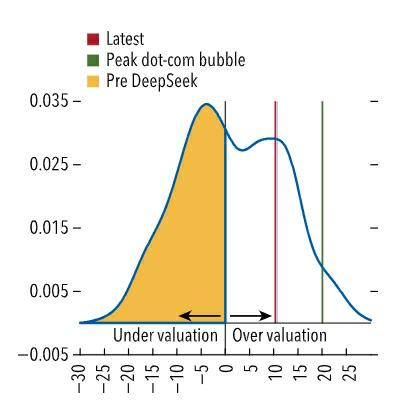
Core Viewpoint - The current asset valuations are significantly higher than fundamentals, increasing the likelihood of disorderly corrections during adverse shocks, as highlighted by the IMF and global financial leaders [1][2][4]. Group 1: Financial Stability Risks - The IMF's Global Financial Stability Report indicates that despite rising trade tensions and geopolitical uncertainties, asset prices have returned to elevated valuations, with financial conditions generally easing [2]. - The interconnectedness of banks and non-bank financial institutions (NBFIs) is increasing, with persistent maturity mismatches that could amplify shocks to the financial system [4][7]. - A recent bankruptcy in the U.S. auto parts sector has exposed potential risks within the burgeoning private credit market, emphasizing the vulnerabilities in the financial system [4]. Group 2: Non-Bank Financial Institutions - NBFIs are becoming increasingly reliant on banks for funding, with banks providing significant loans to various non-bank entities, including mortgage companies and investment funds [7]. - The risk exposure of banks to NBFIs is substantial, with NBFI loans averaging 9% of bank loan portfolios in Europe and the U.S., amounting to approximately $4.5 trillion [7]. - The concentration of risk is particularly high among large regional banks and those with assets under $100 billion, which face greater risk from their exposure to private equity and credit funds [7]. Group 3: Liquidity and Capital Ratios - The IMF warns that if NBFIs encounter difficulties, such as downgrades or declines in collateral value, it could significantly impact banks' capital ratios [8]. - Sensitivity analyses indicate that if NBFI borrowers fully draw on their credit lines, 4% of U.S. banks may lack sufficient liquid assets to meet outflows, potentially leading to negative net liquid assets [8]. - In the Eurozone, the number of banks facing severe liquidity pressures could rise to 5%, while in the U.S., it could increase to 14% under stricter definitions of liquid assets [8].