Global Monetary Order Reconstruction

Search documents
CICC's Miao on China's Bull Market
Bloomberg Television· 2025-11-11 16:20
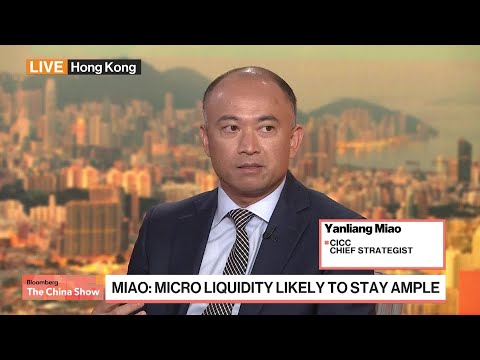
What's the next step. The title report. The next step for China's bull markets, where they'll look for the next step.Yeah, I think, you know, for next year we still remain bullish. To me, I think the big change is really the global monetary order reconstruction from a, you know, strong dollar to a weak dollar and then from China us constantly in the trade negotiations to a G-2 framework. And then probably more importantly is the deep sea moment, not just in Asia but many other industries where there is a ma ...

CICC's Miao on China's Bull Market
Youtube· 2025-11-11 16:20
Core Viewpoint - The article discusses the potential for a slow-moving bull market in China, driven by a shift in global monetary policy and increased liquidity, particularly favoring Asian markets, including China and Hong Kong [2][3][6]. Group 1: Market Dynamics - The global monetary order is shifting from a strong dollar to a weak dollar, with a focus on a G-2 framework in trade negotiations between China and the US [2]. - There is a notable concentration of global actively managed money, with 56% in US assets, only 1.8% in Chinese assets, indicating a need for diversification towards Asia [6]. - The liquidity driving the current market rally is primarily influenced by central bank policies, with expectations that the Fed will maintain a supportive stance [5][4]. Group 2: Sector Opportunities - Various sectors are experiencing cycles of rotation, with technology, financials, and materials showing significant movements [7][9]. - A sustainable, slow-moving bull market is anticipated, allowing underperforming sectors to catch up [9]. - The traditional manufacturing space is expected to benefit from the "Involution" campaign, which could enhance corporate earnings and market balance by 2026 [10]. Group 3: Economic Recovery - Current inflation rates are low, with CPI around zero and expected to rise slightly to 0.5% next year, indicating a gradual recovery [15]. - Structural reforms are necessary for broader economic recovery, focusing on job creation and improving the social safety net, particularly for rural retirees [17][18]. - There is significant potential for improvement in social safety nets, which could support consumption and economic stability in China [18].