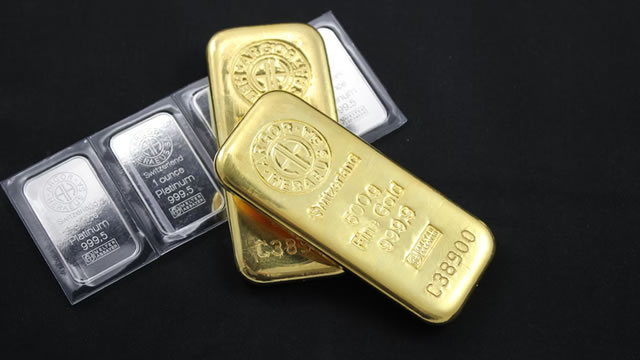
Gold and Silver Bull Market

Search documents
The Gold Boom Isn't Done — And The Uranium Era Is Beginning: Sprott's 2026 Playbook
Benzinga· 2026-01-21 19:57
Group 1: Market Overview - Sprott is evaluating structural changes in the commodities market following a strong year for gold and silver, indicating that commodities are becoming a core allocation influenced by politics and policy [1] - The report outlines three dominant themes: accelerating deglobalization, the rise of the debasement trade, and the continuation of a gold and silver bull market [2] Group 2: Deglobalization and Strategic Assets - Deglobalization is now a reality, with governments prioritizing sovereignty and supply security over cost minimization, placing commodities at the center of this trend [3] - Critical minerals and precious metals are being reclassified as strategic assets, leading to fragmented markets and regional shortages [4] Group 3: Inflationary Trends - The trend towards nearshoring and domestic production is inflationary, causing gold to regain its relevance as a reserve asset in a multipolar world, while silver benefits as both a store of value and an industrial input [5] Group 4: The Debt Conundrum - The debasement trade reflects a long-term shift from fiat currencies to tangible assets due to chronic government deficits that central banks must accommodate [6][7] - By 2025, U.S. public debt is projected to exceed $38 trillion, with little political appetite for austerity, complicating monetary policy independence [8] Group 5: Precious Metals Market - Gold is viewed as underowned despite its recent rally, with significant buying from central banks, particularly China, suggesting continued upside potential into 2026 [11] - Silver's role has evolved from a monetary asset to a critical industrial commodity, facing persistent supply deficits due to its production dynamics [12] Group 6: Emerging Opportunities - Uranium is identified as a cornerstone of energy security, supported by government funding for nuclear power and increasing demand driven by AI [14] - Copper is facing supply shortages due to electrification and grid expansions, while rare earths are seen as strategic bottlenecks influenced by geopolitics [15]